Serengeti · The Complete Guide

Serengeti Safari

A Serengeti safari sits at the top of almost every wildlife traveler’s list, and it earns the spot. Two million wildebeest, four thousand lions and plains that run to the horizon in every direction. Planning one raises real questions, though. When should you go, where in this huge park should you stay, and what will it cost?
This guide answers all of it, from someone who lives here. Mawe Lodges runs three camps inside the Serengeti, placed at the migration’s key stages. Mawe Tented Camp holds the central plains year-round. Gnu Ndutu Camp sits on the calving grounds, and Gnu Mara River Camp overlooks the crossings. Whatever month you travel, one of our camps stands where the action is.
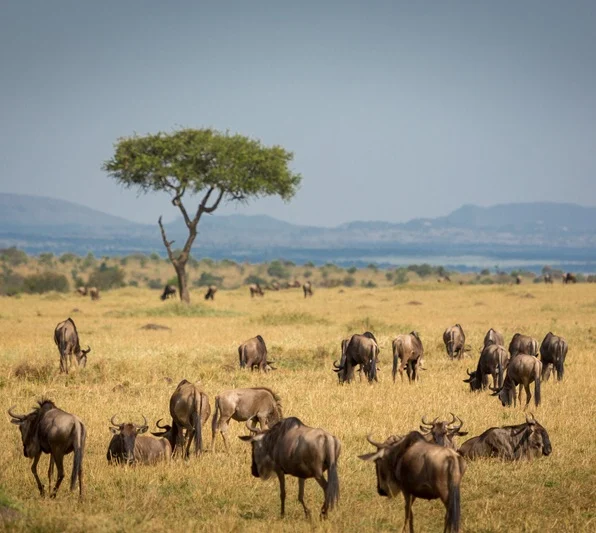
A large herd of wildebeests grazing and resting in the golden grasslands of the savannah under a lone acacia tree during a luxury serengeti safari experience.
The Park

Why the Serengeti Is Africa's Greatest Safari Park

The numbers alone make the case. The Serengeti covers 14,763 square kilometres of plains, woodlands and granite kopjes. It became Tanzania’s first national park in 1951 and a UNESCO World Heritage Site in 1981. Around two million wildebeest and zebra migrate through it every year, in the largest overland migration on Earth.
The predators follow that abundance. Roughly 4,000 lions live here, alongside about 1,000 leopards and 550 cheetahs. In addition, more than 500 bird species fill the skies and acacias. No other park combines this density with this much space.
Yet statistics miss the feeling. The Maasai named it Siringit, the place where the land runs forever. Stand on a kopje at dawn, and you understand the word immediately.
The Migration

The Great Migration, Month by Month

The migration never stops moving, so the right base changes with the calendar. The table below shows where the herds are and the Mawe camp beside them.
MonthsWhere the herds areHighlightNearest Mawe camp
Late Dec to mid MarNdutu plains, southern SerengetiCalving season, predator actionGnu Ndutu Camp
Apr to MayCentral and western plainsGreen season, huge columns on the moveMawe Tented Camp
Jun to early JulWestern Corridor, Grumeti RiverFirst river obstaclesMawe Tented Camp
Jul to OctNorthern Serengeti, Mara RiverThe famous crossingsGnu Mara River Camp
Nov to DecMoving south againShort rains, fresh grassMawe Tented Camp
Here is what that table really means. Most operators book you into one lodge and hope the herds cooperate. We move you to the camp that matches your month, so the migration is a plan rather than a gamble.
The Regions

The Regions of the Serengeti

The park splits into distinct regions, and each one delivers a different safari.
01 — The Heart of the Park

Central Serengeti (Seronera)

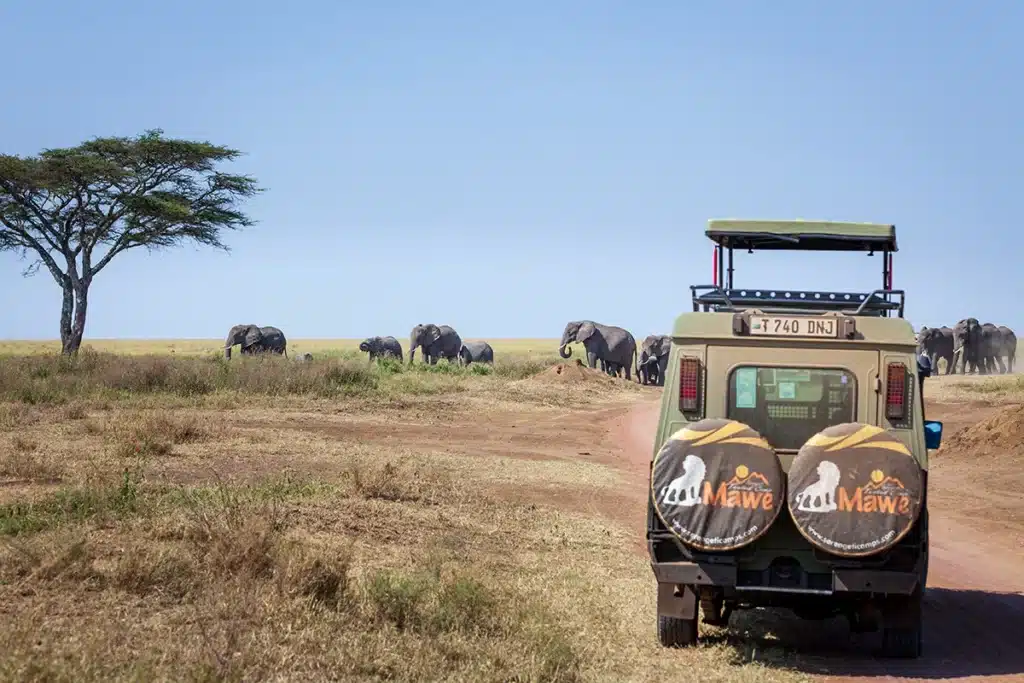
The heart of the park, busy with wildlife all year. River lines hold leopards, the plains hold cheetahs, and lion prides claim the kopjes. Seronera also attracts the most vehicles, so an early start matters. Our Mawe Tented Camp sits inside this region, which puts you at sightings before the day visitors arrive.
02 — The Calving Grounds

Southern Serengeti and Ndutu

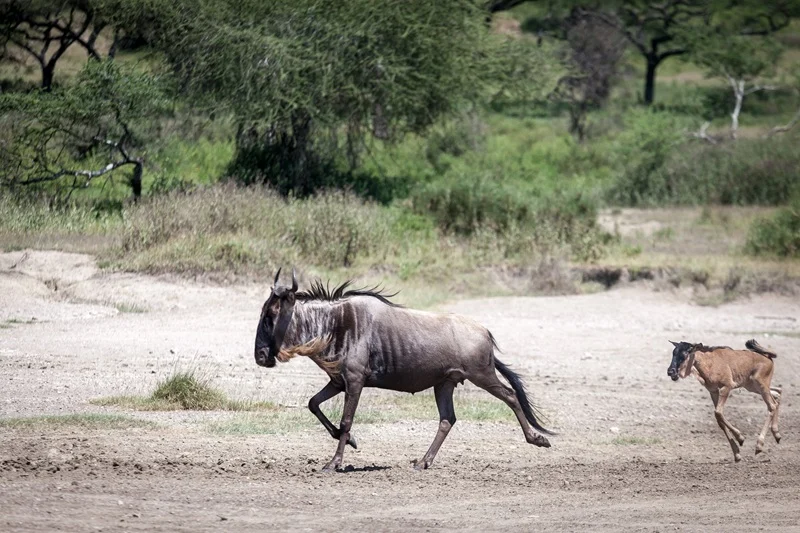
Short-grass plains that explode into life from late December to mid March. Thousands of wildebeest calves arrive daily at the peak, and the predators respond. Photographers rate Ndutu as the best show in Africa. Gnu Ndutu Camp operates here through the season.
03 — The Crossings

Northern Serengeti and the Mara River

Remote, green and dramatic. From July to October, the herds gamble with the crocodiles at the Mara River crossings. Fewer visitors reach this corner, which keeps sightings quieter. Gnu Mara River Camp stands beside the action.
04 — The Quiet Arm

Western Corridor

The Grumeti River drains this quieter arm of the park. The migration pushes through from May to July, and resident wildlife stays year-round. It works well as an add-on for longer stays.
The Experience

A Luxury Serengeti Safari, Redefined

Luxury on safari is not marble bathrooms. Real luxury is waking up inside the park, in a small camp, in exactly the right region for the season. It is a guide who repositions for the light and a private vehicle. It is dinner under more stars than you have ever seen.
That is the luxury Serengeti safari we build. Our tented camps stay deliberately small, so the bush stays louder than the guests. Every tent is en suite and comfortable, and the locations do what no chandelier can. Consequently, you spend your money on position and time with wildlife, not on lobby decor.
Experiences

Things to Do on a Serengeti Safari

Game drives carry the safari, and the Serengeti rewards them like nowhere else. Morning and afternoon drives suit most days, while full-day drives chase the migration.
Then layer in the specials. Walk the designated wilderness zones with a guide and armed ranger. Float over the plains at sunrise in a hot air balloon. Or build the whole trip around your camera, with golden-hour starts from inside the park.
Two rules keep expectations honest. Night drives are not permitted inside the Serengeti, and vehicles stay on the tracks. For after-dark wildlife, add Tarangire to your route.
When to Go

Best Time to Visit the Serengeti

There is no bad month, only different ones. June to October brings dry weather, short grass and the Mara River crossings in the north. This is peak season, with prices and visitor numbers to match.
January and February deliver the calving season at Ndutu, a favorite among photographers and repeat travelers. Meanwhile, April and May offer green landscapes, dramatic skies and the emptiest tracks of the year. Rates drop then too, so value hunters should look hard at the green season.
Trip Length

How Many Days Do You Need?

Plan a minimum of three to four days in the Serengeti. The park is enormous, and rushing it wastes the entry fees and the flights. Longer is better if your schedule allows.
One planning trick beats everything else. Split your stay between two regions, one with the migration and one without. For example, pair central Serengeti with Ndutu in February, or with the Mara River in August. Our three camps make that split seamless, with transfers arranged between them.
Getting Here

Getting to the Serengeti

Most international travelers fly into Kilimanjaro International Airport. Depending on your arrival time, you either connect straight on or overnight in Arusha. Daily light aircraft then fly from Arusha to airstrips across the park, landing close to your camp.
Prefer the overland route? The drive from Arusha crosses the Ngorongoro highlands and enters the park from the east. It takes most of a day, and it doubles as a safari. Many guests drive in through Tarangire and Ngorongoro, then fly out. We arrange every version.
Costs

What Does a Serengeti Safari Cost?

Be ready for real numbers, because the Serengeti is not a budget destination. Park fees alone run about 75 to 85 US dollars per person per 24 hours, including VAT. Concession fees apply for staying inside the park, and vehicle fees add more.
Full safari costs depend on style. Mid-range trips typically run several hundred dollars per person per day, all inclusive. Our camp rates include VAT and government fees, with park fees itemized separately, so your quote stays transparent. Tell us your dates and group size, and we will price the whole route honestly.
Where to Stay

Where to Stay: Three Camps, One Serengeti

Our three properties cover the park between them:
Central Serengeti. Ten tents among the kopjes, open year-round, in the park's busiest wildlife region.
Southern plains. Seasonal camp on the calving grounds, open late December to March.
Northern Serengeti. Seasonal camp beside the crossings, open July to October.
Every camp keeps the same promise: small, en-suite tents inside the ecosystem, with rates that include VAT and government fees. Browse all our properties on the camps and lodges page.
Beyond Serengeti

Build the Full Northern Circuit

The Serengeti anchors the route, and its neighbors complete it. Add the Ngorongoro Crater for Big Five density in a single day. Add Tarangire for elephants, baobabs and our night game drives. Karatu sits between them, a green base for the highlands.
Read our review, Tripadvisor
Questions

Frequently Asked Questions

Can you see the Big Five in the Serengeti?

+

Yes, though rhino sightings take luck and patience. Lions, leopards, elephants and buffalo appear regularly on game drives. For the best rhino chance, add a Ngorongoro Crater day to your route.

Are night game drives allowed in the Serengeti?

+

No, TANAPA does not permit night drives inside Serengeti National Park. Off-road driving is also prohibited. For night drives, we run them in Tarangire from Baobab Tented Camp.

How do you get to the Serengeti?

+

Fly into Kilimanjaro International Airport, then connect by light aircraft from Arusha to a park airstrip. Alternatively, drive in through the Ngorongoro highlands in about a day. We arrange both routes.

Is the Serengeti safe for tourists?

+

Yes, a Serengeti safari is safe, and the park has hosted travelers for decades. You travel with professional guides, and camps follow strict safety routines. Standard travel precautions apply in the cities, as anywhere.

Where should I stay in the Serengeti?

+

Match your camp to your month. Stay central for year-round wildlife. Choose Ndutu from December to March, or the Mara River from July to October. Our three camps cover all three positions.

Plan Your Safari

The Serengeti Is Waiting. Which Month Is Yours?

Tell us your travel dates, and we will place you at the right camp for the herds. One enquiry covers camps, transfers, park fees and every activity.