TANZANIA 0N FOOT

Walking Safari
Tanzania
You want to feel the bush, not just watch it through a car window. A walking safari in Tanzania puts you on the ground, where every track, scent and sound matters. Yet most travelers hesitate before booking one. Is it safe? What does it cost? And where in Tanzania can you actually walk?
This page answers all of those questions. At Mawe Lodges, we run guided bush walks directly from our camps in the Serengeti, Tarangire, Karatu and Lake Eyasi. A professional guide and an armed ranger lead every walk. Prices start at 80 US dollars per person, with no hidden extras.
Below, you will find walk types, current rates, safety rules, the best season and a packing list. Read through, then reach us on WhatsApp or the enquiry form for a tailored plan.
The Experience

What Is a Walking Safari?

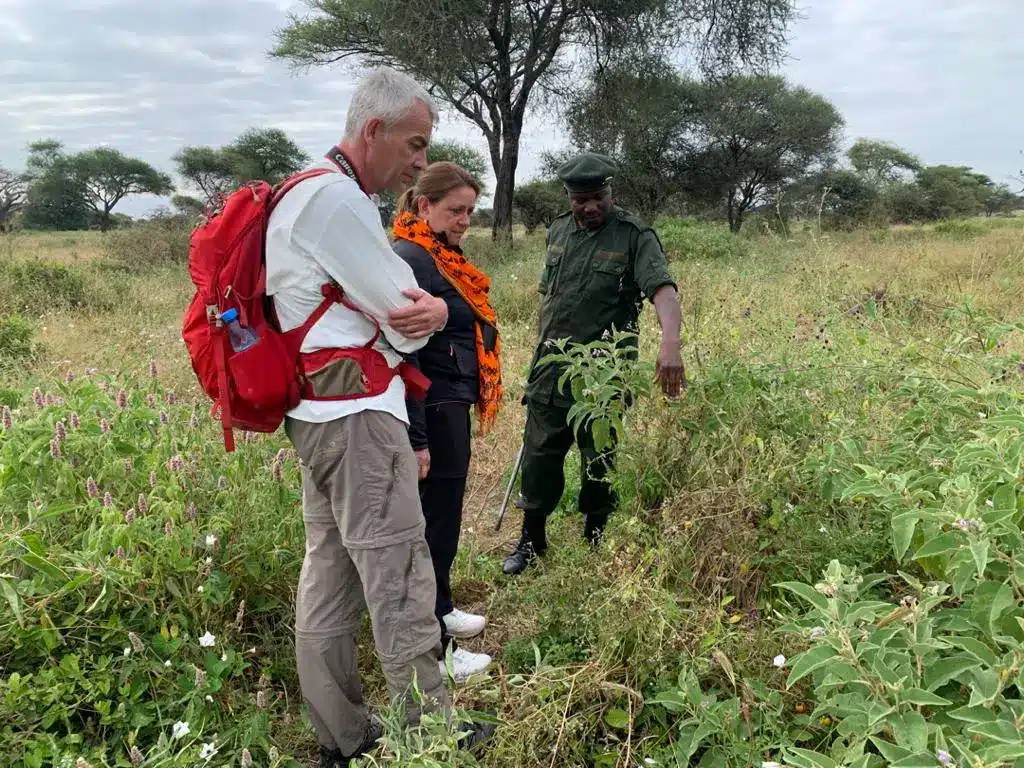
A walking safari is a guided walk through wild terrain, led by a trained guide and an armed ranger. Instead of driving, you follow game trails on foot in small groups of six guests or fewer. The pace stays slow, so you notice details a vehicle always misses.
A walking safari in Tanzania comes in three formats. A short bush walk lasts two to three hours and starts near camp. A half-day walk covers more ground and includes a bush breakfast. Multi-day walking safaris link remote camps on foot and suit confident hikers.
Your guide reads tracks, dung, birds and plants along the way. As a result, even a quiet morning becomes a lesson in how the ecosystem works. Elephants, giraffes and antelope often appear at a respectful distance.
Compare

Walking Safari vs Game Drive: What Is the Difference?

Both belong on a Tanzania itinerary, but they serve different purposes. A game drive covers long distances and brings you close to big cats. A walking safari trades distance for depth. On foot, you smell wild sage, hear alarm calls and feel the ground itself.

Walking Safari Game Drive
Viewpoint On foot, at ground level Seated in a 4x4
Focus Tracks, plants, birds, insects, big game at a distance Close sightings of big game
Terrain Vehicle-free zones and open bush Established park roads
Group size Maximum six guests Up to six per vehicle
Pace Three to five kilometres per hour, frequent stops Covers large areas fast
Most of our guests combine walking safari with Game Drive. For example, many walk at dawn and drive in the afternoon. Neither replaces the other, and together they show you two versions of the same wilderness.
Destinations

Where Can You Go on a Walking Safari in Tanzania?
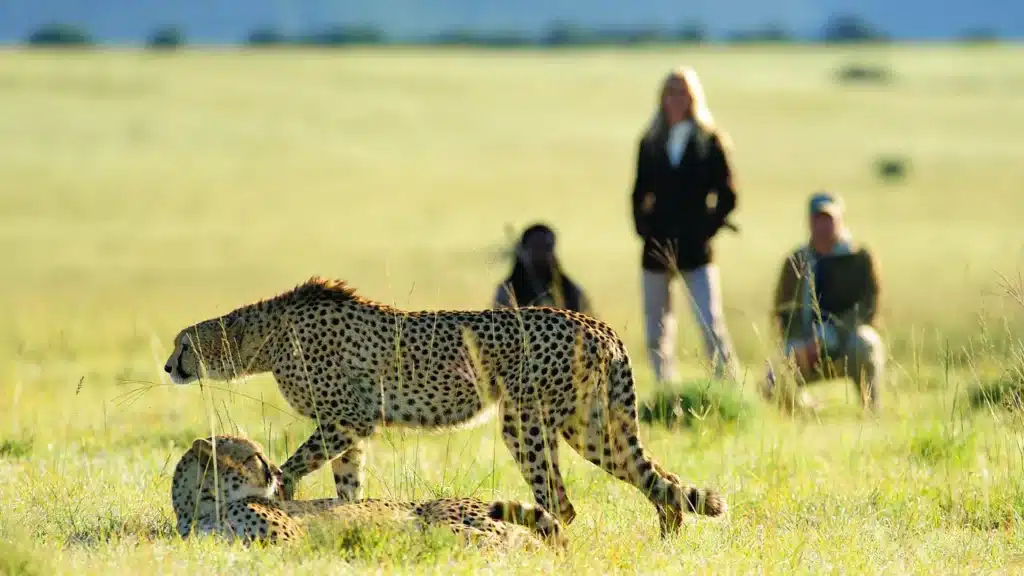
Tanzania allows walking in designated zones of its national parks and across the Ngorongoro Conservation Area. Our camps sit inside or beside these areas, so your walk starts at the tent flap. No long transfers, no wasted morning light.
01 — National Park

Serengeti National Park

The Serengeti permits walking safaris in set wilderness zones, always with an armed ranger. Here you walk among granite kopjes and open grassland far from any road. During migration season, the plains around our Gnu camps fill with wildebeest and zebra. Walks depart straight from Mawe Tented Camp and our mobile Gnu camps.
02 — National Park

Tarangire National Park
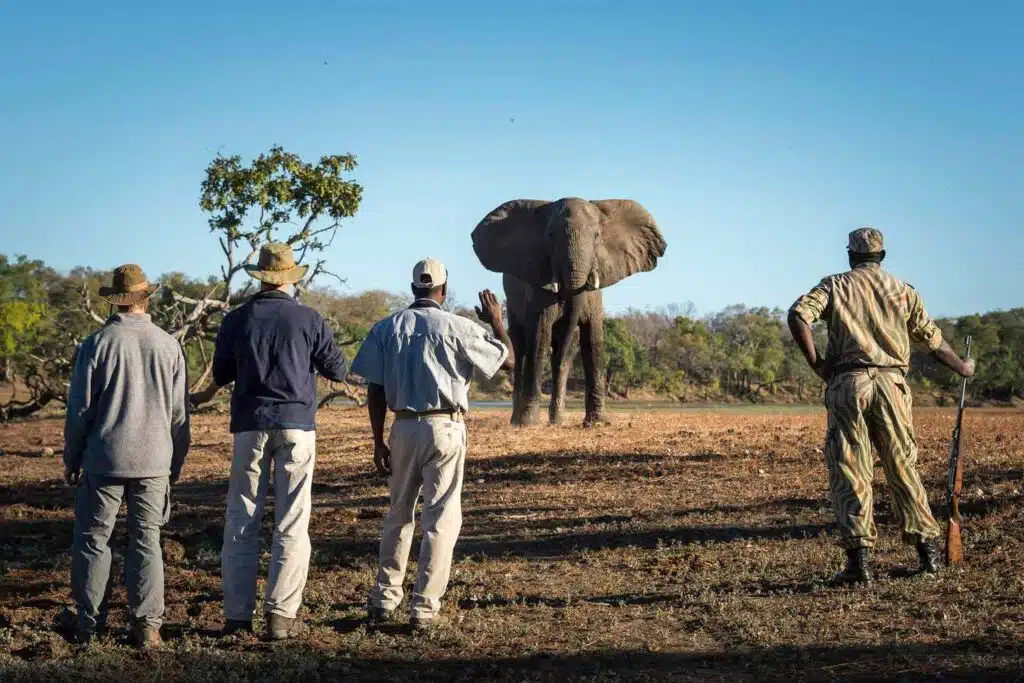
Tarangire holds one of the largest elephant populations in East Africa. Ancient baobab trees mark the walking routes, and the Tarangire River draws game all year. Consequently, dry-season walks here rank among the best in northern Tanzania. Our Baobab Tented Camp sits right in the middle of it.
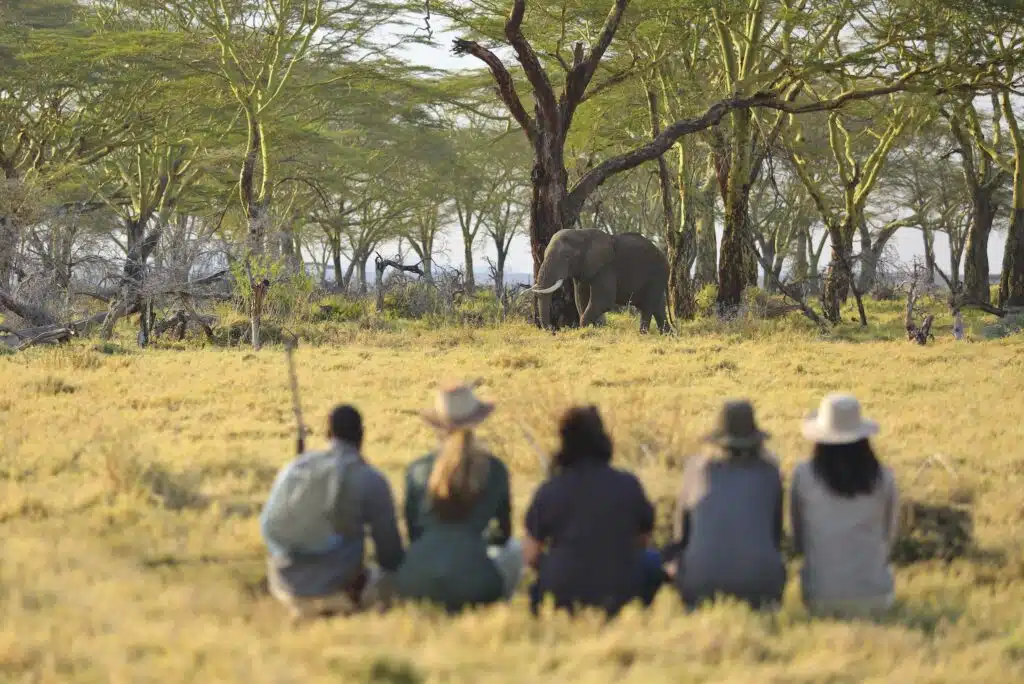
A group of tourists and an armed park ranger encountering a large African elephant on foot during a walking safari Tanzania experience.
03 — Conservation Area

Ngorongoro Crater

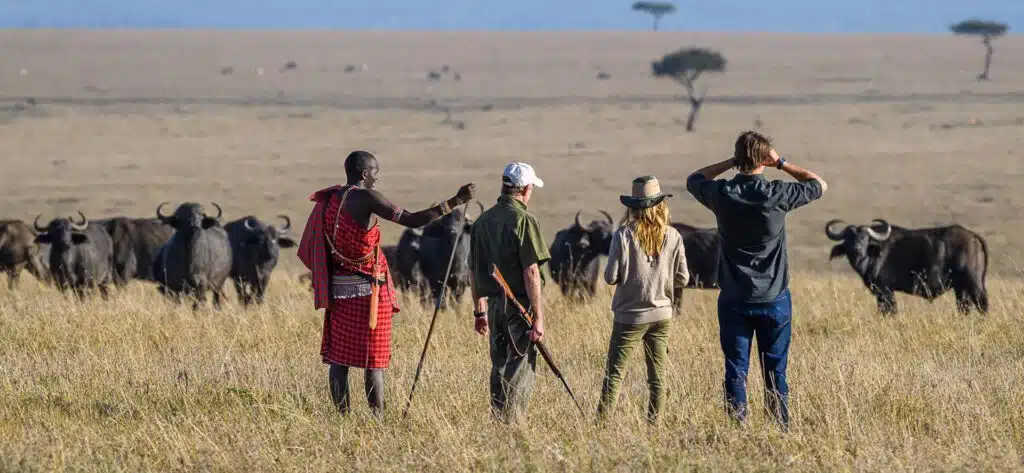
Ngorongoro Highlands and Empakai Crater The Ngorongoro Conservation Area allows walking almost everywhere, which makes it a hiker’s dream. Trails follow the crater rim, cross Maasai grazing land and descend into Empakai Crater. Flamingos gather on the soda lake below, and the views stretch to Ol Doinyo Lengai. Cool highland air keeps these walks comfortable even at midday.
04 — Farmland & Lakeshore

Karatu and Lake Eyasi

Around Karatu, walks pass coffee farms, forest edges and quiet village paths. Further south at Lake Eyasi, you can walk with Hadzabe hunters and Datoga blacksmiths. These routes suit families and anyone who wants culture along with nature. Karatu Tented Lodge serves as the base.

Most of our guests combine walking safari with Game Drive. For example, many walk at dawn and drive in the afternoon. Neither replaces the other, and together they show you two versions of the same wilderness.
Rates

How Much Does a Walking Safari in Tanzania Cost?

A walking safari in Tanzania costs 80 US dollars per person for a short walk with Mawe Lodges. A half-day walk costs 180 US dollars per person. Park entry and conservation fees apply separately, and we confirm those in your quote.
Walk type Duration Price / person Includes
Bush walk 2 to 3 hours $80 Guide, armed ranger, drinking water
Half-day walk Up to 6 hours $180 Guide, armed ranger, water, bush breakfast
Multi-day walking safari 2+ days On request Full board, mobile camp, guide team
Longer treks and private departures follow a tailor-made rate. Therefore, tell us your dates and group size, and we will price the full trip for you.
Safety

Is a Walking Safari in Tanzania Safe?

Yes. A walking safari in Tanzania is safe when a qualified team leads it, and the rules make sure one does. Tanzania National Parks, known as TANAPA, requires an armed ranger on every walk inside a national park. Group sizes stay small, usually six guests at most.
Every Mawe Lodges walk begins with a clear safety briefing. You walk in single file behind the guide, speak quietly and follow instructions at all times. The guide checks wind direction constantly and chooses routes that keep safe distances from big game.
Honestly, no walk in wild Africa carries zero risk. That edge is part of why people love it. However, incidents on guided walks are extremely rare, and our guides train for years before they lead guests.
A Day on Foot

A Typical Day on a Walking Safari

Here is how a walking morning with us usually runs:

How a walking morning with us usually runs

06:00

Coffee and tea at camp, followed by the safety briefing

06:30

You set out in the cool morning light with your guide and ranger

09:30

Bush breakfast in the shade, or return to camp on a shorter walk

12:00

Back at camp for lunch and a rest through the heat

16:00

Optional afternoon game drive, cultural visit or sundowner

Mornings work best because animals move before the heat builds. In addition, the low sun makes tracking easier and photography better. Afternoon walks run on request in the cooler months.
when to go

Best Time for a Walking Safari in Tanzania

The best time for a walking safari in Tanzania is the dry season, from June to October. Short grass, firm trails and wildlife gathered near water make these months ideal. January and February also work very well, especially in the southern Serengeti during calving season.
Walks run for most of the year. Still, the long rains from March to May can close some routes and soften the ground. If you travel then, we shift walks to the Ngorongoro highlands and Karatu, where drainage is better.
Who Can Walk

Fitness and Age Requirements

You do not need to be an athlete. If you can walk comfortably for two hours on uneven ground, you can join a bush walk. The pace stays gentle, and the guide stops often to explain tracks and plants.
The minimum age for our standard walks is 12 years. Younger children can join easy nature walks around Karatu instead. For multi-day treks, we recommend a reasonable hiking fitness level. Above all, tell us about any health concerns in advance, and we will match the route to you.
what to bring

What to Wear and Pack for a Walking Safari

Dress for the bush, not for the camera. Neutral colors such as khaki, olive and beige help you blend in. Avoid dark blue and black, because those shades attract tsetse flies. Bright white stands out to wildlife, so leave it at the lodge.
Pack these items for every walk:
  • Broken-in closed walking shoes or light boots
  • Long trousers and a long-sleeved shirt
  • A wide-brimmed hat and sunglasses
  • Sunscreen and insect repellent
  • A small daypack with one to two litres of water
  • Binoculars and a camera with the strap secured
Mornings start cold in the highlands, so bring a light fleece from June to August. Meanwhile, we supply drinking water and snacks on every guided walk.
Culture

Walking with the Maasai and Hadzabe

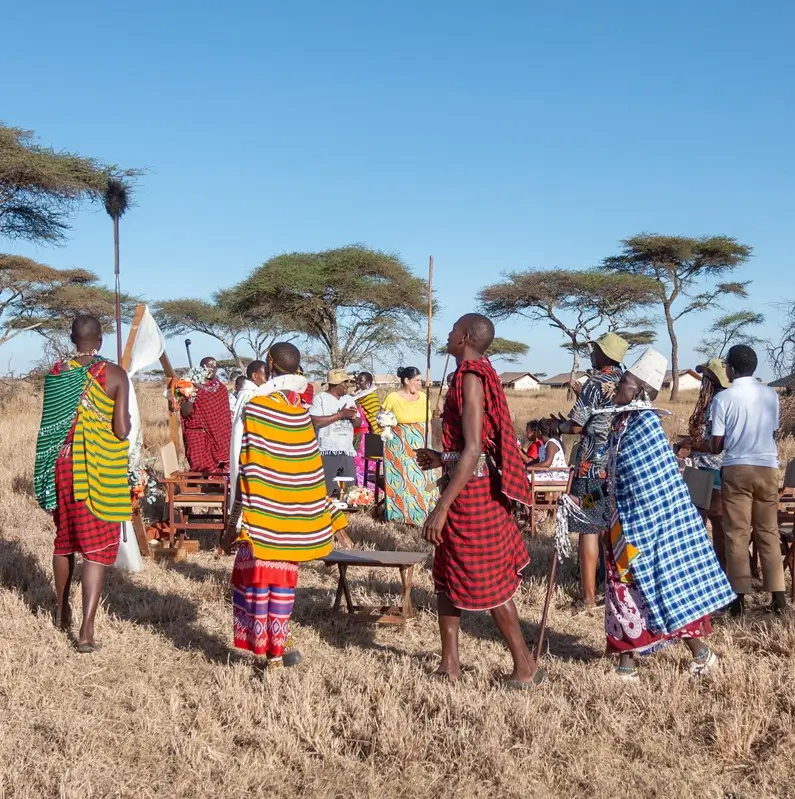
Some of our most memorable walks include people, not only wildlife. In the Ngorongoro highlands, Maasai guides share how their communities read the land and live beside lions. At Lake Eyasi, Hadzabe hunters demonstrate bow hunting and honey gathering on foot.
These visits follow community agreements, and fees go directly to the villages involved. Consequently, your walk supports the people who keep these landscapes open.
why mawelodges

Why Walk with Mawe Lodges?

Our walking safaris in Tanzania start at our own camps, so you waste no time on transfers. The guides who host your dinner lead your walk the next morning. They know this ground in detail. An armed ranger joins every departure, as the rules require.
You also see our prices before you commit. Walks start at 80 dollars per person, and your quote lists every fee. Finally, every route bends to you. First-time walker or seasoned trekker, we set the distance and pace around your group.
Questions

Frequently Asked Questions

Yes. Every walk runs with a trained guide and an armed ranger, as TANAPA regulations require. Groups stay small, you walk in single file, and a safety briefing precedes every departure. Incidents on guided walks are extremely rare.
With Mawe Lodges, a two to three hour bush walk costs 80 US dollars per person. A half-day walk costs 180 US dollars per person. Park and conservation fees are quoted separately, and multi-day treks are priced on request.
Short bush walks last two to three hours. Half-day walks run up to six hours and include a bush breakfast. Multi-day walking safaris last two days or more and move between camps on foot.
Yes. The Serengeti allows walking in designated wilderness zones with an armed ranger. Our walks leave directly from Mawe Tented Camp and our mobile Gnu camps, so you reach the walking zones quickly.
Giraffes, zebras, elephants, antelope and warthogs are common sightings on foot. You also study tracks, birds, insects and plants that game drives pass by. Predators appear sometimes, always at a safe distance chosen by your guide.
Wear neutral colors like khaki or olive, long trousers, a long-sleeved shirt and closed walking shoes. Avoid dark blue and black, since tsetse flies favor those colors. Bring a hat, sunscreen, repellent and water.
Guests must be 12 years or older for standard bush walks. Younger children can join gentle nature walks around Karatu. Multi-day treks suit teenagers and adults with reasonable hiking fitness.
Moderate fitness is enough for a bush walk. You should manage two hours of easy walking on uneven ground. The pace is slow with frequent stops, and we adjust every route to your group.
June to October offers the best walking, with dry trails and short grass. January and February are excellent too. During the March to May rains, we move walks to the Ngorongoro highlands and Karatu.
Neither is better, because they do different jobs. Drives cover distance and deliver close big-game sightings. Walks reveal the small details and the feeling of the bush itself. Most guests combine both in one trip.
Plan Your Walk

Ready to Walk the Wild Side of Tanzania?

Tell us your travel dates and who is coming. We will build a walking safari in Tanzania around your pace, from one morning walk to a highland trek.