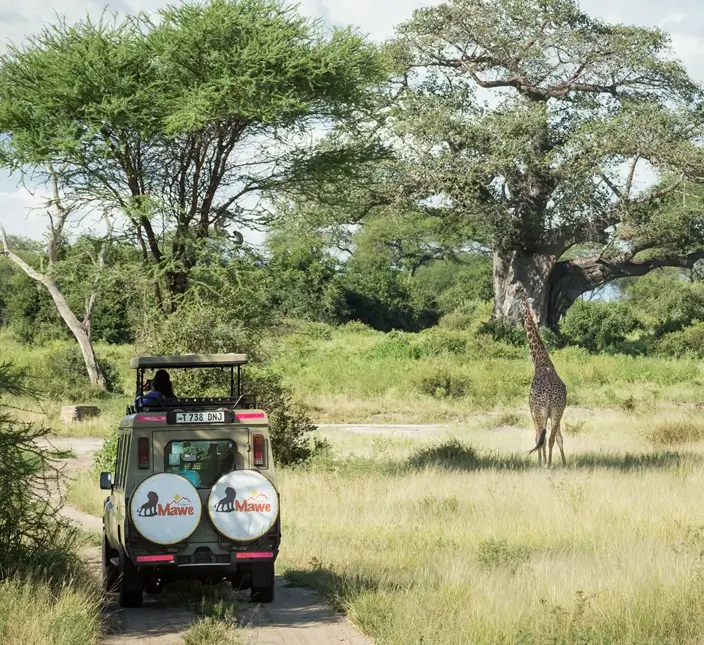
Central Serengeti - Seronera
Mawe Tented Camp
Mawe Tented Camp is a luxury tented camp in the central Serengeti, near Seronera, and one of the few camps and lodges in this part of the park. Some guests find us listed as Mawe Tented Lodge or Mawe Lodge Serengeti; they are the same property.
The ten tents are near the Ngarenanyuki River, in the Soit Le Motonyi area of the central-eastern plains of Serengeti, which is known for the large number and breeding grounds of lions, leopards, and cheetahs. Some guides call the area where we are the Namiri Plains. Guests fly into Seronera Airstrip and reach camp on a game drive of thirty to forty-five minutes. Our team runs game drives, walking safaris, and balloon bookings directly from camp.

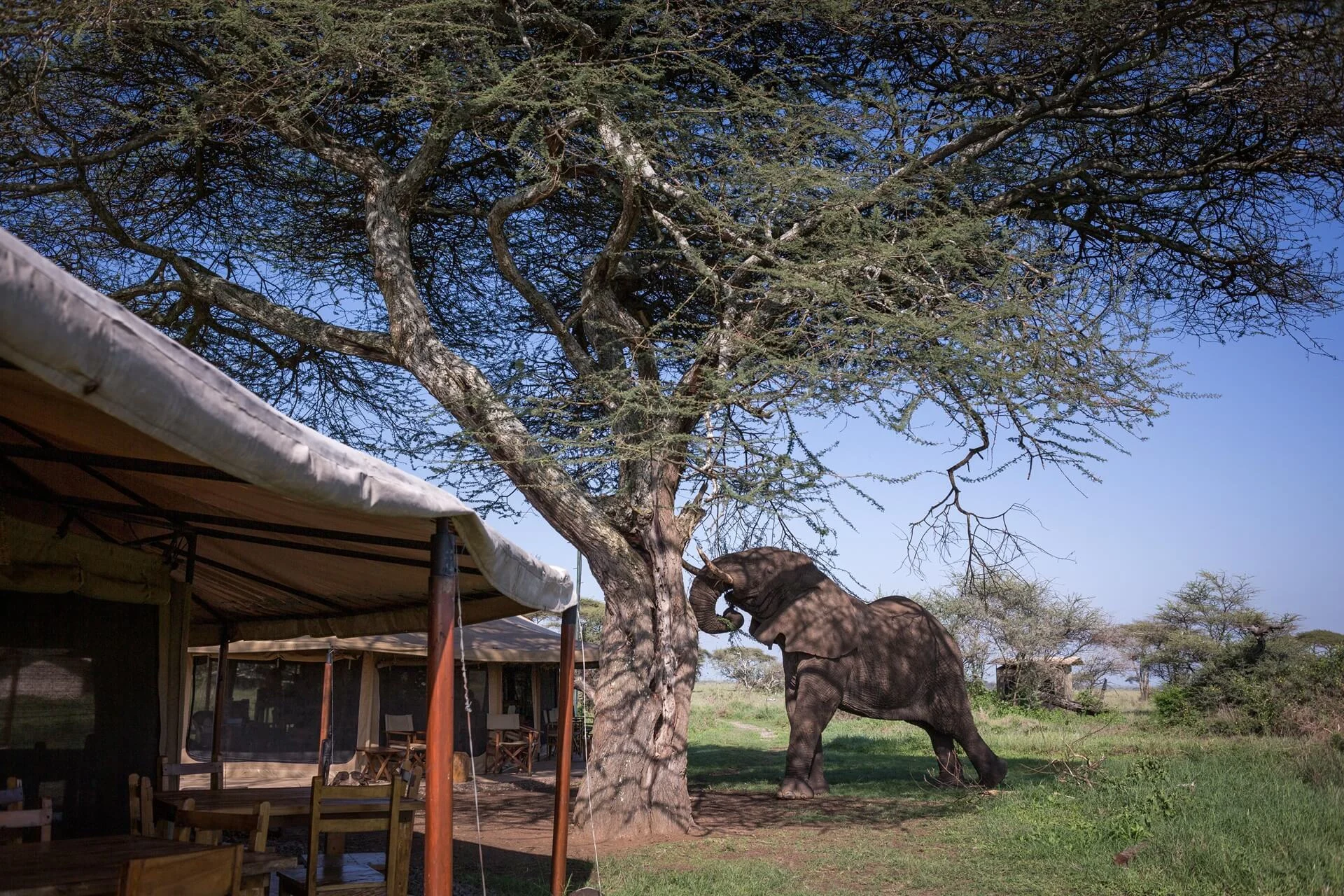
- 10 luxury tents
- Heart of the Serengeti, near Seronera
- Resident big cats all year
- Full board dining
- Open year-round

The Camp
A Serengeti Safari Camp in Big Cat Country
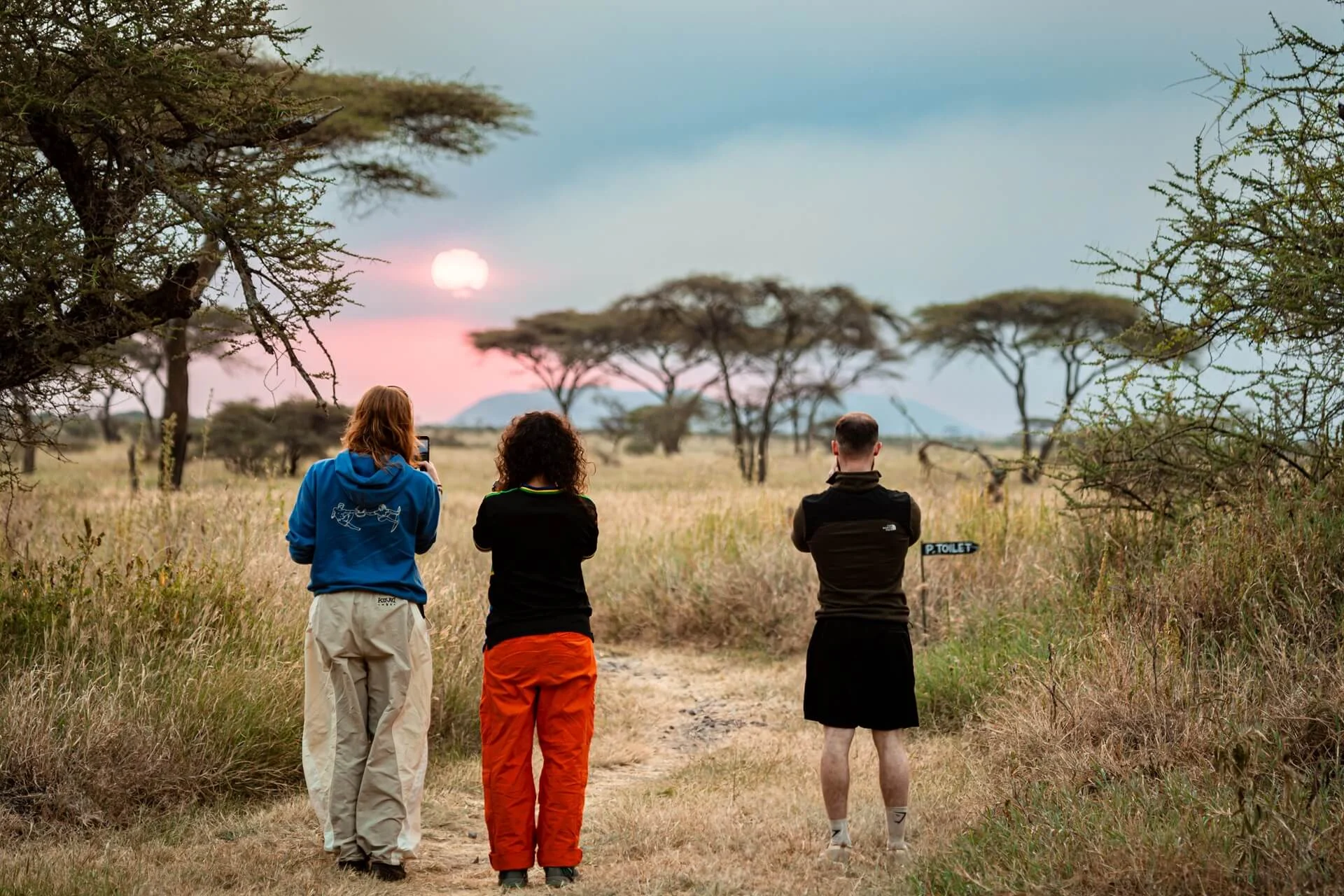
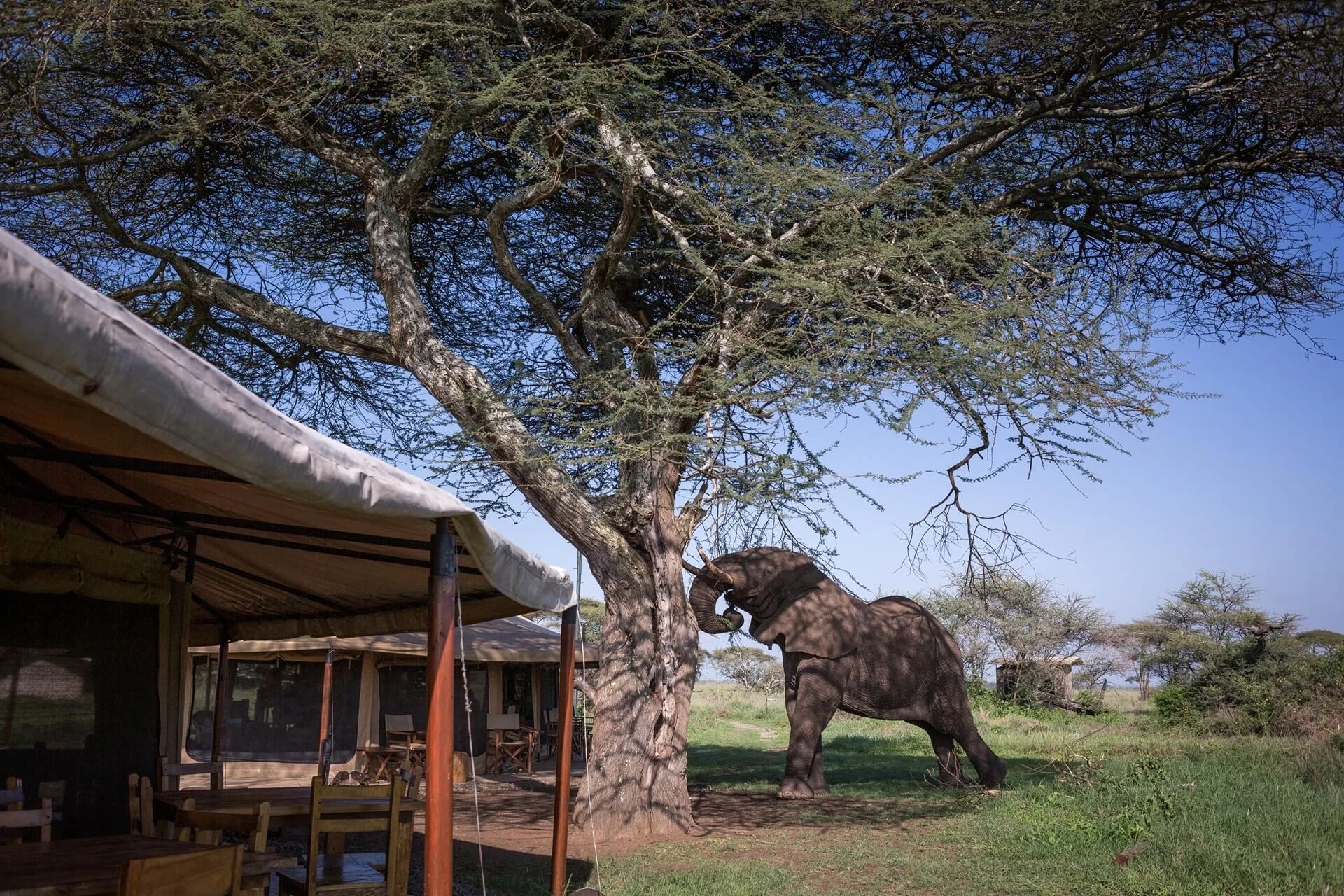
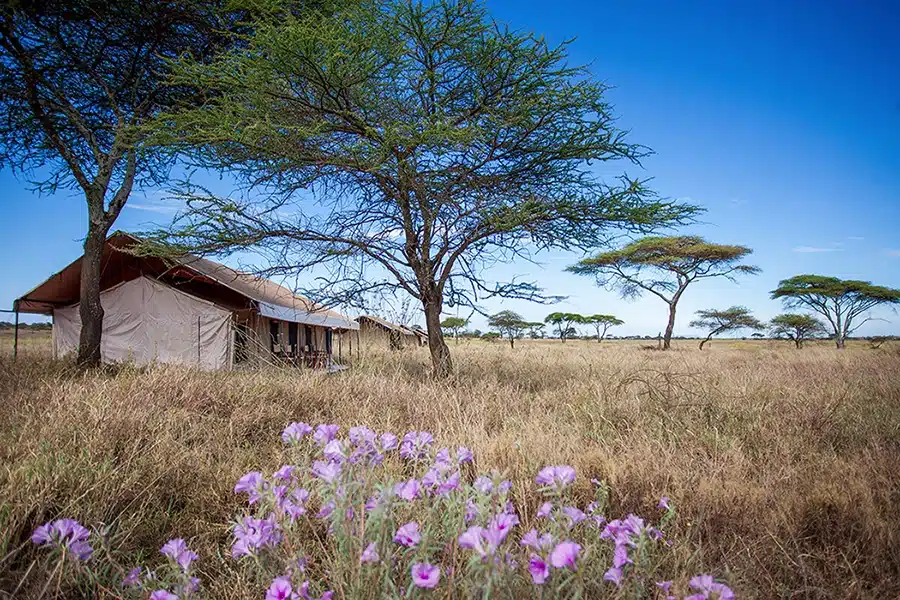
The camp stands in the Soit Le Motonyi area of the central Serengeti, near the Ngarenanyuki River. Animals come to the river daily, so there is usually something to watch from camp.
This part of the Serengeti does not depend on the migration. The Seronera region holds one of the highest densities of big cats in Africa, and they live here all year. Lions keep territories on the kopjes, leopards hold the river lines, and cheetahs hunt the open plains toward Gol.
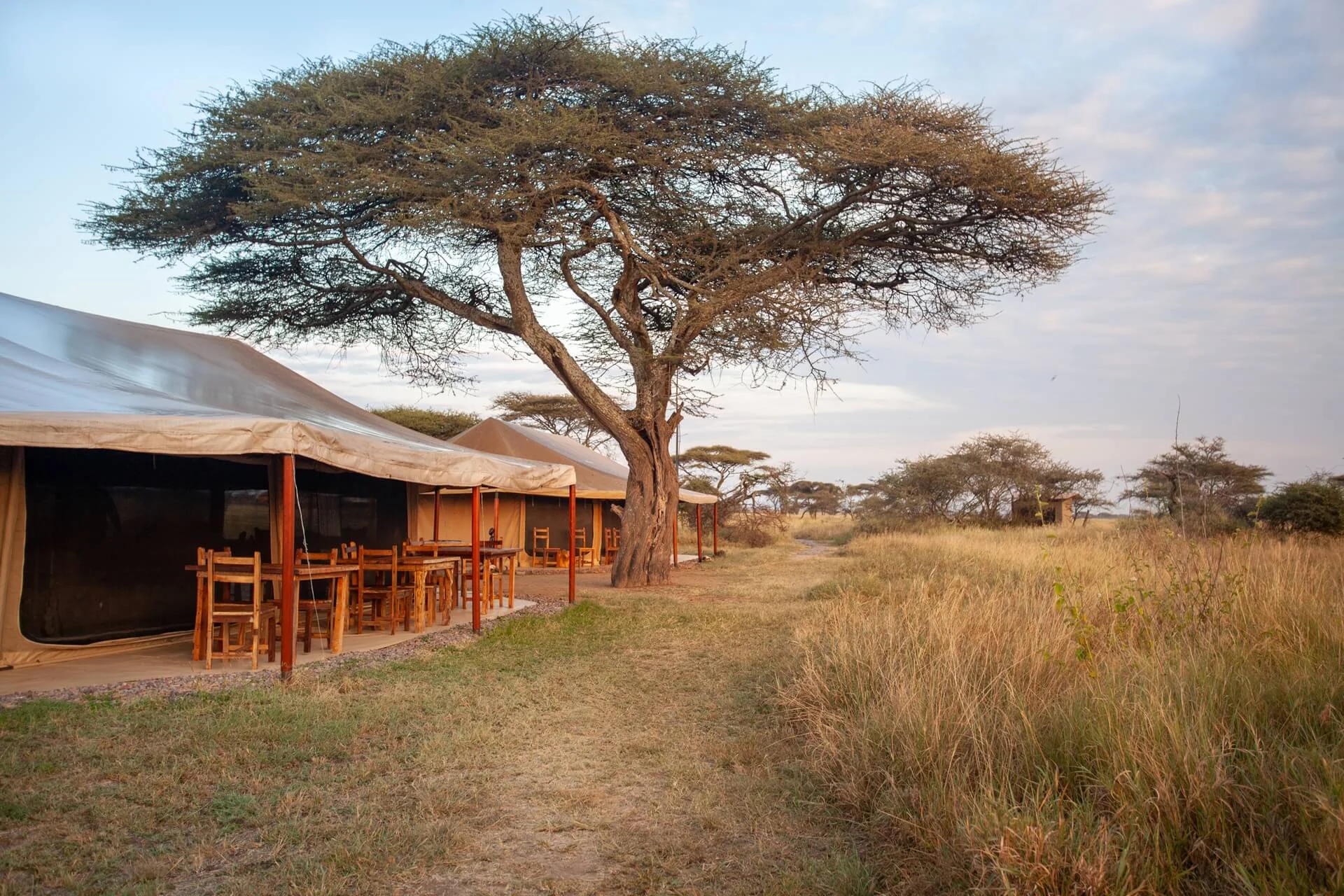
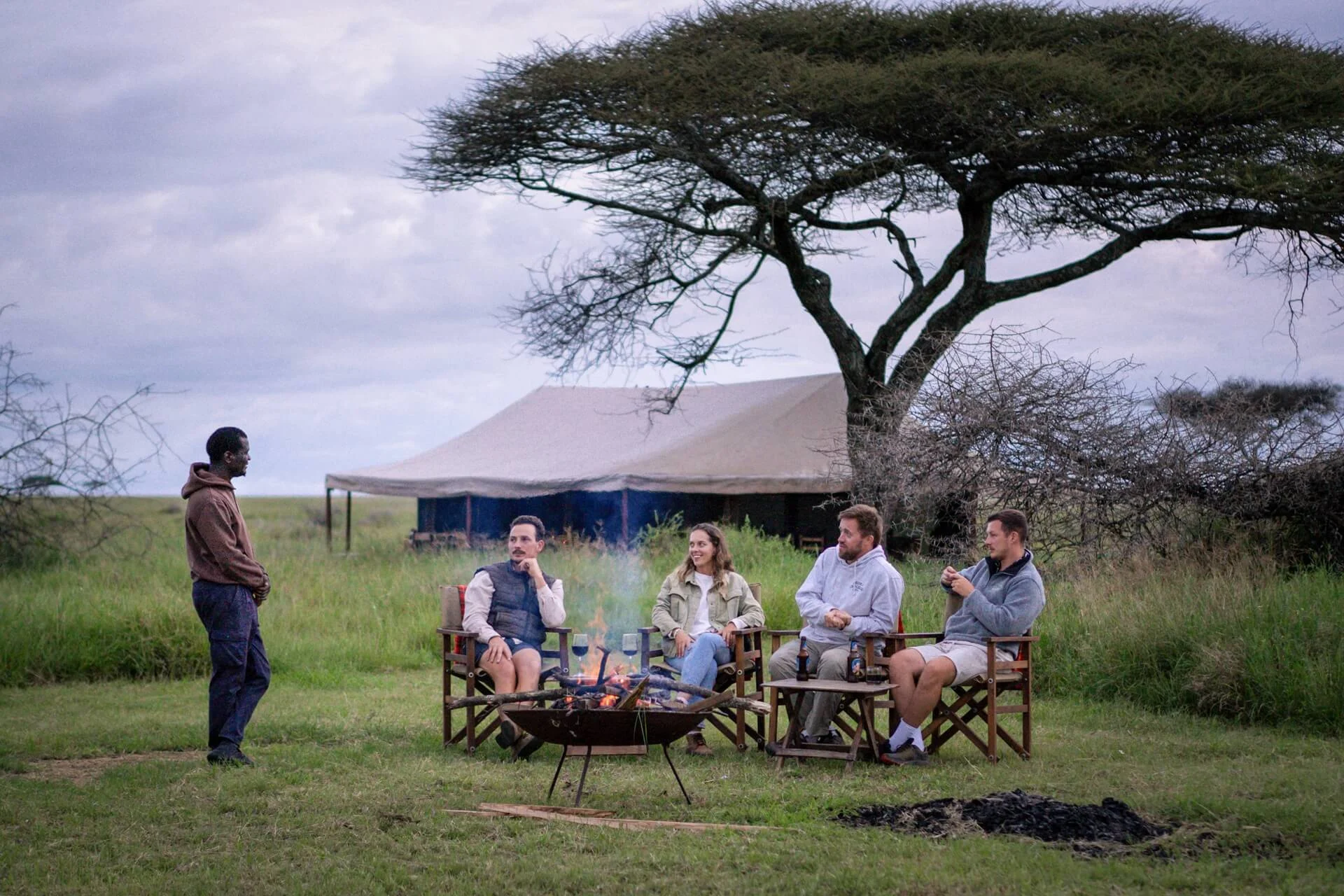
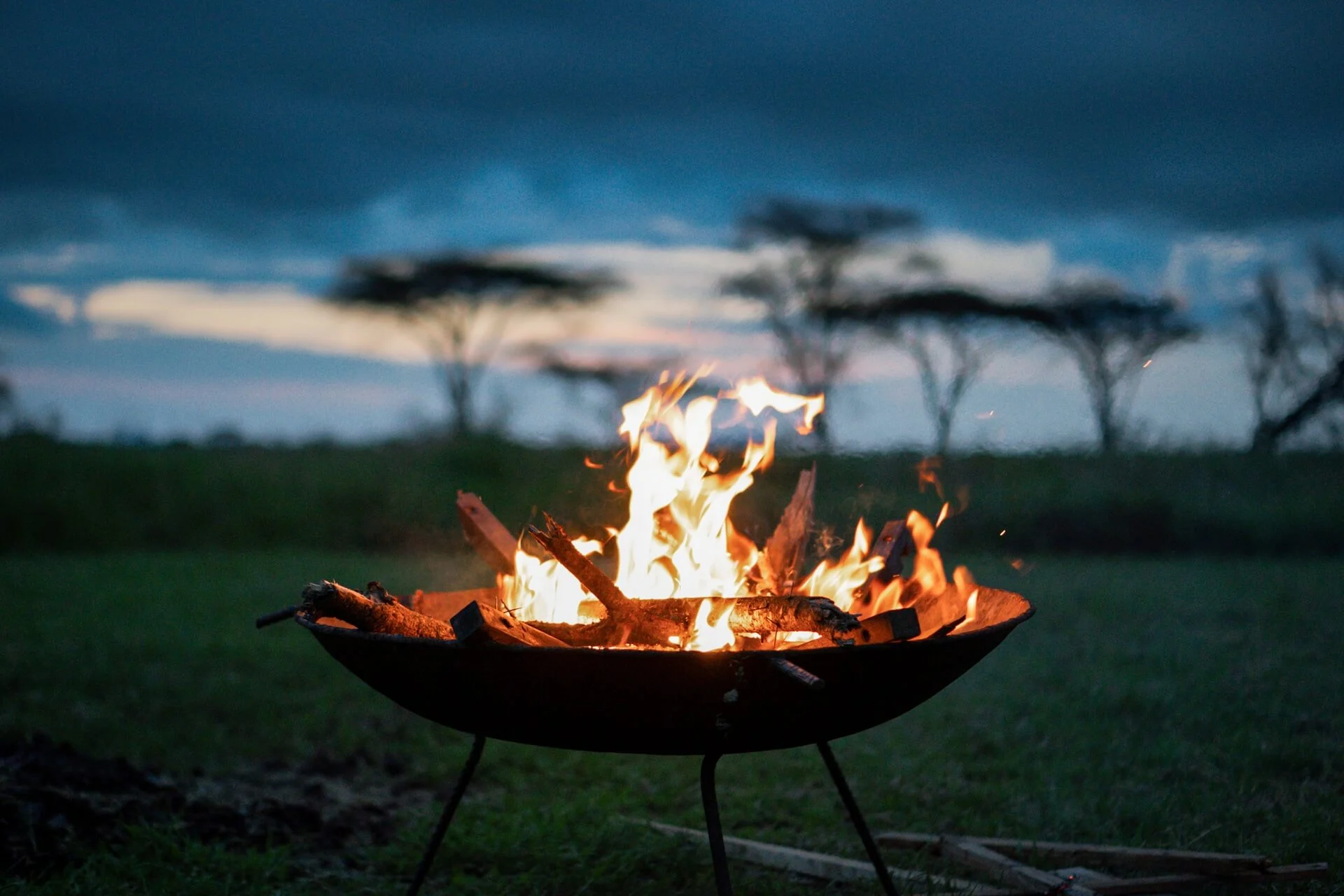
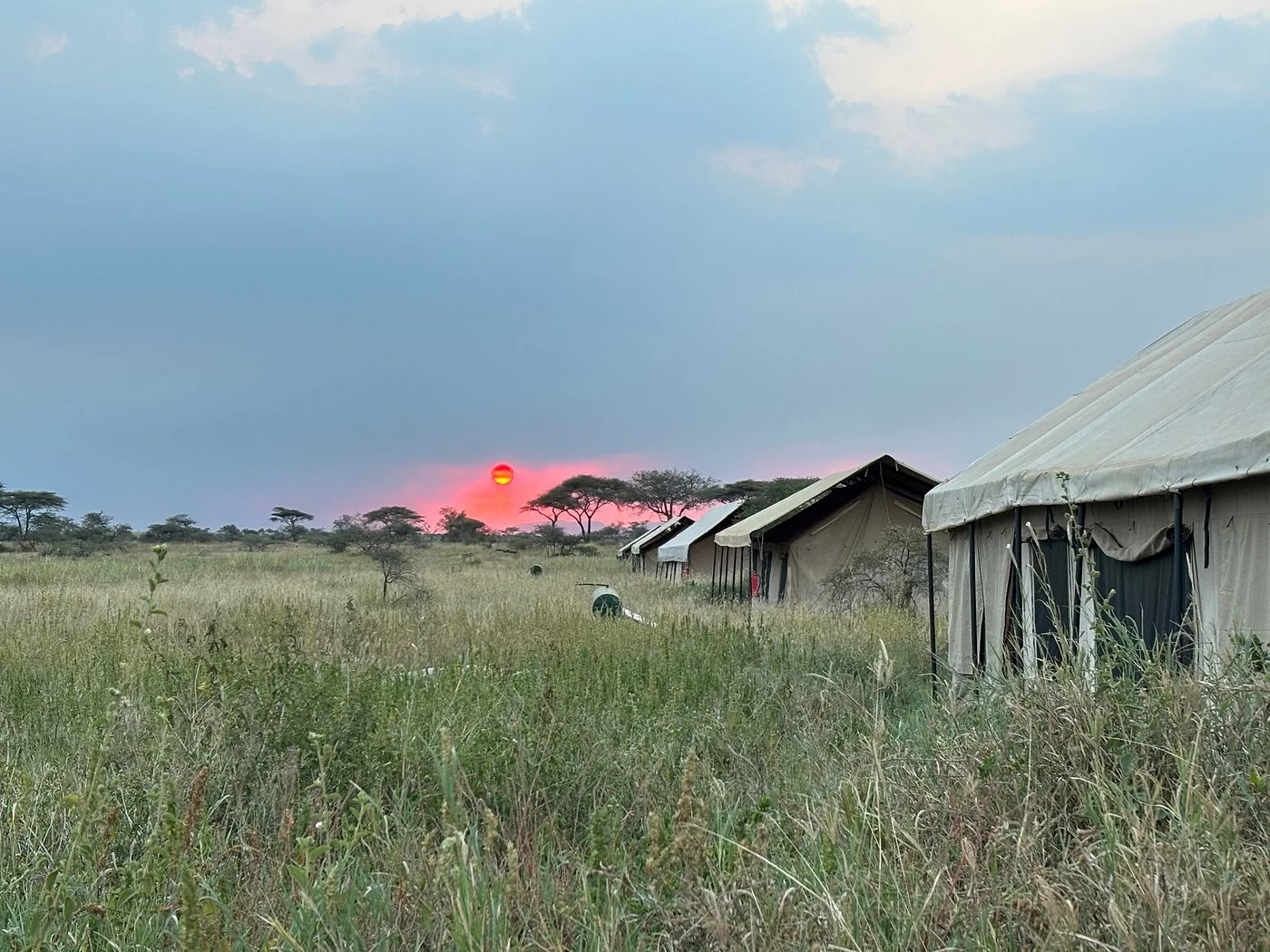
The camp itself stays small and quiet. Ten tents stand in a line with wide space between them, all facing the plains. Evenings end at the campfire, and guests often hear lions after dark. Several reviews describe waking to buffalo grazing outside the tent.
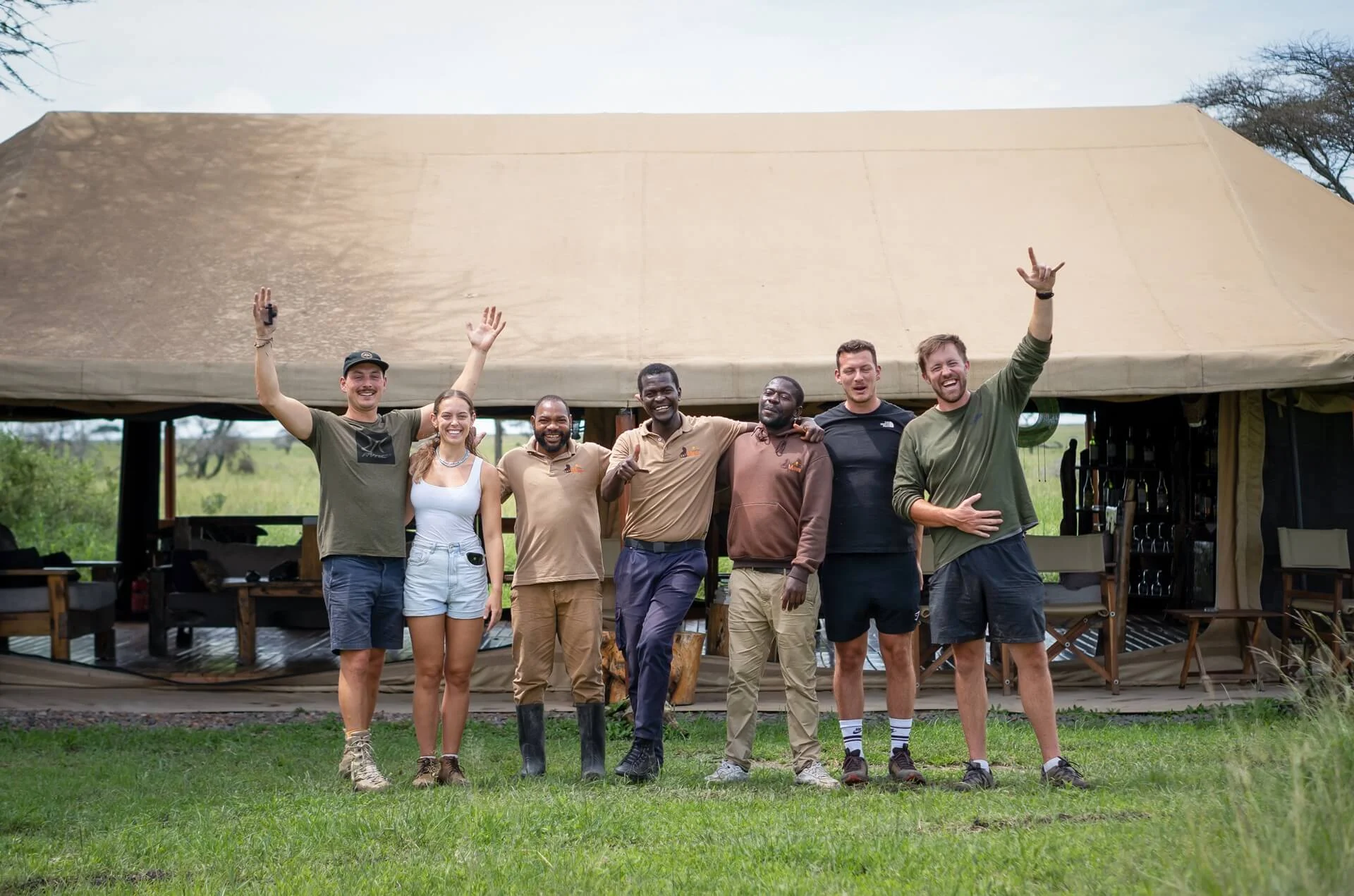
We run the camp year-round with a team our guests thank by name in their reviews. After dark, a staff member walks you to your tent, and on cold nights you will find a bed warmer under the blankets.
Rooms
Rooms and Accommodation at Mawe Tented Camp
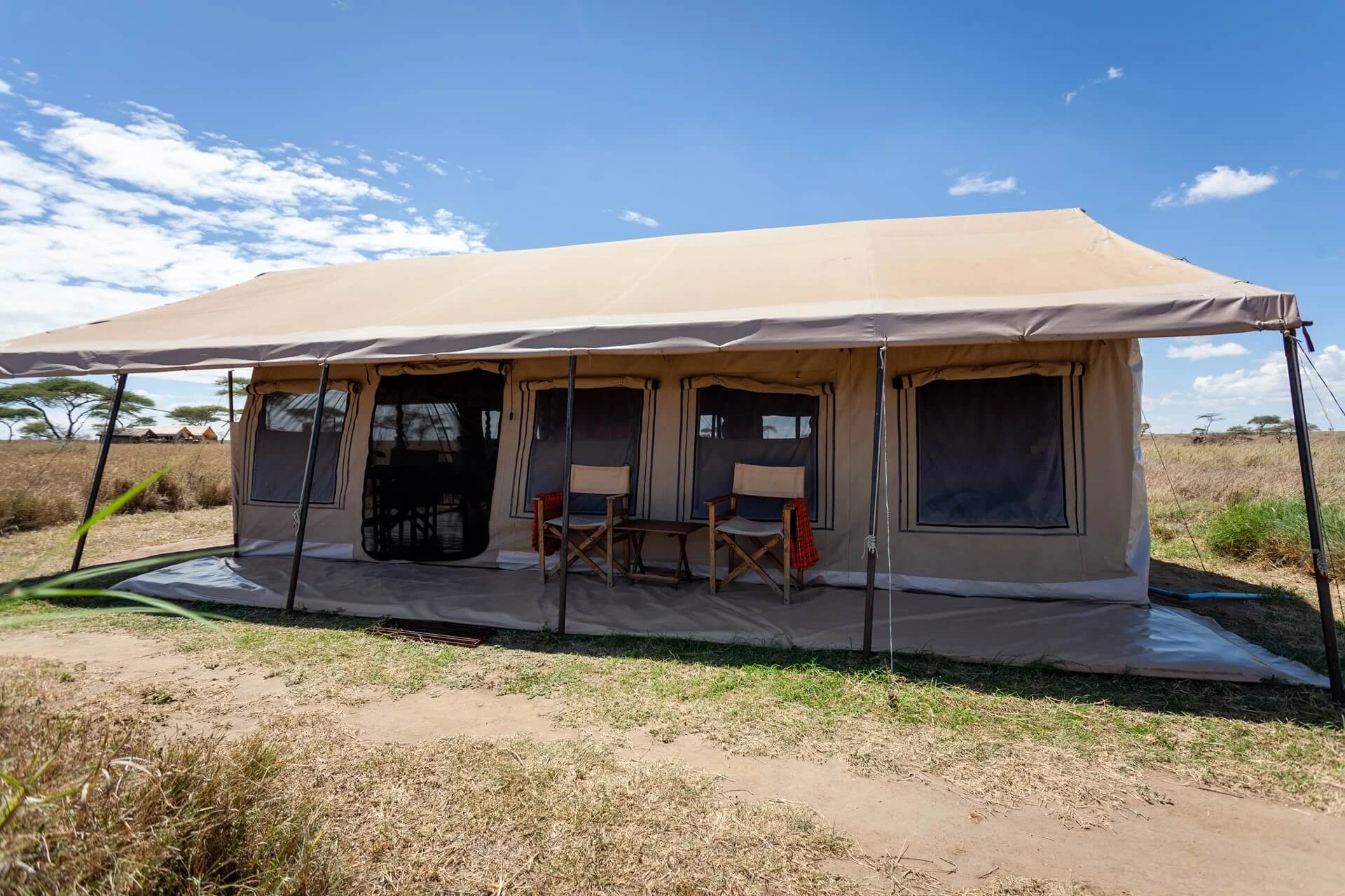
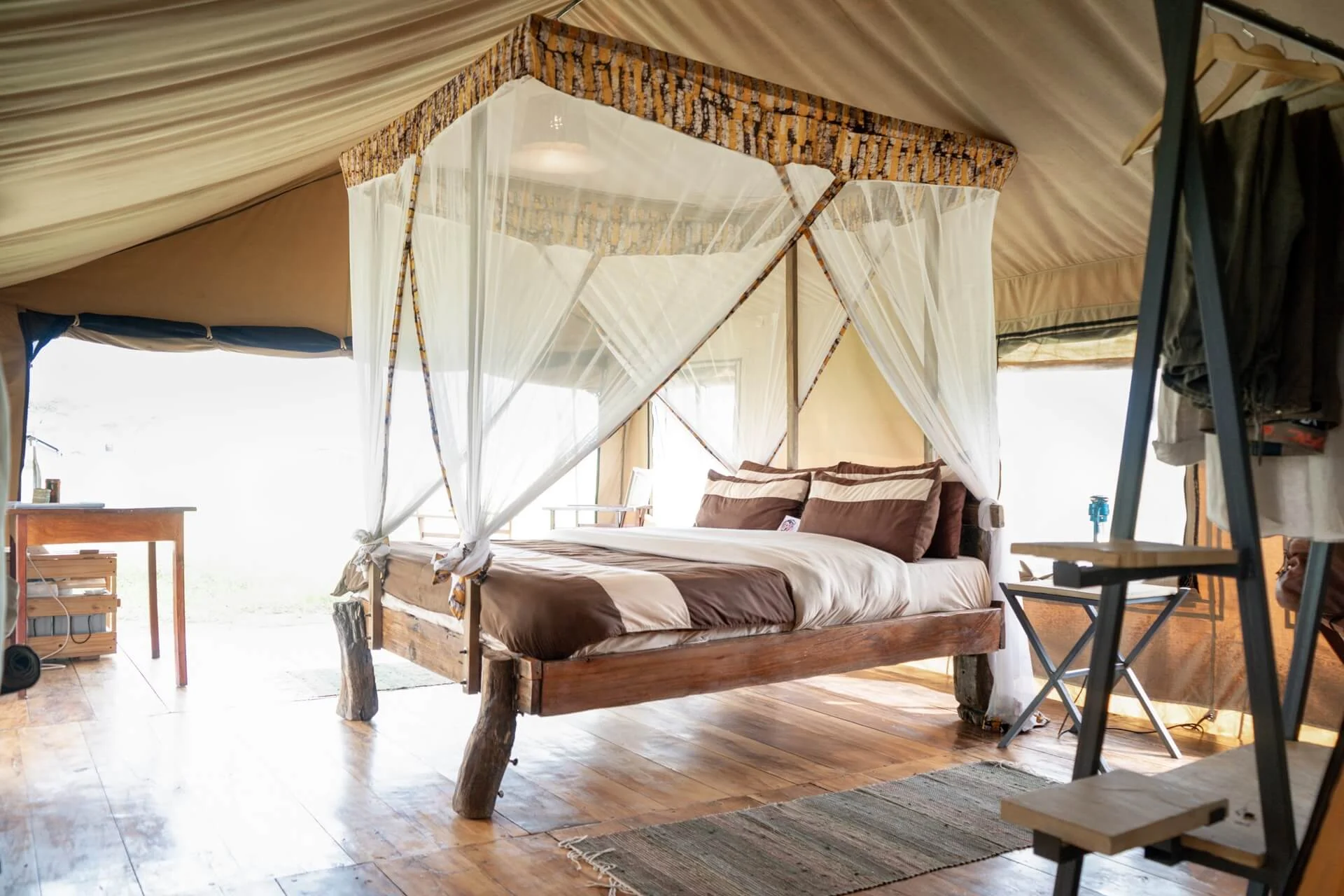
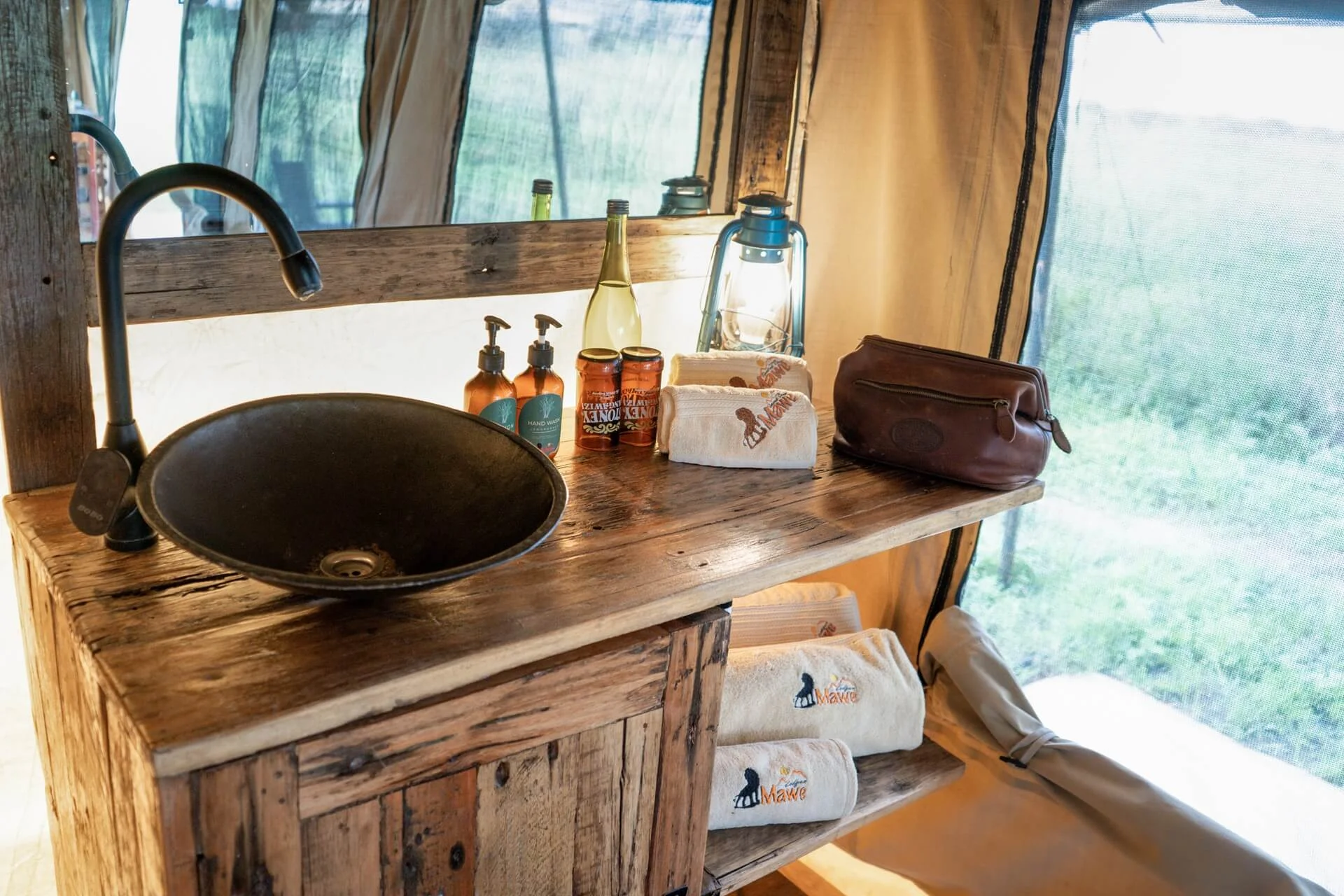
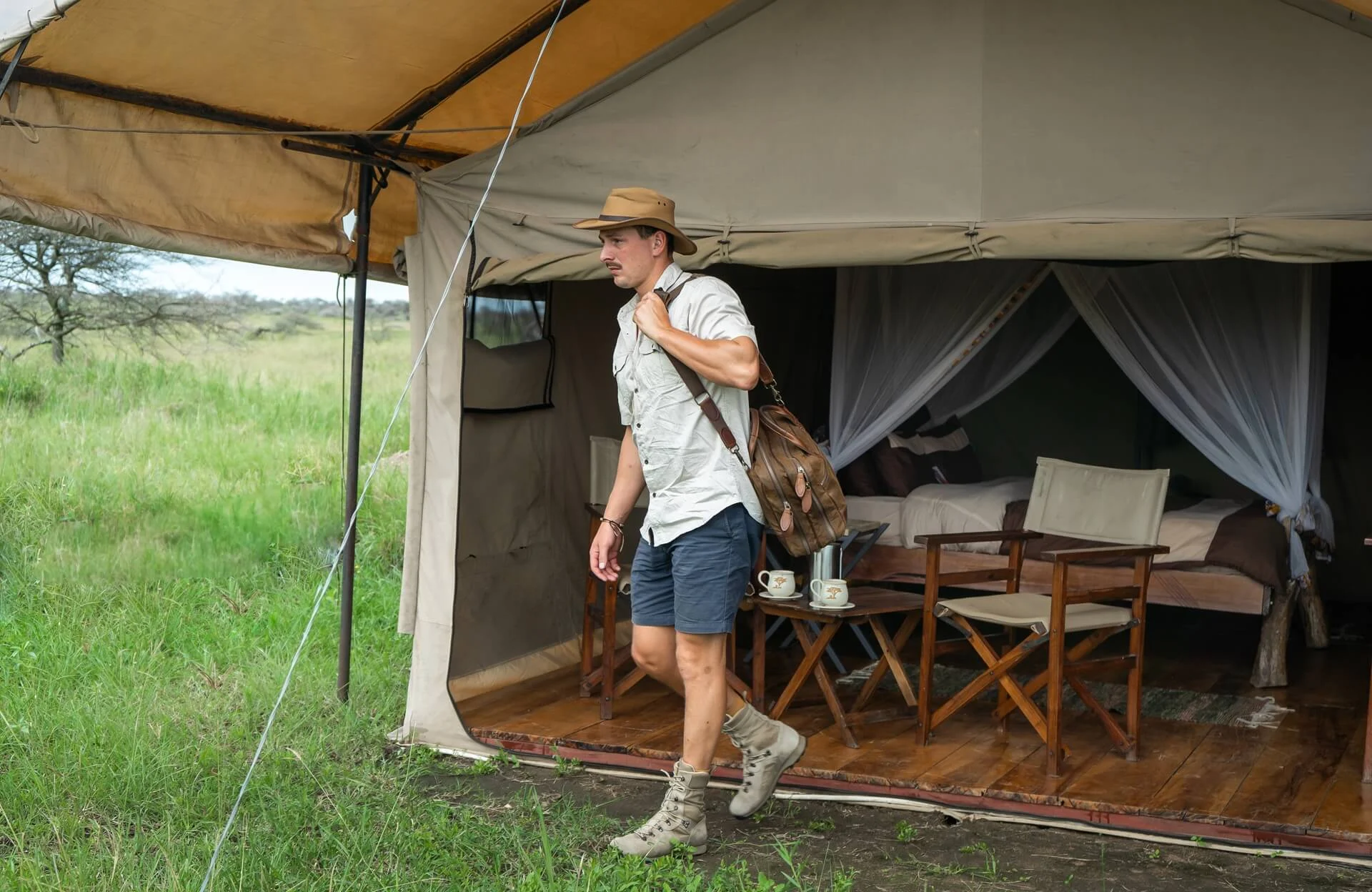
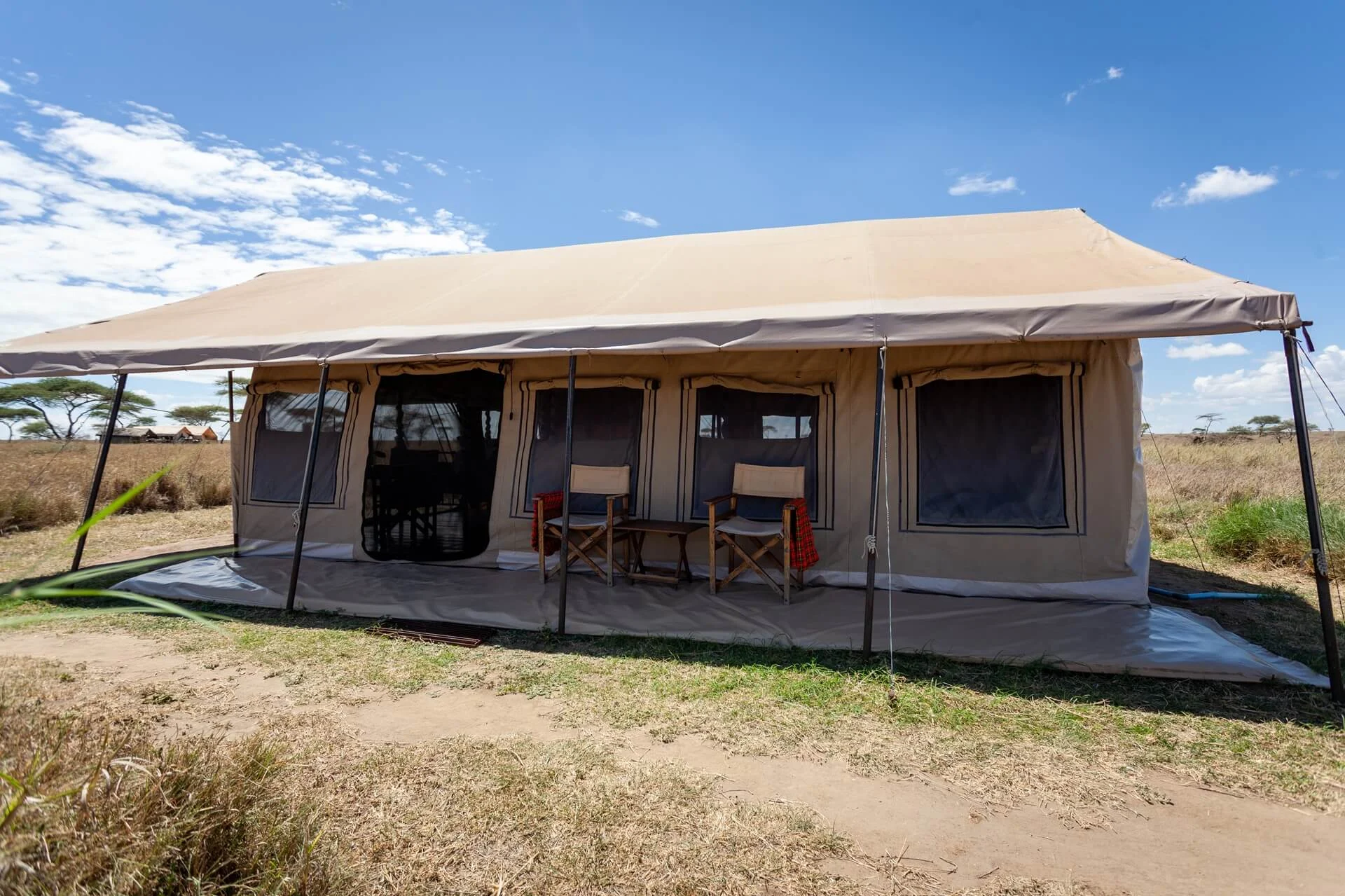
All ten tents are en-suite, with a flush toilet and a hot shower. Solar panels power the camp, so every tent has lighting and charging points. Inside, you find proper beds with mosquito nets, filtered drinking water in glass bottles, and daily housekeeping. All tents face the plains, and all are non-smoking.
The tents have canvas walls, so the sounds of the Serengeti reach you at night. On cold nights, the team places a bed warmer under your blankets before you turn in.
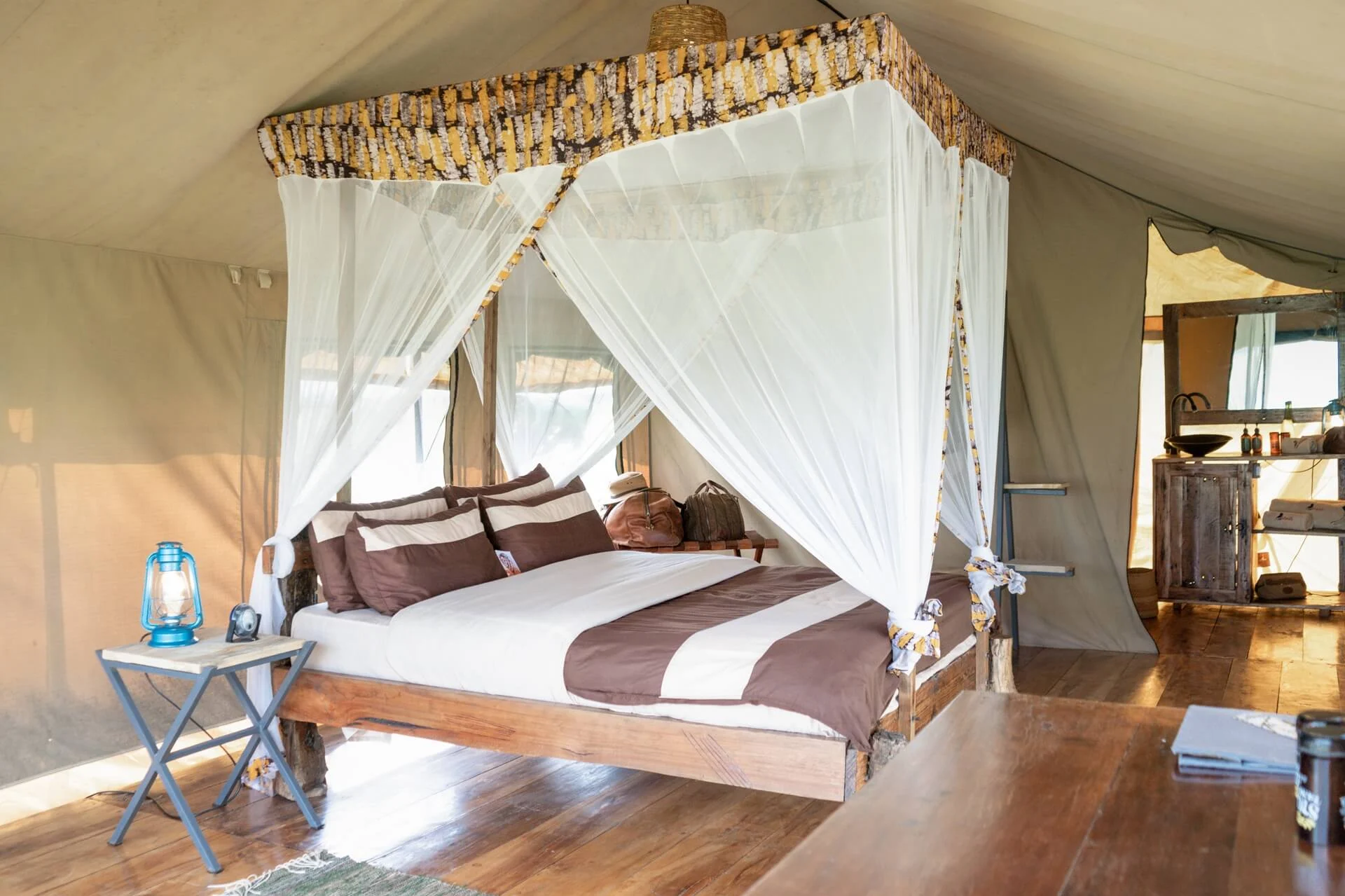
Double or Twin Tent (5 tents)
Our double and twin tents take two guests, with a double bed or two twin beds. These are the tents most couples book.
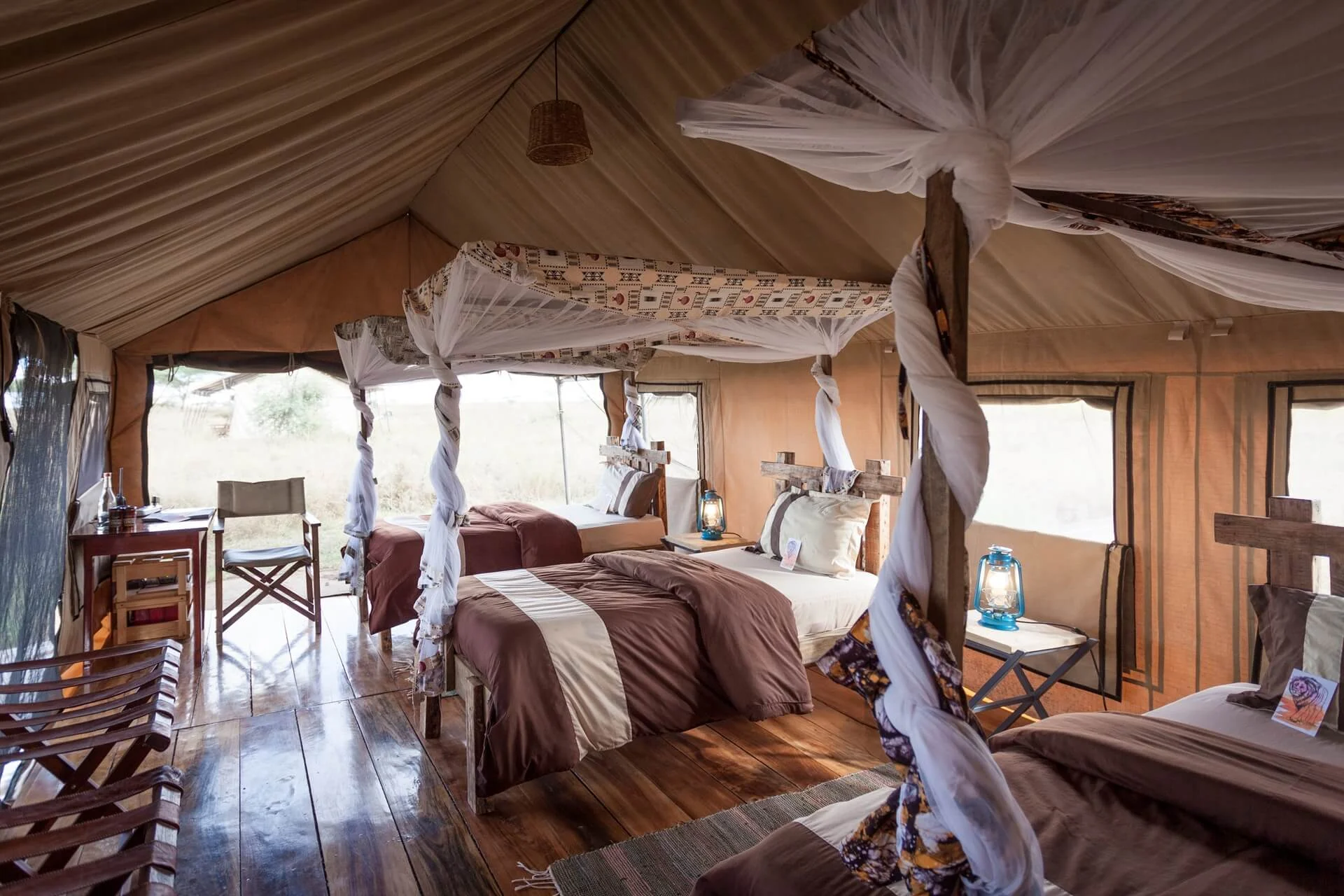
Triple Tent (2 tents)
The triple tents take three guests. Friends travelling together and parents with one child use them most.
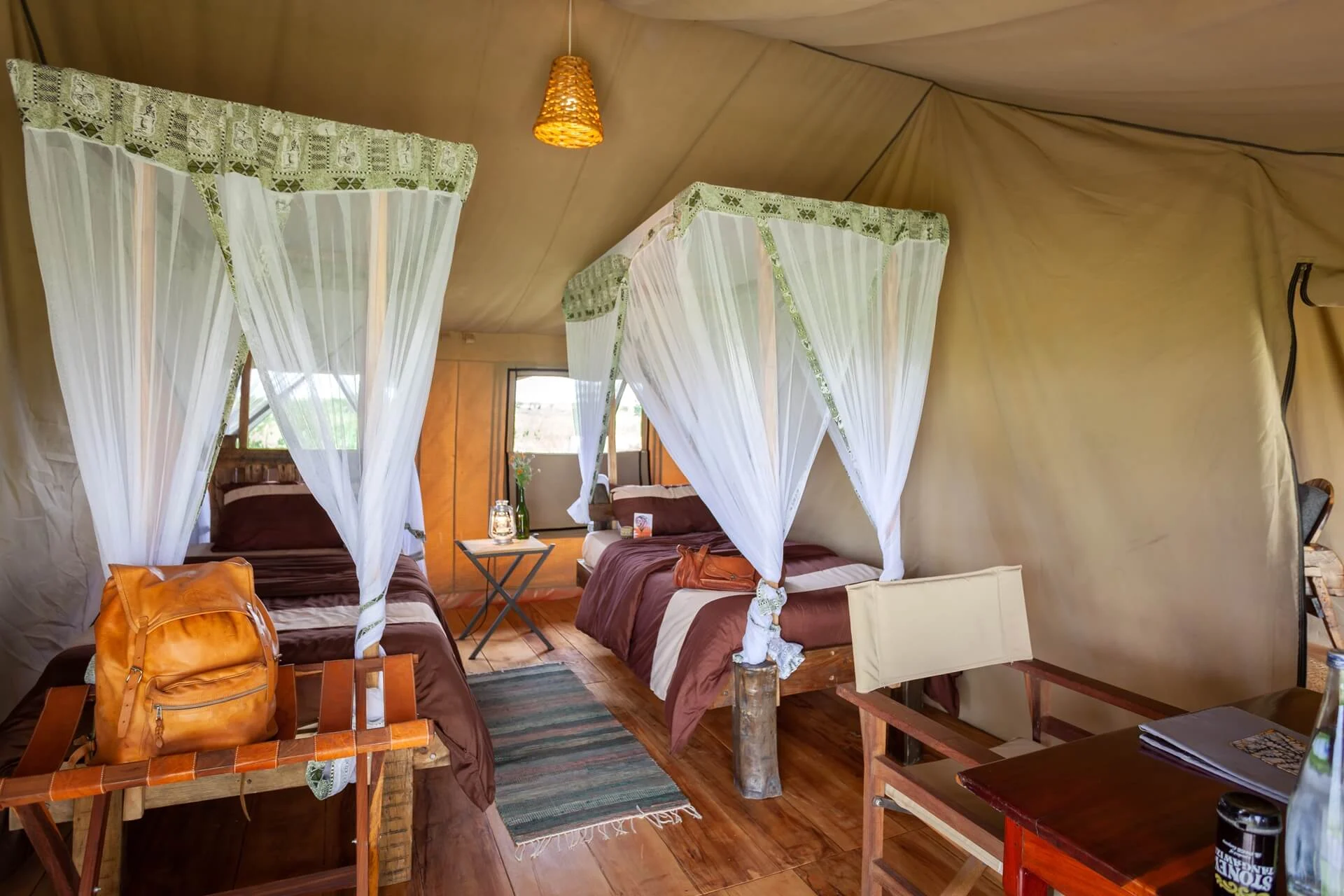
Family Tent (3 tents)
The three family tents keep parents and children together in one unit. Tell us your family size when you enquire, and we will match you to the right tent.
- En-suite bathroom with hot shower
- Solar power with charging points
- Wi-Fi in the main areas
- Mosquito nets and filtered water in glass bottles
- Daily housekeeping
- Bed warmers on cold nights
- Escort to your tent after dark
- Laundry service
Why Stay in the Central Serengeti
Choosing between the Serengeti camps and lodges usually comes down to timing, more than to price or style. The migration moves around the park through the year, and most areas have strong months and empty months. The central Serengeti is the exception, because its wildlife is resident.
The Seronera Valley and its river lines hold lions, leopards, cheetahs, elephants, giraffes, and buffalo in every season. If your travel dates are fixed, this is the safest part of the park to book. You will see big game here in February and in August alike.
The area around our camp adds something extra. The eastern side toward the Gol Kopjes is classic cheetah country, and the short grass makes the cats easy to find. One of our guests photographed a serval near camp, which is a rare sighting anywhere.
Seronera is also the busiest part of the park in the middle of the day, and this is where staying at one of the central Serengeti camps rather than a lodge on the periphery makes the clearest difference. You reach the sightings early, before the vehicles arrive from outside, and you return to a quiet camp when they leave.
The great migration also passes through the central Serengeti twice a year, moving north around April to June and south again around November to December. In those months, the herds move within reach of camp. For the river crossings themselves, stay at our Gnu Mara River Camp in the northern Serengeti. It is a 40 to 45 minute drive from the Mara River, and the camp is open from 1 June until 15 November.
Facilities & Dining
Facilities and Dining at our Serengeti Camp
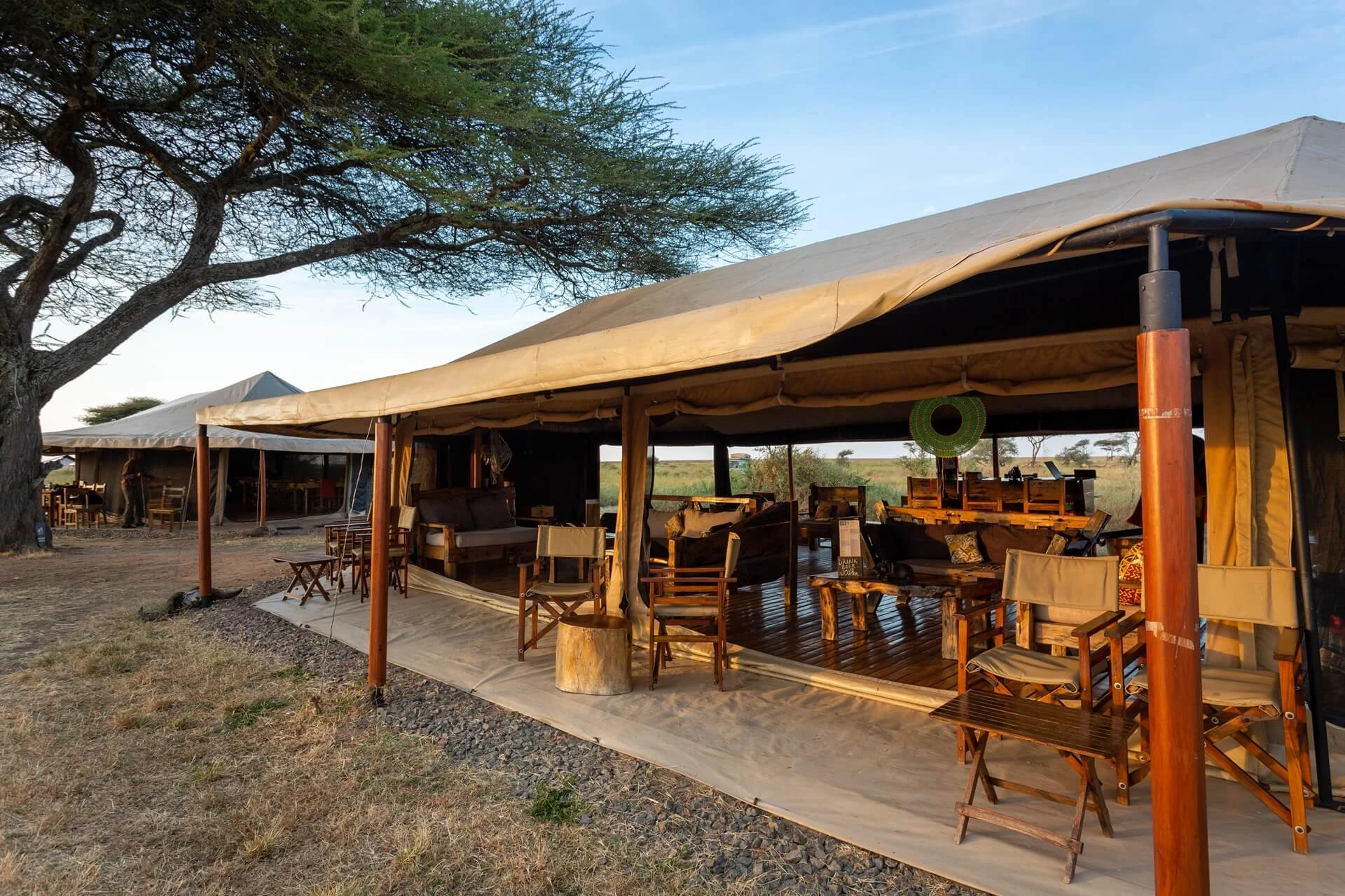
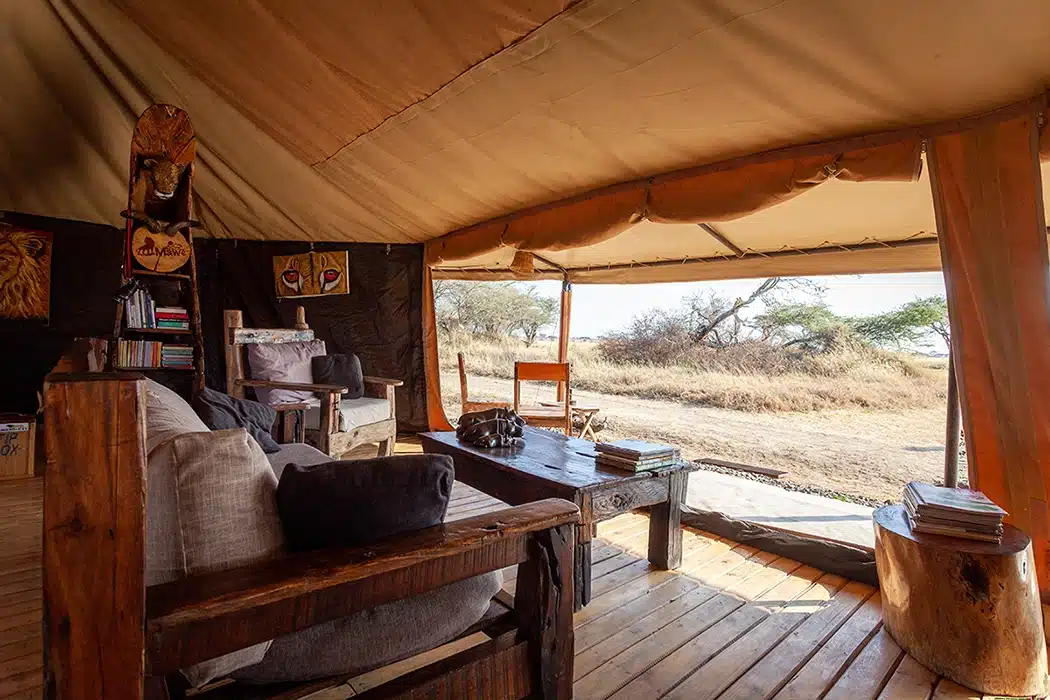
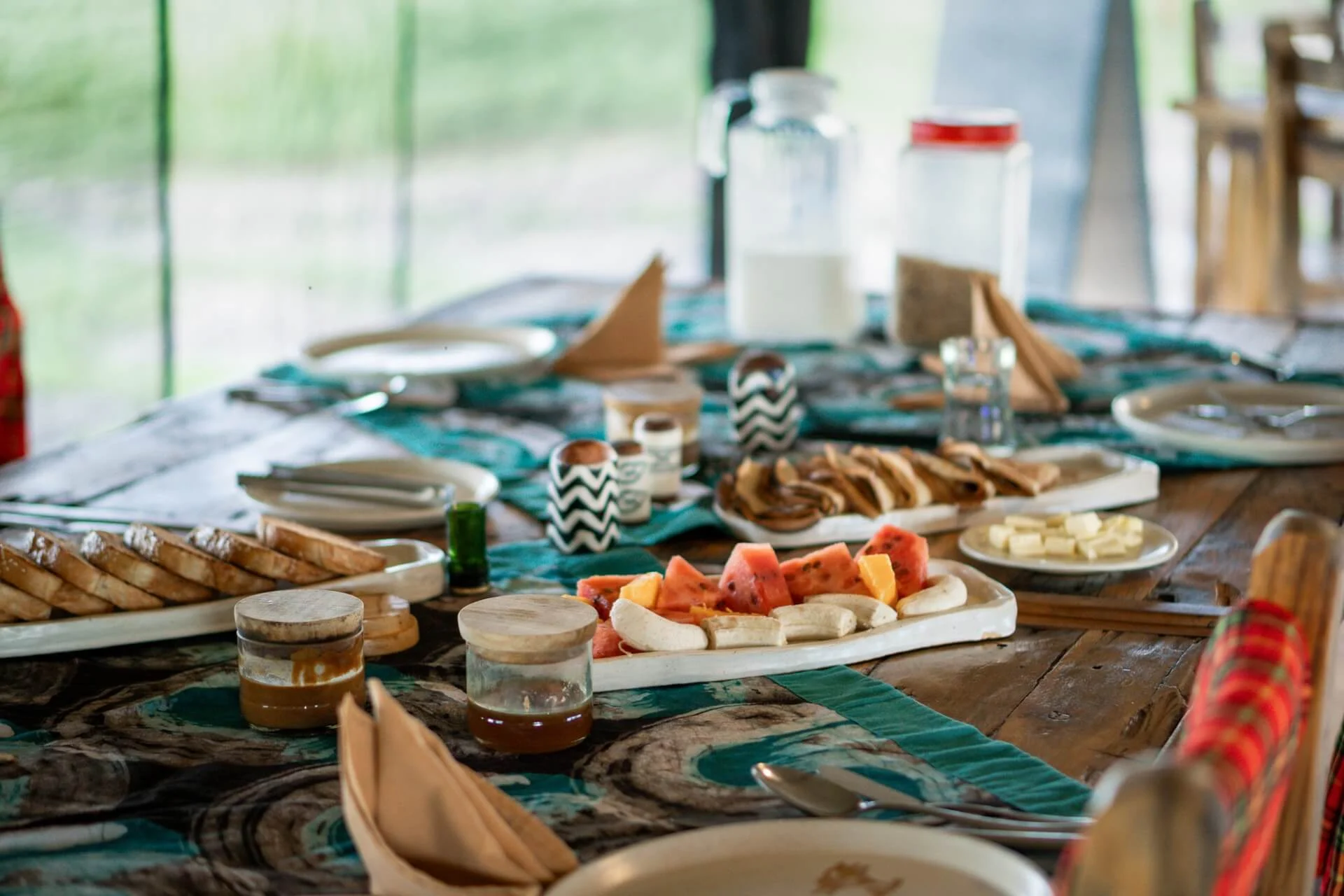
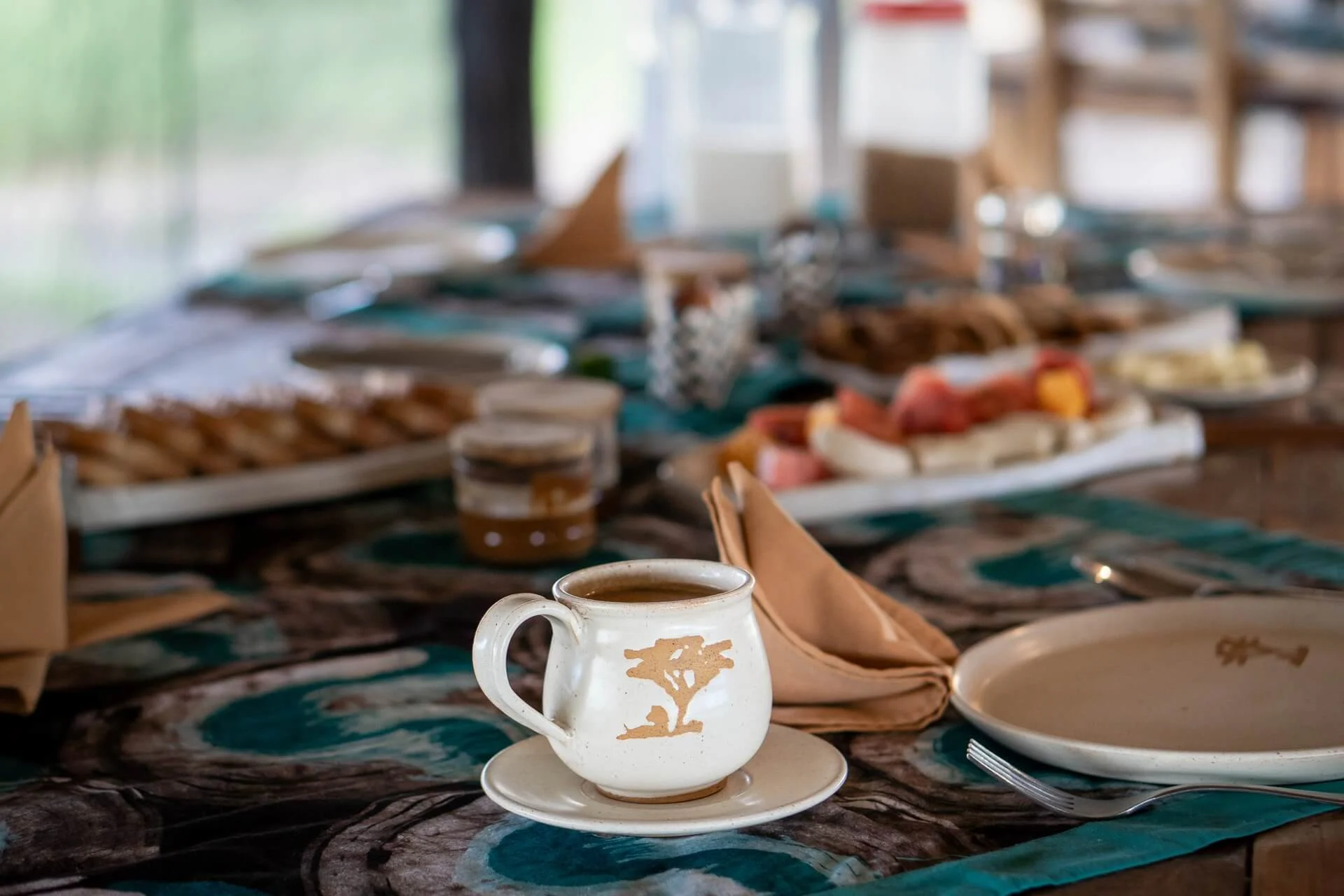
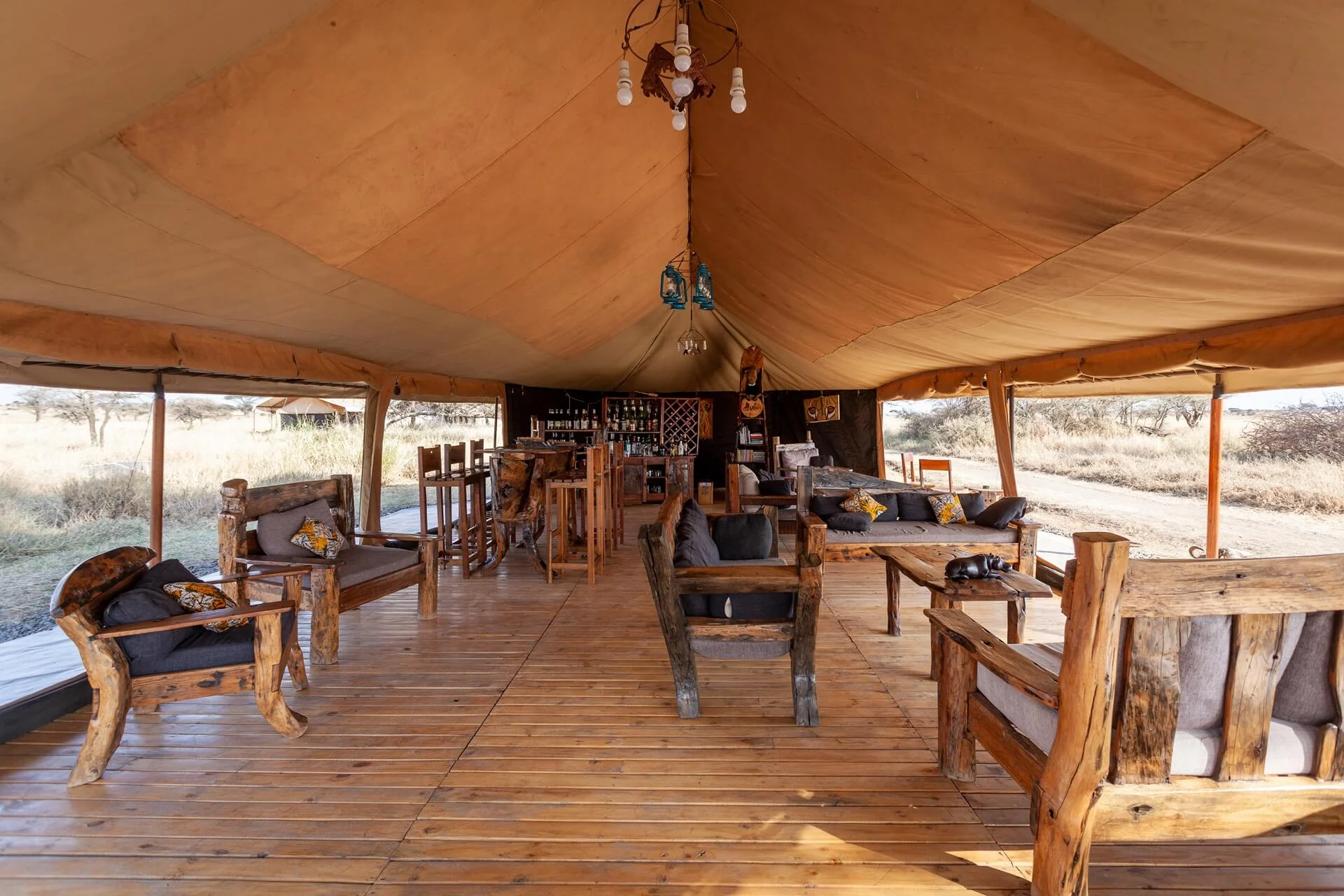
The main area holds the restaurant, the bar, and a lounge with Wi-Fi. Breakfast comes with fruit, breads, eggs, and pancakes, and filter coffee is served at sunrise. Dinner is a three-course meal with a choice of dishes. One group of sixteen guests wrote to us weeks after their stay, still talking about the soups.
If you are out for the whole day, the kitchen packs a breakfast or lunch box for the drive. Tell us about dietary needs when you book, or when you arrive. Vegetarian, vegan, gluten-free, and most other requests are simple for us.
Your stay at Mawe Tented Camp is full board. Breakfast, lunch, and dinner are part of your rate, and drinks from the bar cost extra. The bar prices stay reasonable, and the campfire outside it is where most evenings end.
The camp runs on solar power, and we take the sustainability side seriously. There is no single-use plastic in camp, drinking water comes filtered in refillable glass bottles, and the toilets are composting. Most of our food comes from local suppliers. A small stand in the main area sells crafts, and the money goes to the local artists who made them.
Location
Our Location in the Central Serengeti, near Seronera
The camp stands in the Soit Le Motonyi area of the central-eastern Serengeti, near the Ngarenanyuki River, which puts us among the few tented camps in the Serengeti sited on a permanent water line. The river draws game daily, and the plains open straight out from the tents.
Most guests fly into Seronera Airstrip, with daily flights from Arusha, Zanzibar, and Dar es Salaam. The transfer to camp is a game drive of thirty to forty-five minutes, and it often produces the first sightings of the trip. Guests arriving by road from the west pass through Seronera before reaching us.
From camp, the famous Seronera river circuits, the Maasai Kopjes, and the cheetah plains toward Gol are all within a morning drive. Many guests pair this camp with our Karatu Tented Lodge, which breaks the road journey toward Ngorongoro Crater.
Best Time to Stay at Mawe Tented Camp Serengeti
June to October
The dry season brings short grass and easy game viewing. The resident cats are at their most visible, and the weather stays sunny and mild. These are the busiest months in Seronera, which makes staying within the area more valuable.
November to February
The short rains green the plains, and the park quiets down. The resident game stays, so the central Serengeti keeps producing sightings when other areas slow. Around November and December, the great migration passes south through the region on its way to Ndutu, and guests following the herds from here often add a few nights at our Gnu Ndutu Camp for the calving season that follows.
March to May
The long rains bring the lowest rates and the fewest vehicles. Game viewing around the rivers stays reliable, and photographers get dramatic skies. From April, the migration begins moving north through the central and western Serengeti, sometimes in columns that take hours to pass. By July and August the herds reach the Mara River in the north, where our Gnu Mara River Camp sits above the crossing points.
Activities
Safari Activities at Mawe Tented Camp, Serengeti
Every activity starts at camp. Book ahead where you can, so we can arrange guides and permits.
01 - Game drives
Game drives
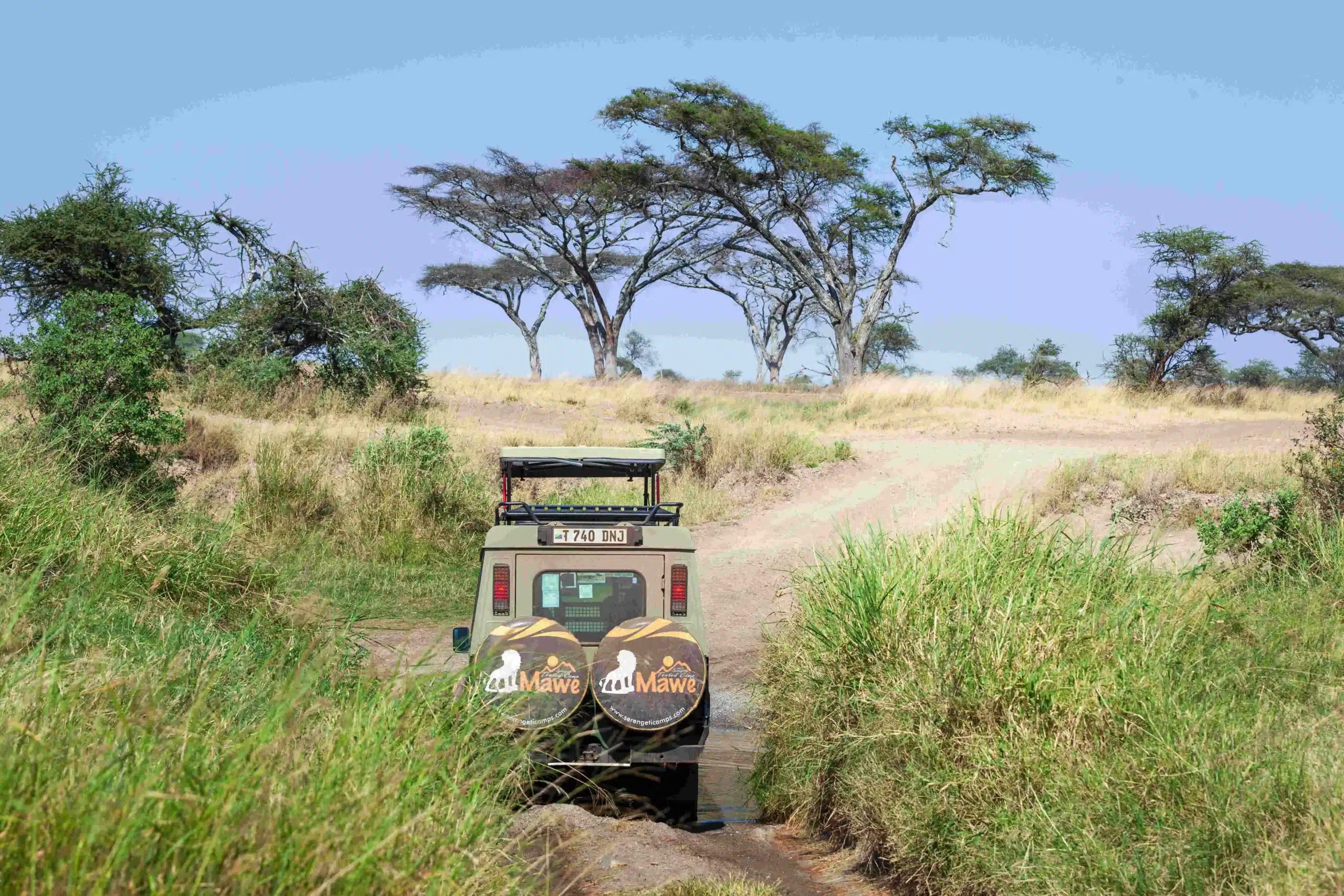
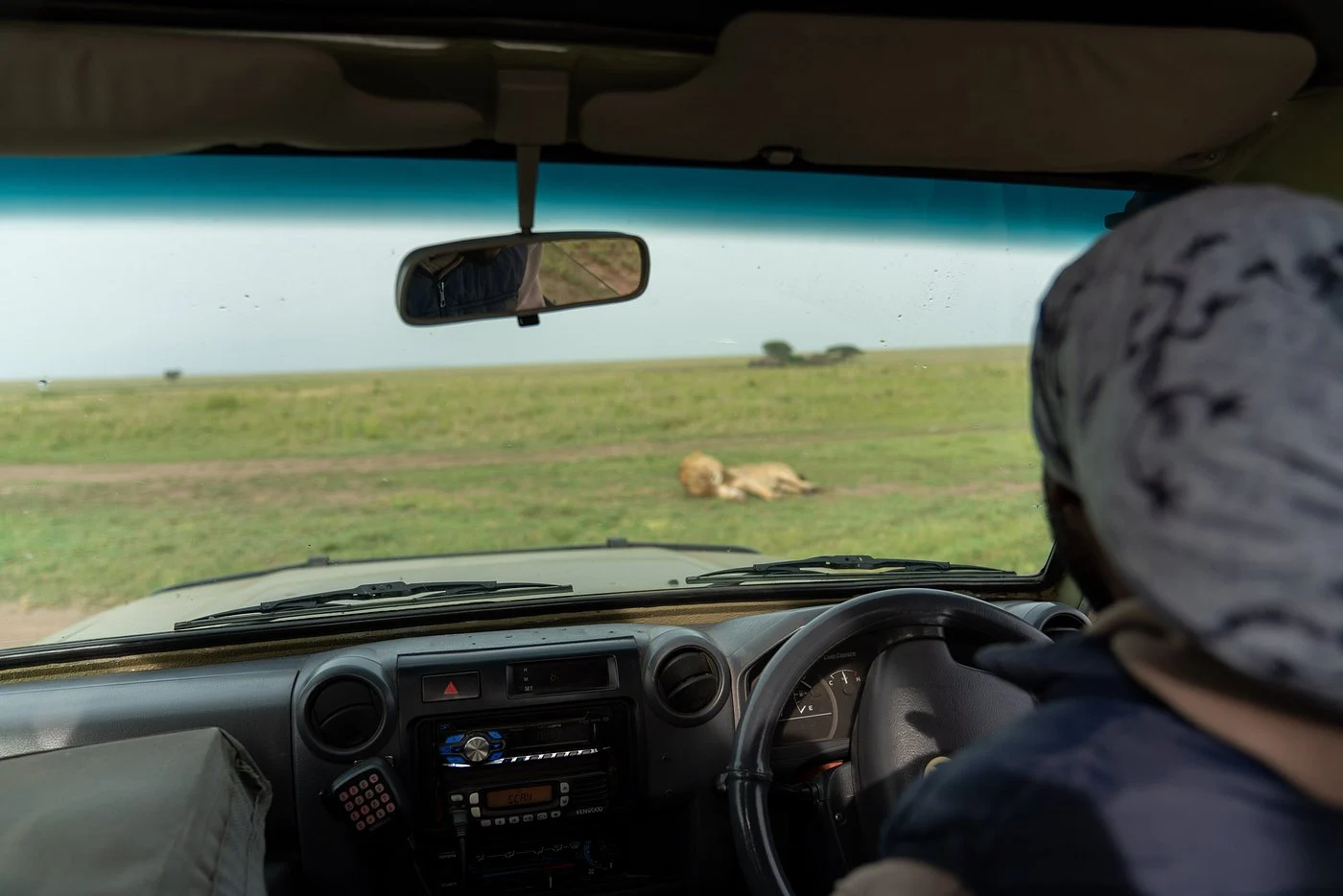
Game drives run in our 4×4 vehicles with our own guides. Morning drives leave at sunrise with coffee served first. The Seronera river circuits and the cheetah plains are both within easy reach.
02 - Walking safaris

Walking safaris
A guided walk shows you the Serengeti at ground level. You learn tracks, plants, and the small details a vehicle passes. Walks run in the cool morning hours and need advance booking.
03 - Hot air balloon safari
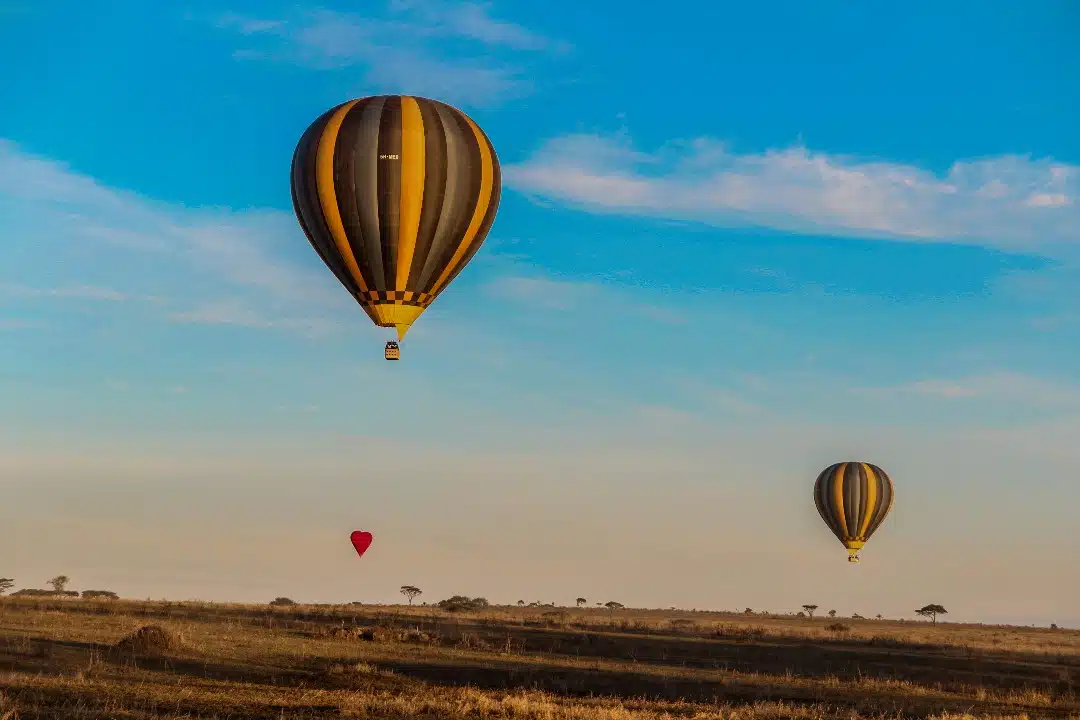
Hot air balloon safari
Balloons launch near Seronera at dawn and drift over the plains and river lines. The flight ends with a bush breakfast. Seats are limited, so book this one well ahead.
04 - Sundowners and campfire evenings
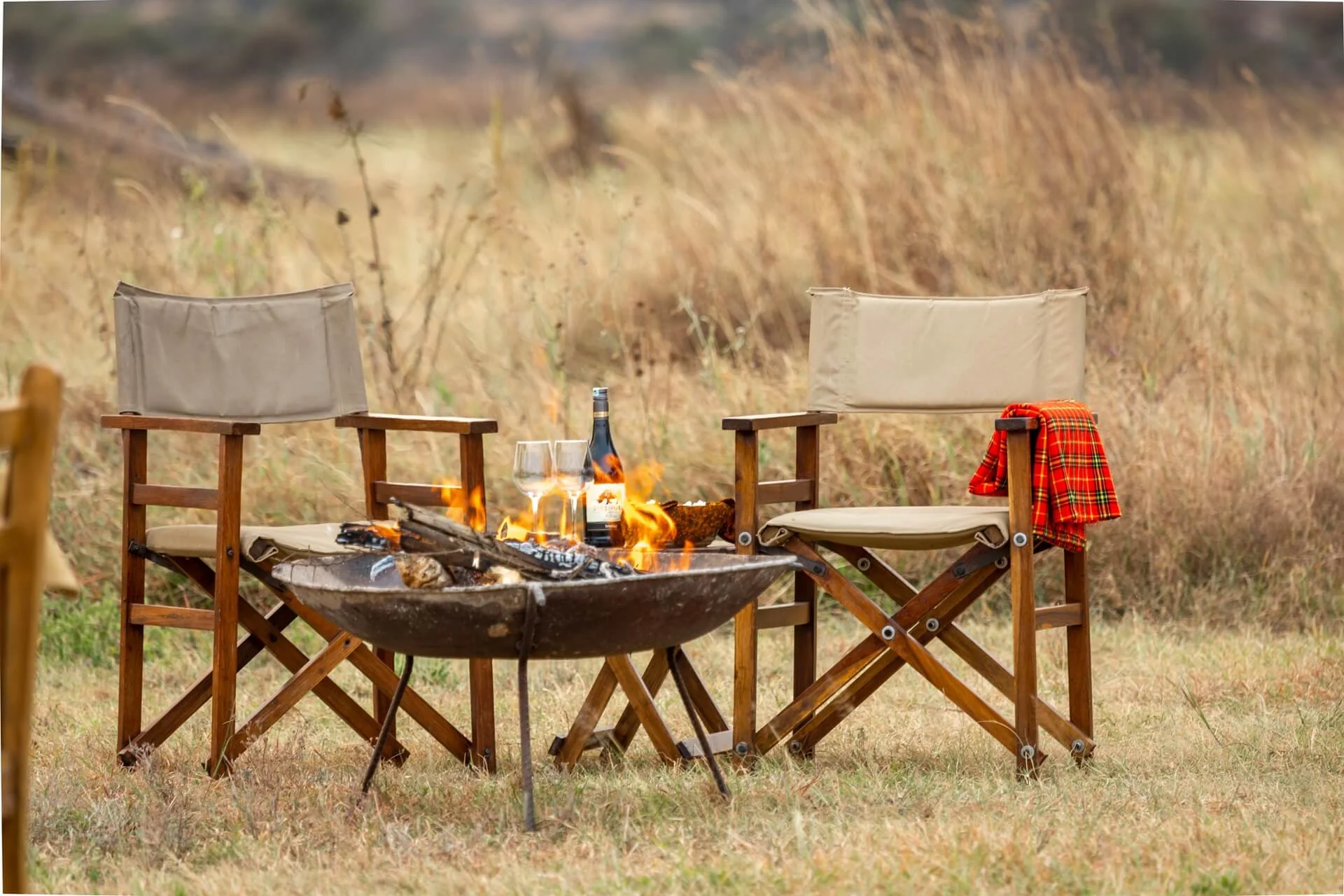
Sundowners and campfire evenings
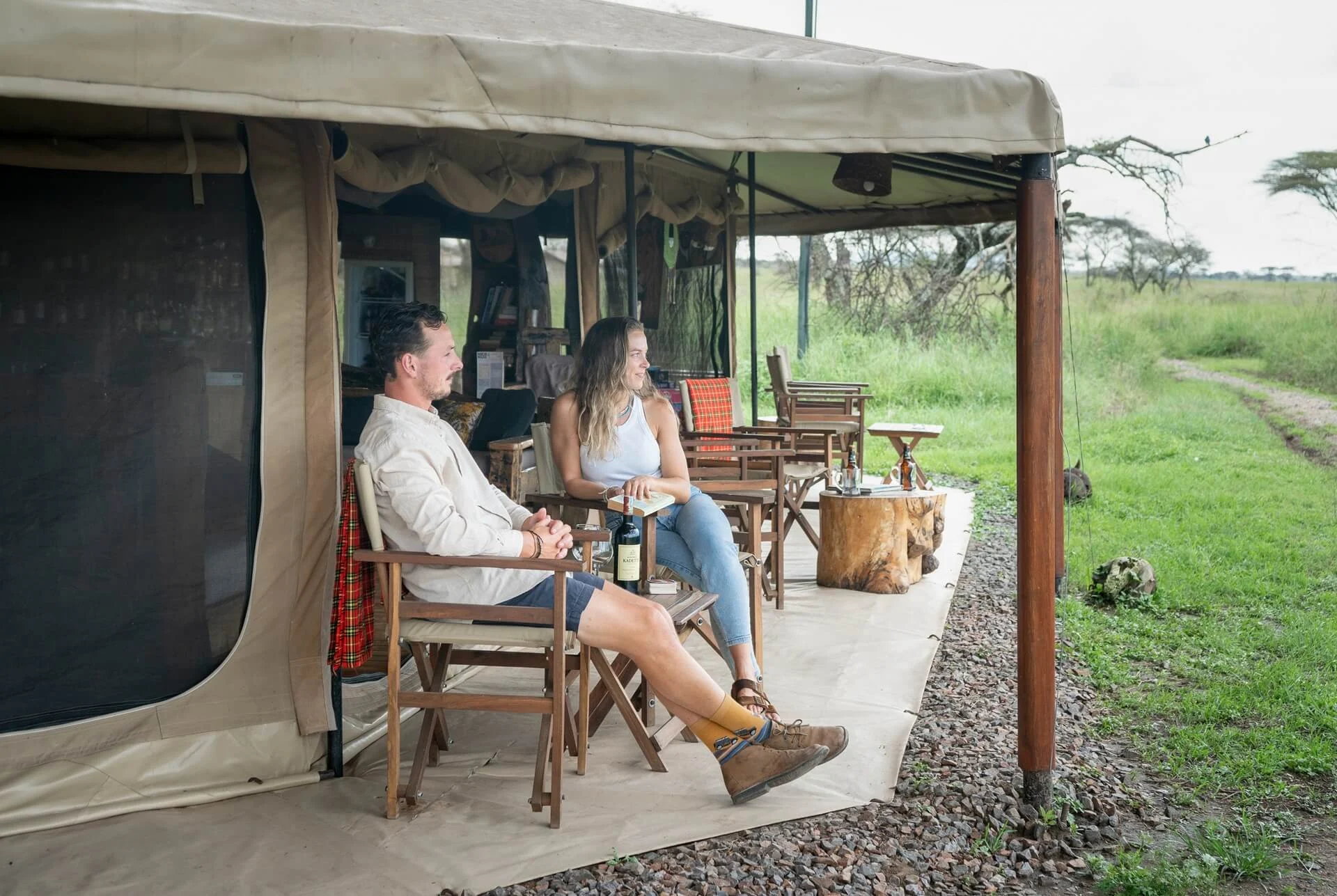
The day ends with a drink facing the plains, and then the campfire. Our team sometimes brings music and dancing to the fire. Guests tend to mention those evenings in their reviews.
05 - Watching from camp
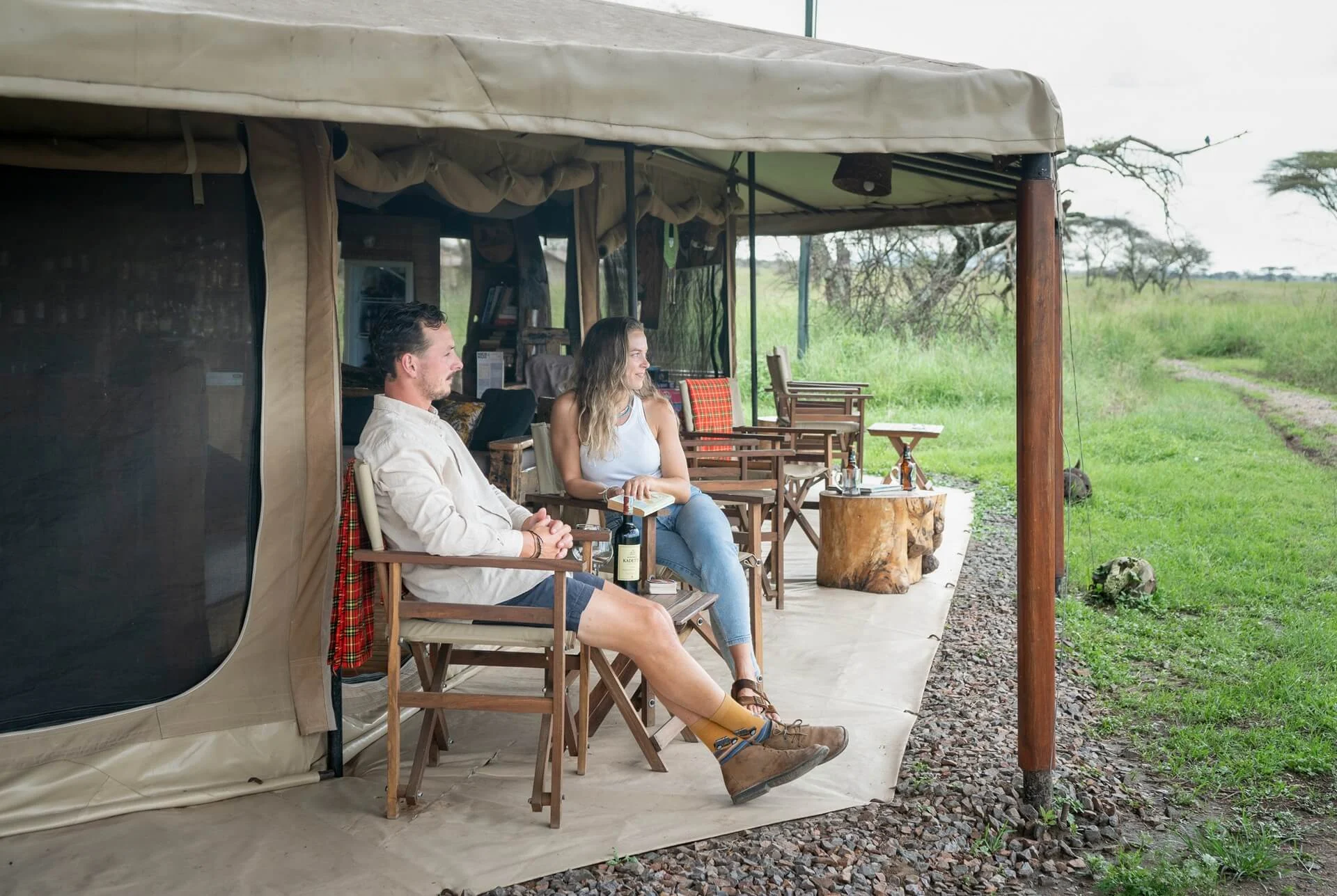
Watching from camp
The Ngarenanyuki River brings animals past camp through the day. Some guests keep binoculars at the tent and let a quiet afternoon do the work. In this location, that counts as game viewing too.
Rates and Booking at Mawe Tented Camp
Included
Full board meals (breakfast, packed lunch or lunch, dinner), Wi-Fi in main areas, VAT and government fees, parking.
Not included
Serengeti park entrance fees, concession fees, and campsite fees, which TANAPA collects separately, drinks from the bar, activities such as walking safaris and balloon flights, transfers, gratuities.
These are luxury rates for the central Serengeti, and what they buy is position. You are inside resident big cat country, facing the Ngarenanyuki River, on full board, with the Seronera circuits and the Gol cheetah plains within a morning drive. Guests who have stayed further out tell us the driving time was what they noticed most.
Check live availability, or send us an enquiry, and we will reply with dates and a full quote.
Mawe Tented Camp Reviews
Naser, July 2010
Sandrine C, June 2026
Dustin Roehr, Feb 2026
Read all our reviews on TripAdvisor. Guests return most often to three subjects: the staff, the food, and the animals around camp.
Frequently Asked Questions
The camp is in the Soit Le Motonyi area of the central-eastern Serengeti, facing the Ngarenanyuki River. Seronera, the central hub of the park, is about 26 kilometres away.
Yes, and that is its main strength. The Seronera region holds resident lions, leopards, cheetahs, elephants, and buffalo in every month. If your dates are fixed, the central Serengeti is the safest area of the park to book.
Partly, and we answer this honestly. The great migration passes through the central Serengeti around April to June and again around November to December. In those months, the herds move within reach of camp. For the river crossings, our Gnu Mara River Camp in the northern Serengeti is the migration specialist.
Seronera Airstrip, with daily flights from Arusha, Zanzibar, and Dar es Salaam. The transfer to camp is a game drive of thirty to forty-five minutes.
Two to three nights suit most itineraries. That covers the Seronera circuits, the cheetah plains, and time at camp. Guests combining several regions often add our camps in the north or south.
Rates are per person per night, sharing a tent, on full board. A couple in a double tent pays twice the listed rate for the tent. Park, concession, and campsite fees are separate, and TANAPA collects them.
Yes. Every tent has a hot shower, a flush toilet, and solar-powered lighting and charging. Wi-Fi works in the main areas of camp.
Yes. Three family tents keep parents and children in one unit, and the triple tents suit small families. Tell us the ages of your children when you enquire, so we can advise on activities.
No. Animals move freely past camp, which is why guests wake to buffalo and hear lions at night. A staff member walks you to your tent after dark.
Yes. We arrange everything from single game drives to complete multi-day safaris across the Northern Circuit, with our own vehicles and guides.
Continue Your Safari With Mawe Lodges
Mawe Tented Camp is one of five Mawe properties across northern Tanzania. Many guests link two or three of them in one route.
The great migration and the Mara River crossings in the north.
The calving season on the southern plains around Ndutu.
Your base near Ngorongoro Crater, on the road route.
Your nights inside Tarangire National Park.
Tanzania · Northern Circuit
Book your stay with Mawe Lodges
Our own lodges and camps, our own guides, our own 4×4 vehicles. One team from arrival to departure.
-
12+
years operating -
Own
lodges & camps -
Own
guides & 4×4 vehicles