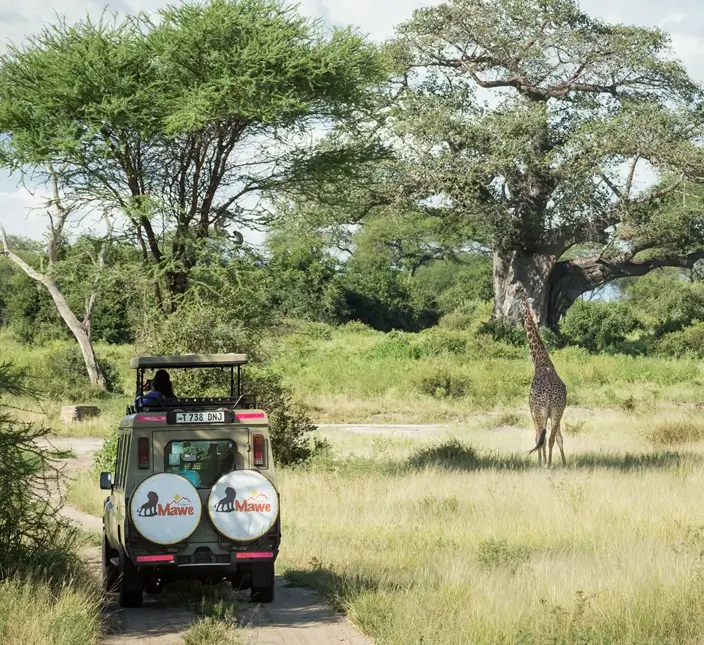
Ndutu · Southern Serengeti Plains
Gnu Ndutu Camp

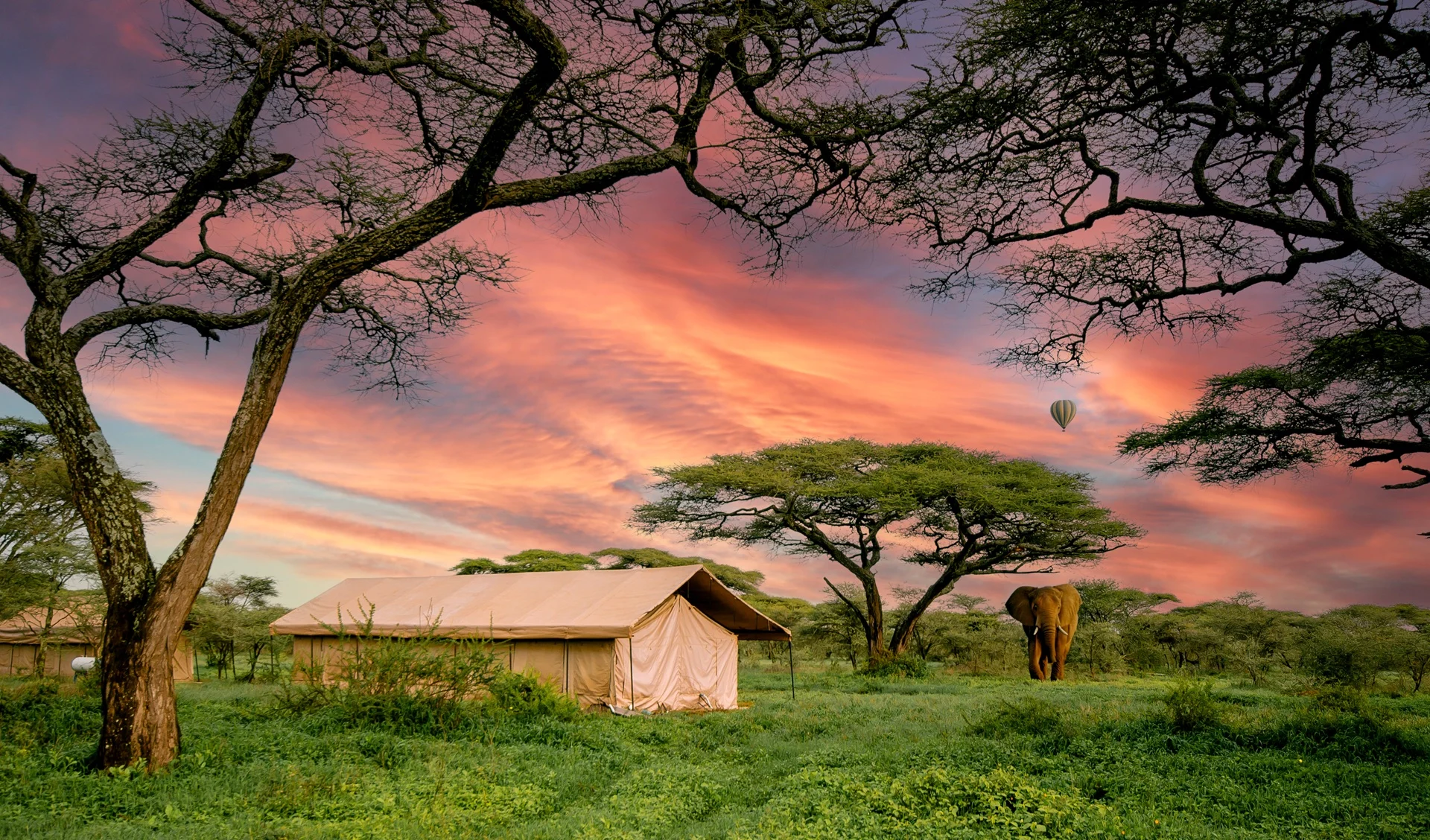
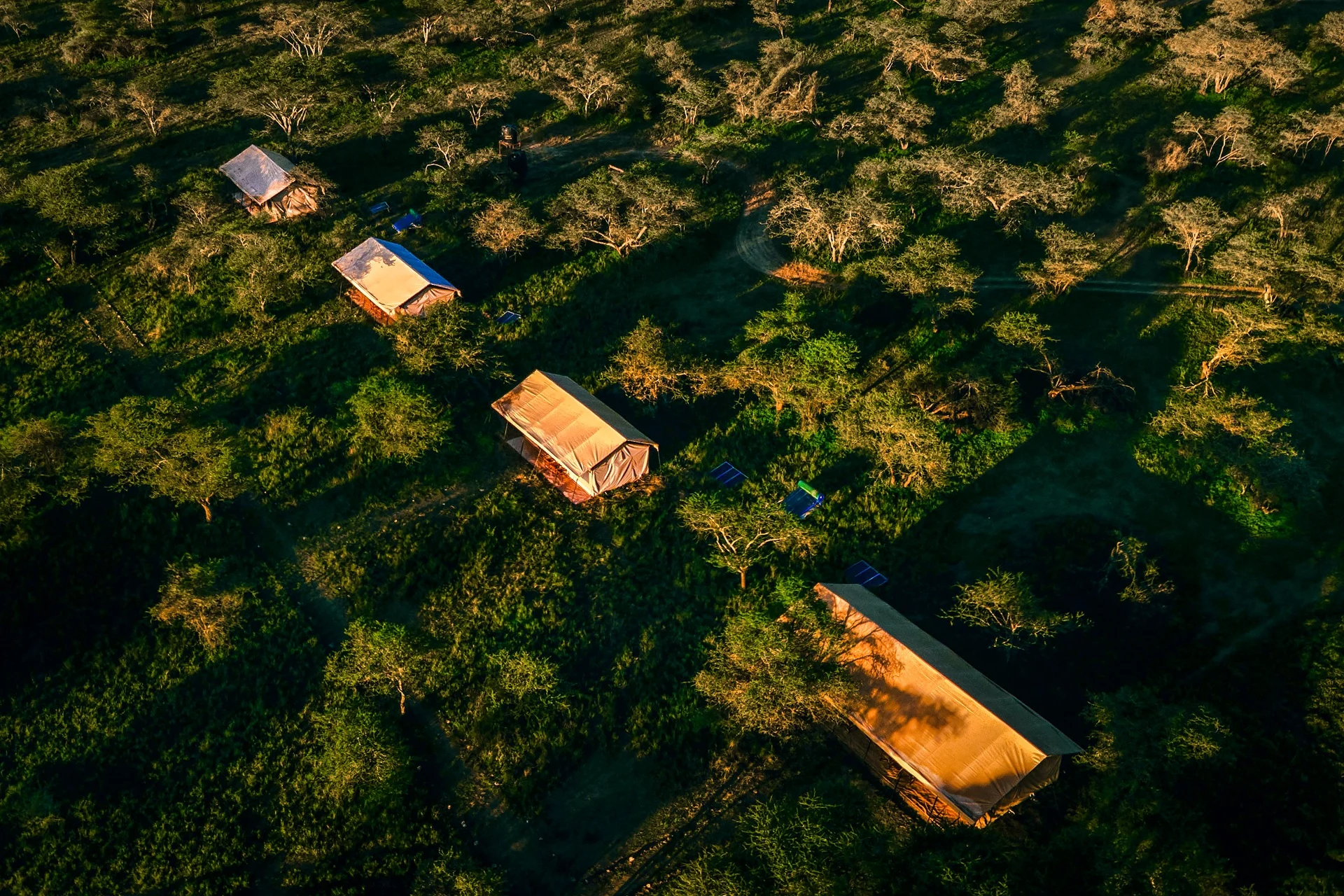
- 10 en-suite tents
- Open December to March
- On the calving grounds
- Off-road driving permitted
- Full board dining

The Camp
Welcome to Our Ndutu Camp
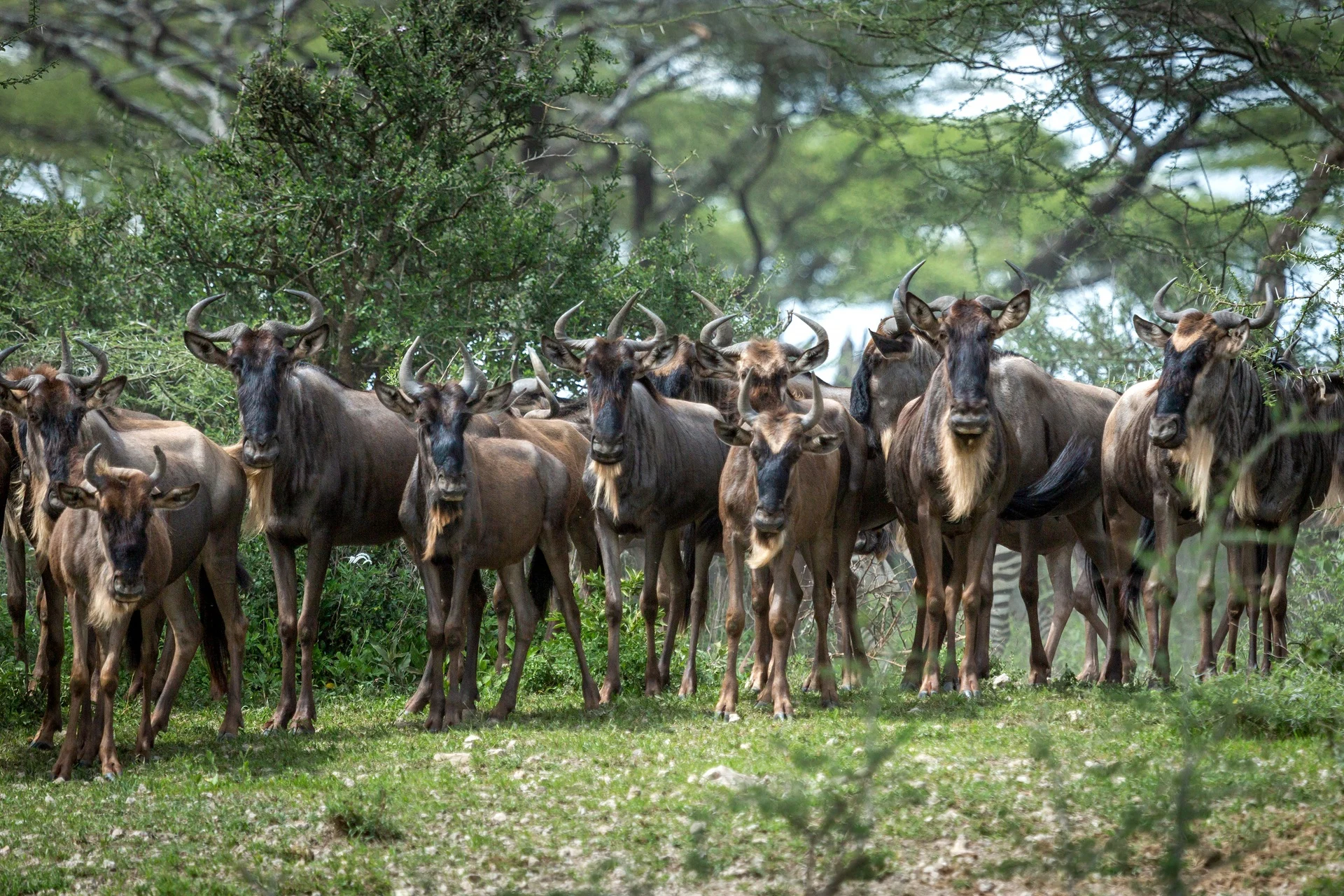
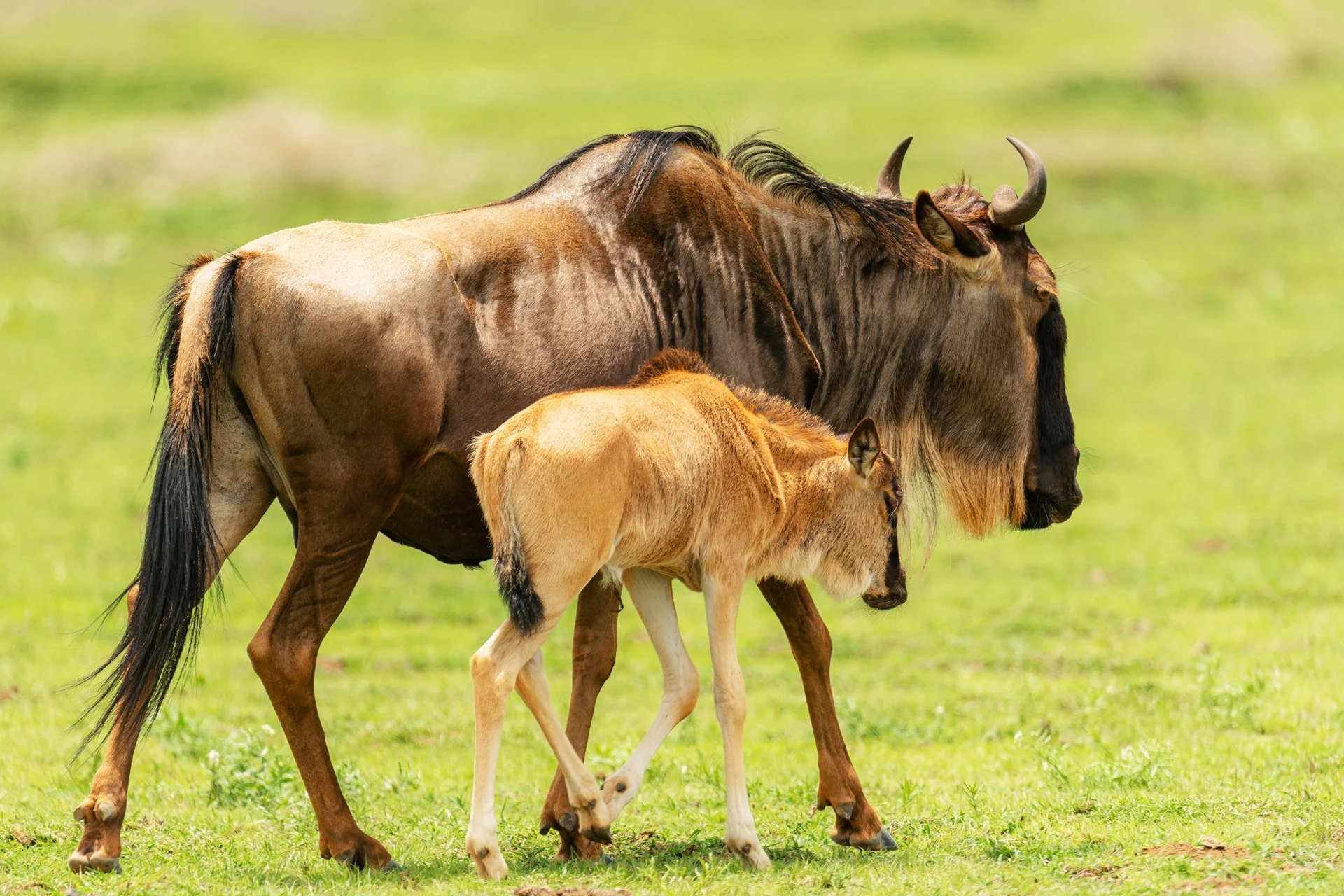
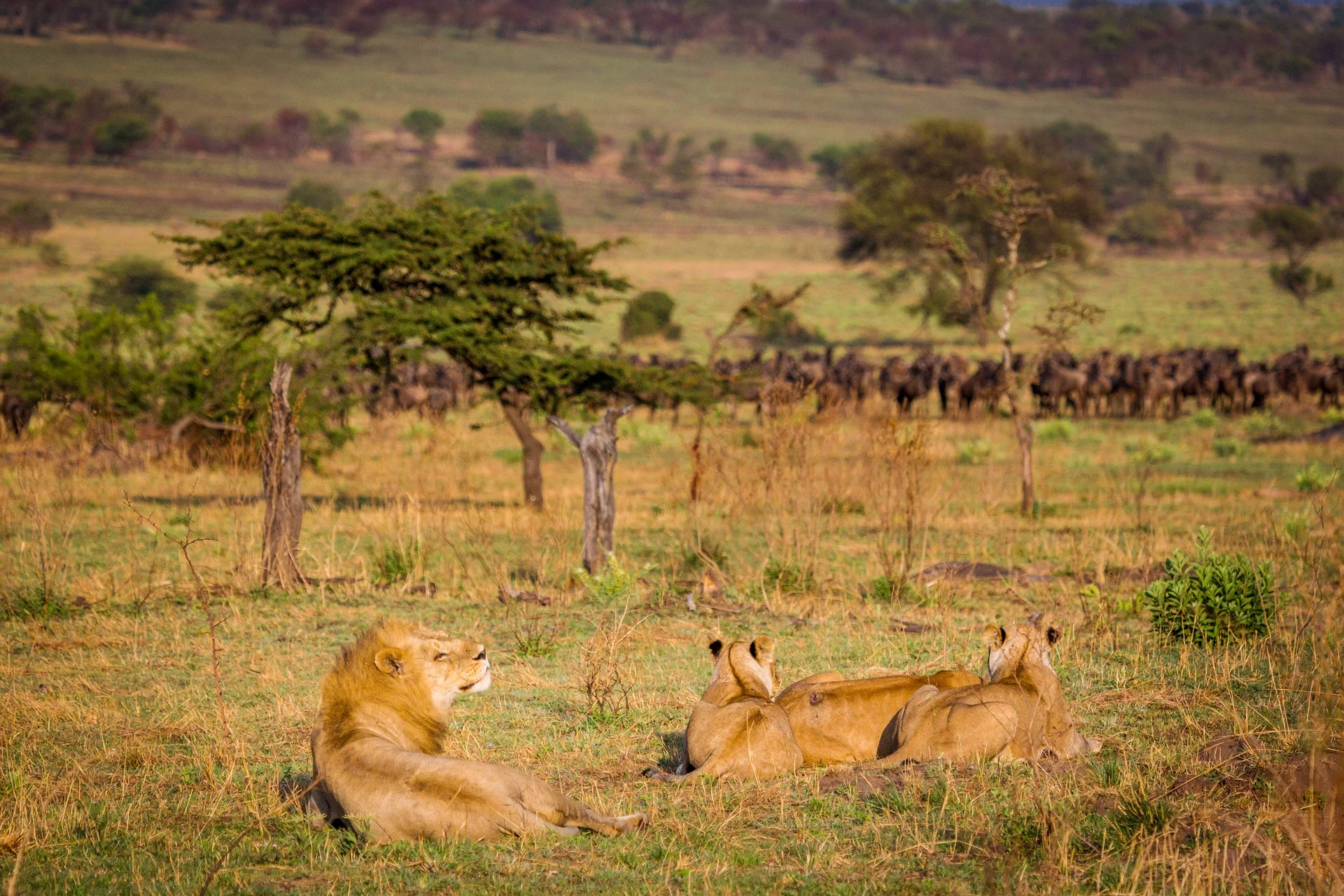
The great migration begins here. Every year from December, the herds move onto the short-grass plains around Ndutu to give birth. At the peak, thousands of calves arrive in a single day. Photographers rate this as the best wildlife show in Africa, and we agree with them.
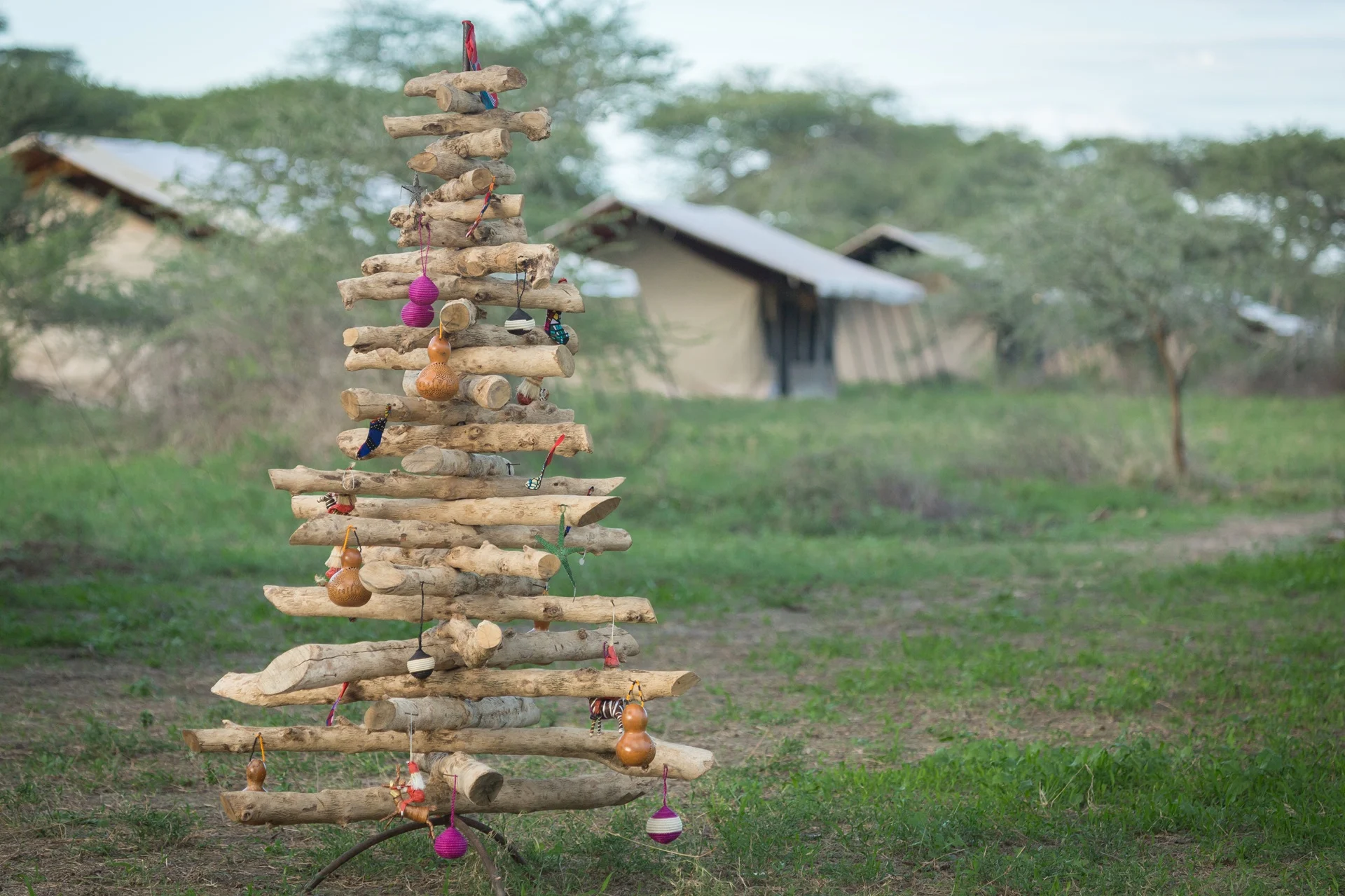
Our safari camp in Ndutu operates through the whole season. Gnu Ndutu Camp is a mobile tented camp, which means we set up where the herds are and move when they move. The tents face open plains, and the herds graze around camp for weeks at a time. You do not chase the migration from here, because the migration is already outside your tent.
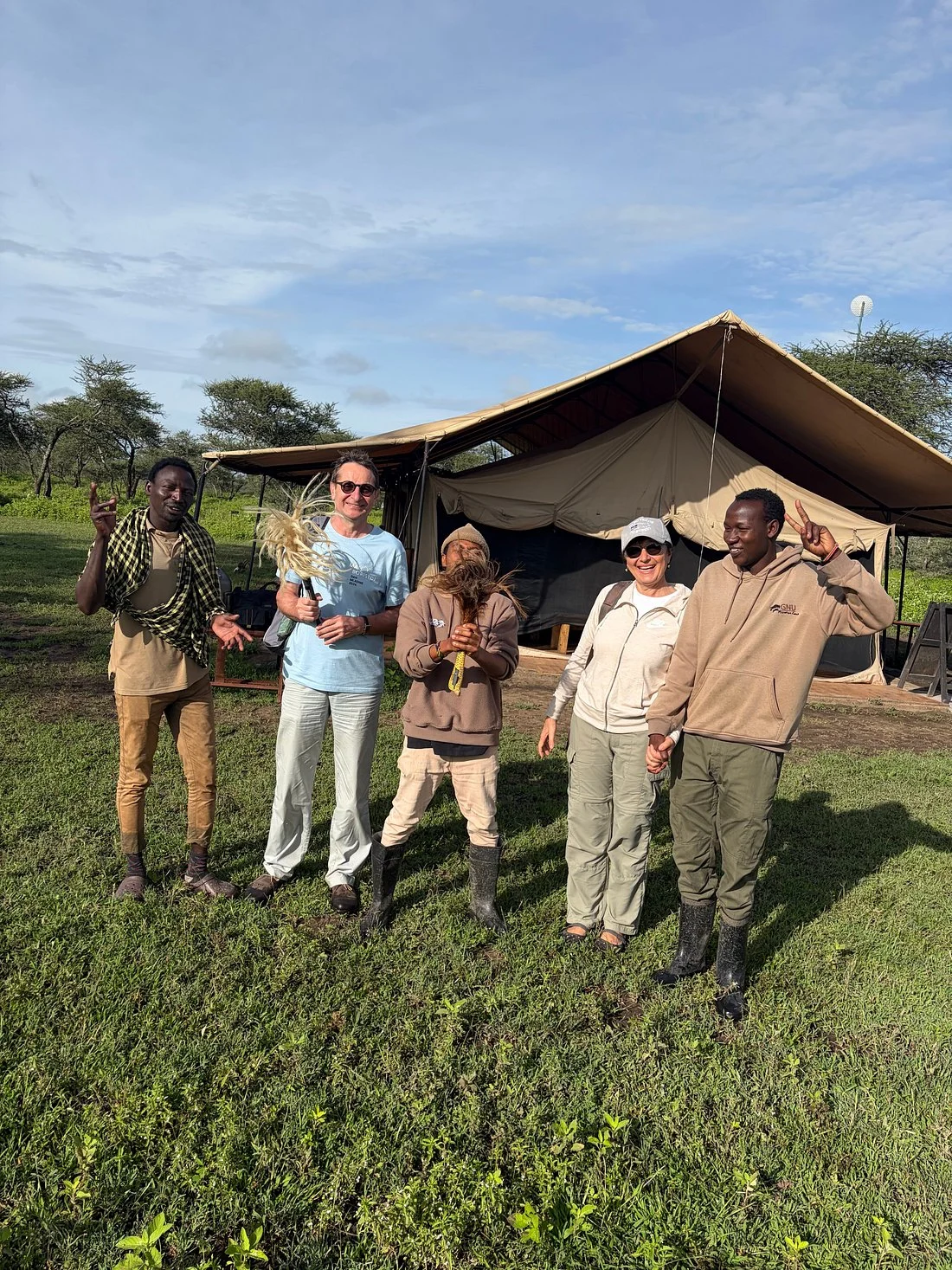
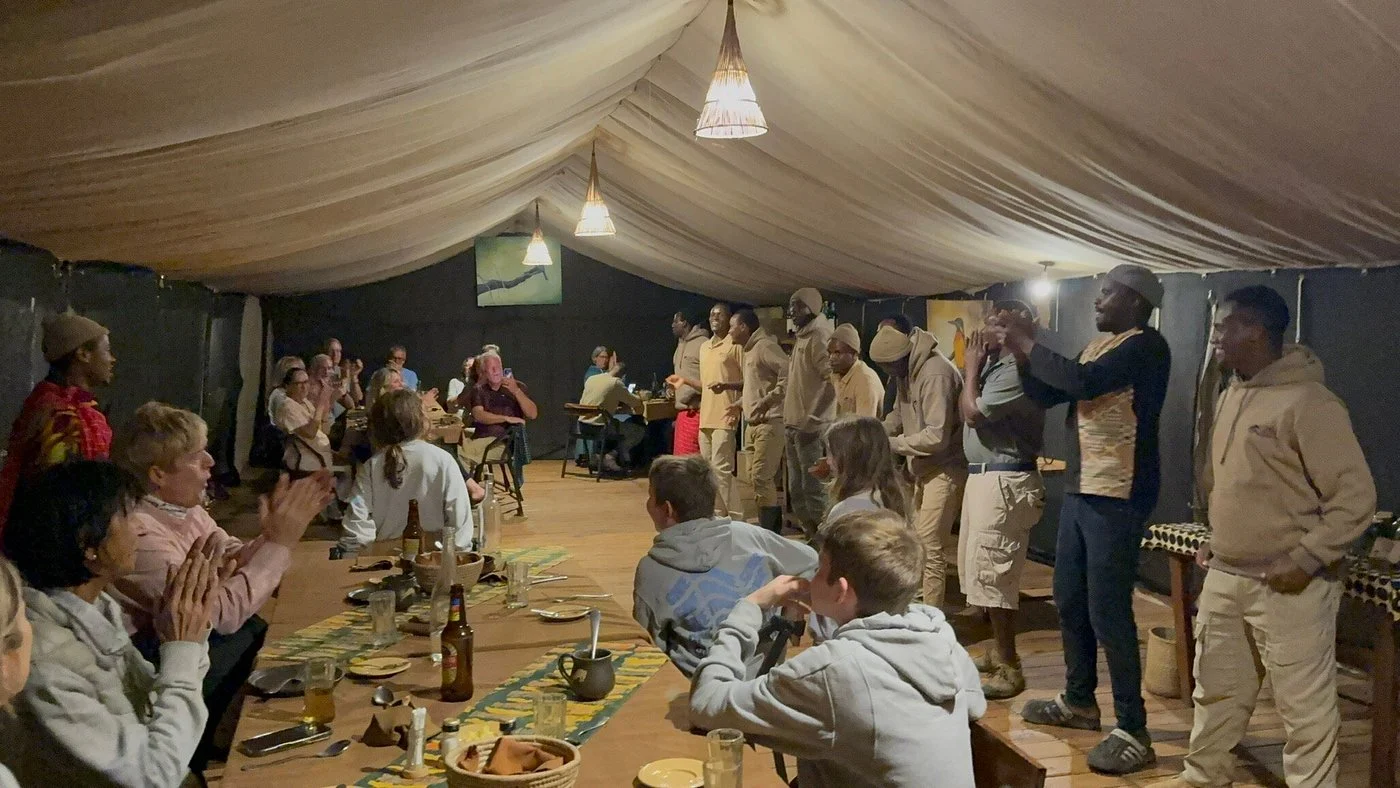
The camp stays small, with ten tents and a team that guests remember by name. Reviews from the southern season mention lions on every game drive, and leopards and cheetahs in the same week. One guest wrote about arrival drinks, a proper briefing, and dancing with the staff at a birthday dinner.
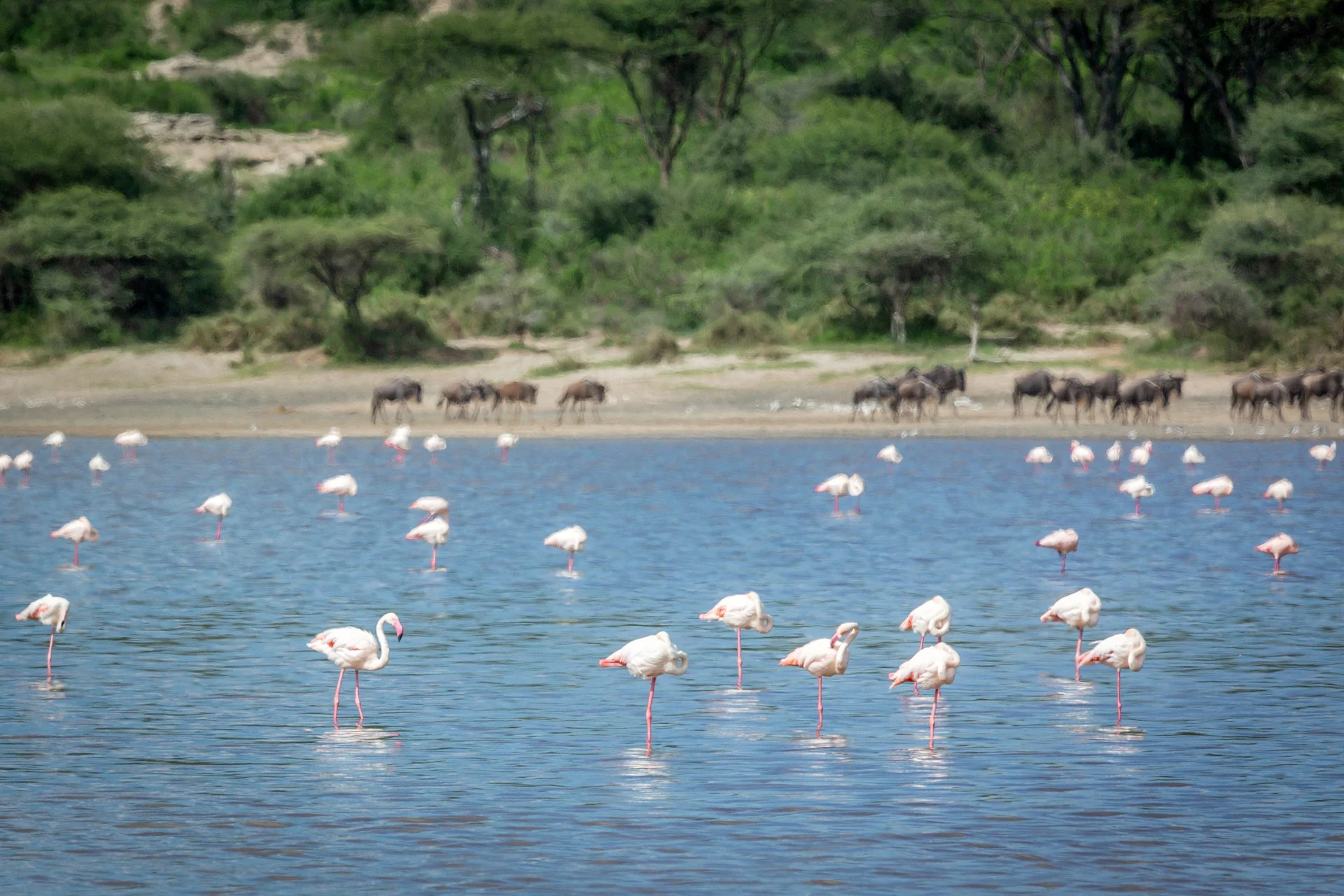
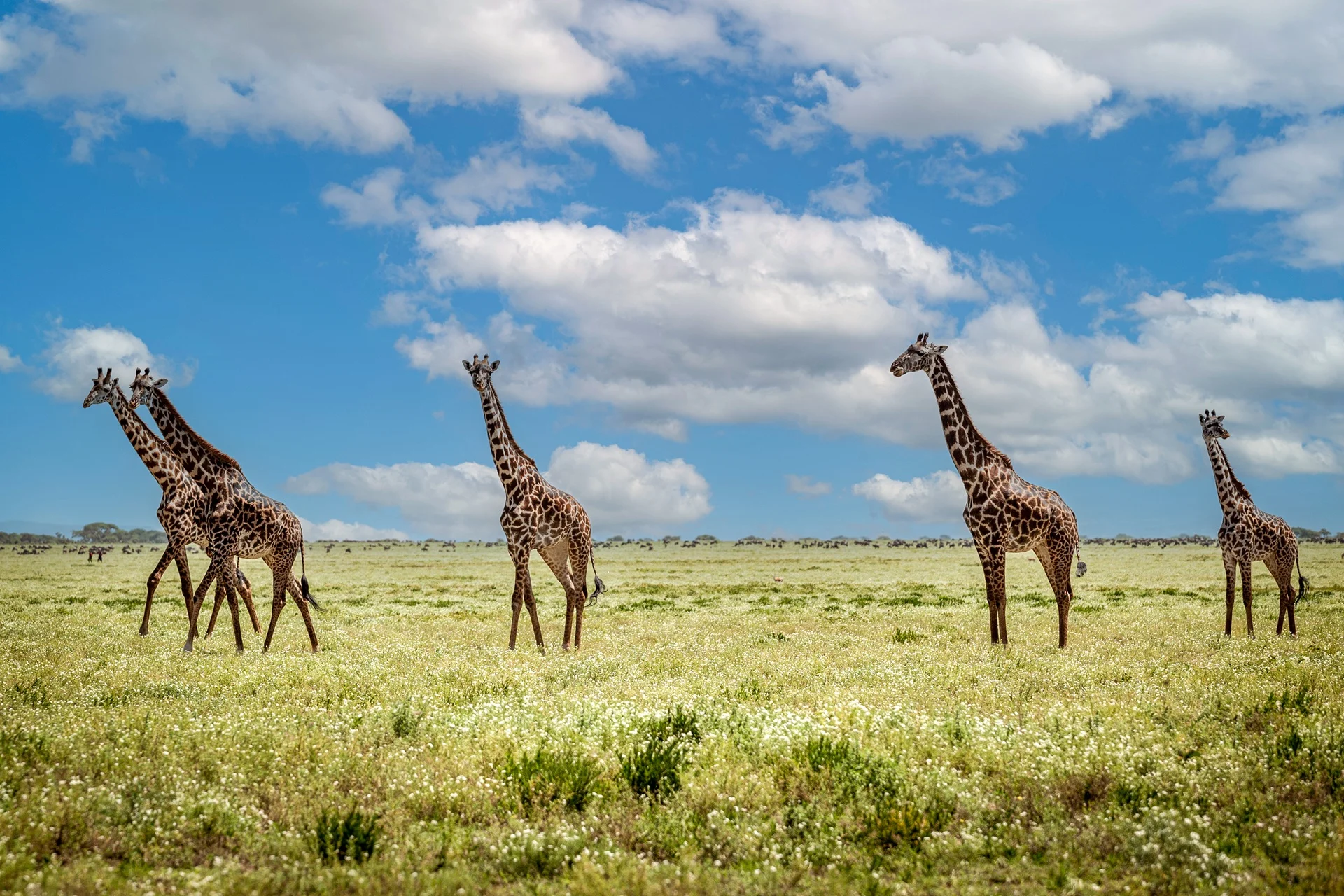
Ndutu also holds resident game all season. Giraffes, elephants, hyenas, servals, and big cats live here, and the soda lakes bring flamingos and hundreds of bird species.
Mawe Lodges has run camps and lodges in northern Tanzania since 2014, and this camp returns to Ndutu for every calving season.
Rooms
Rooms and Accommodation at Gnu Ndutu Camp
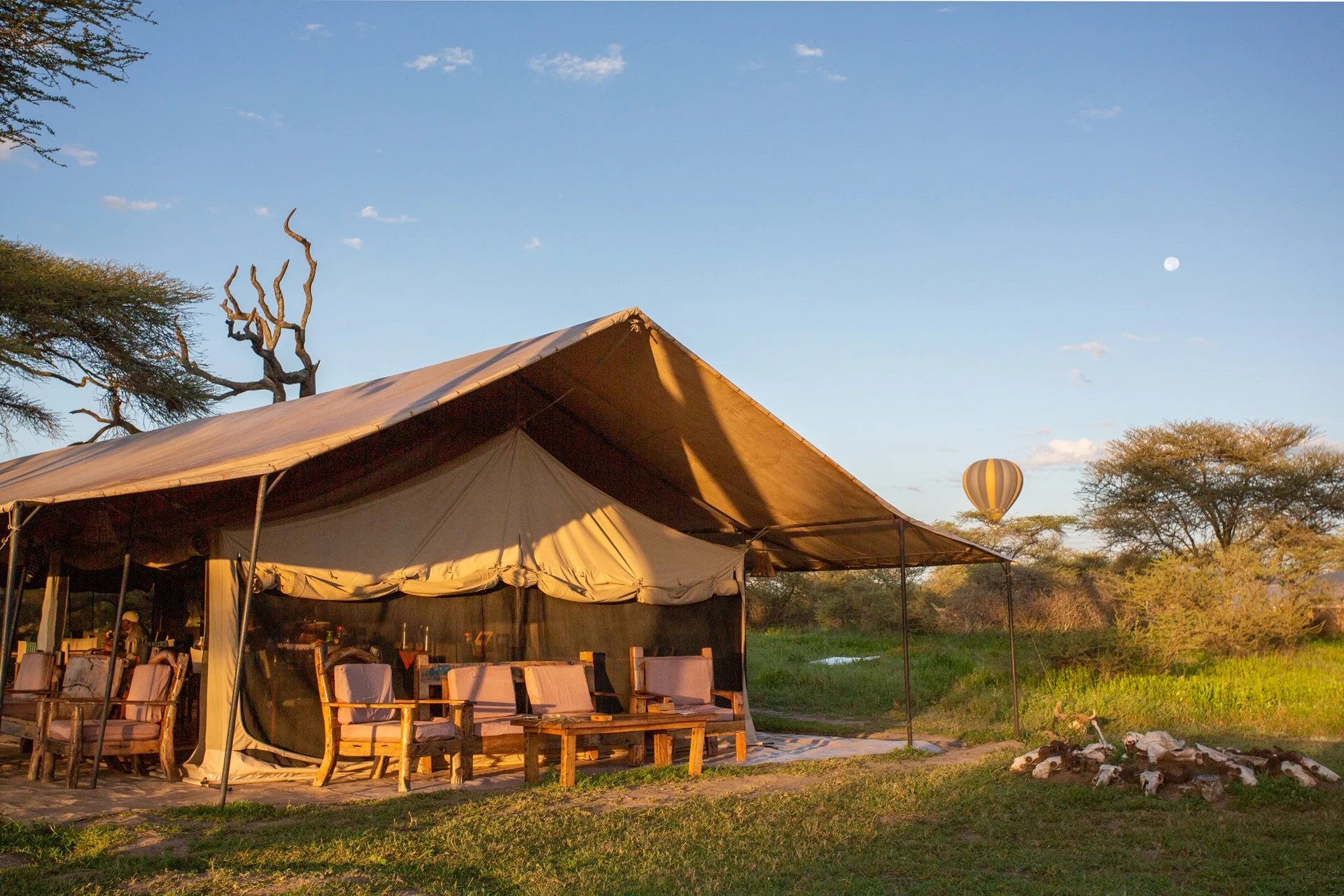
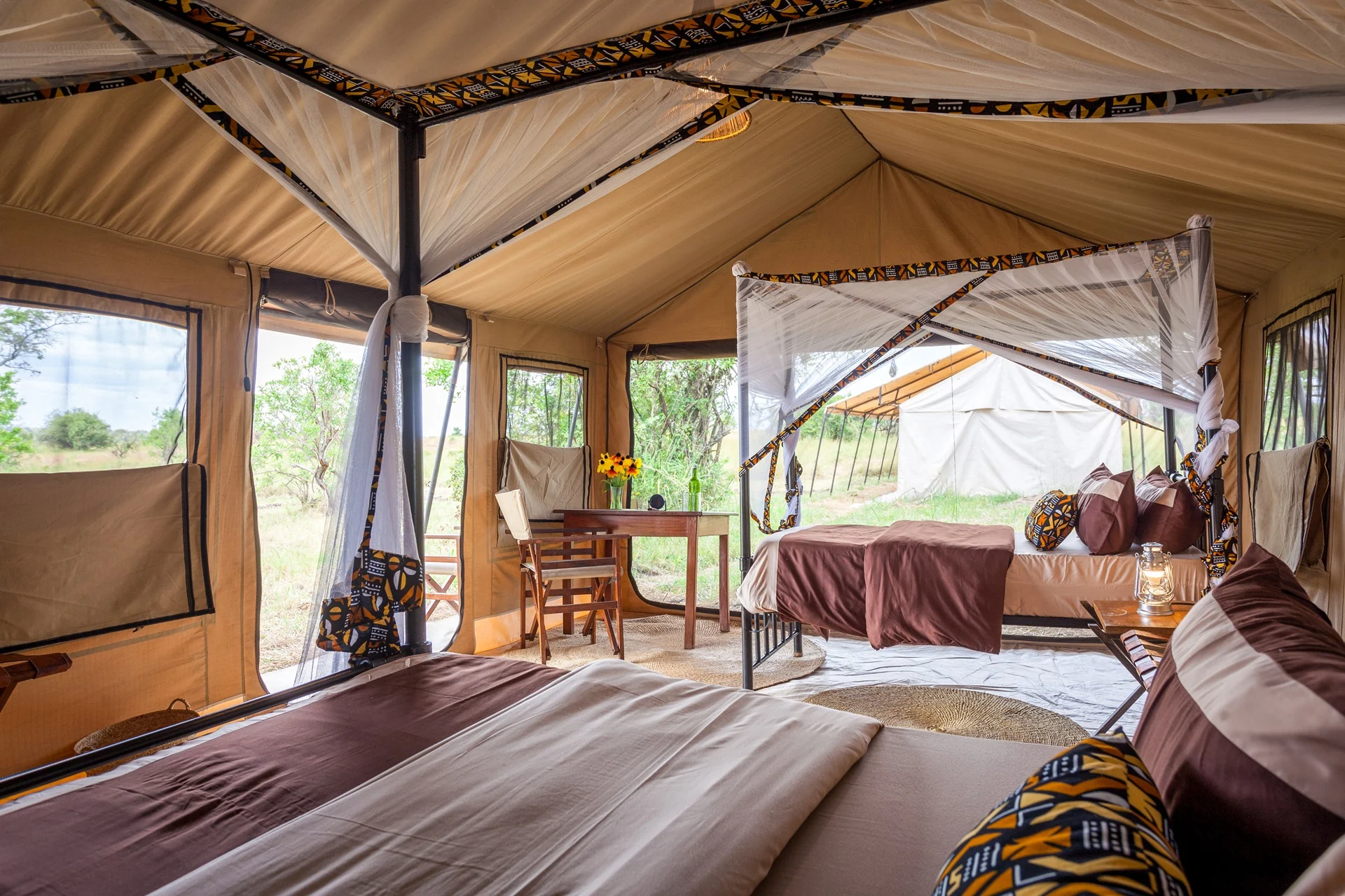
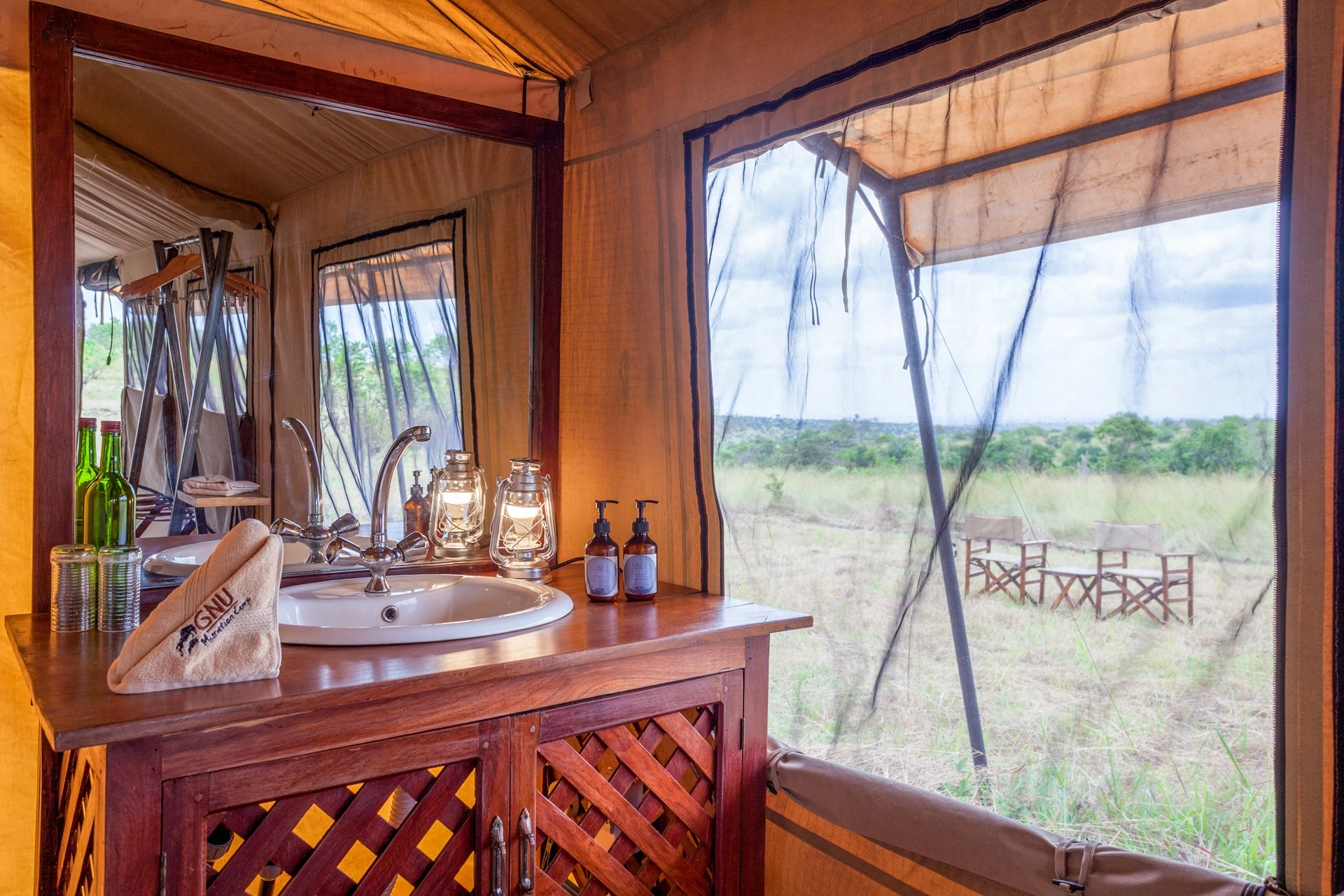
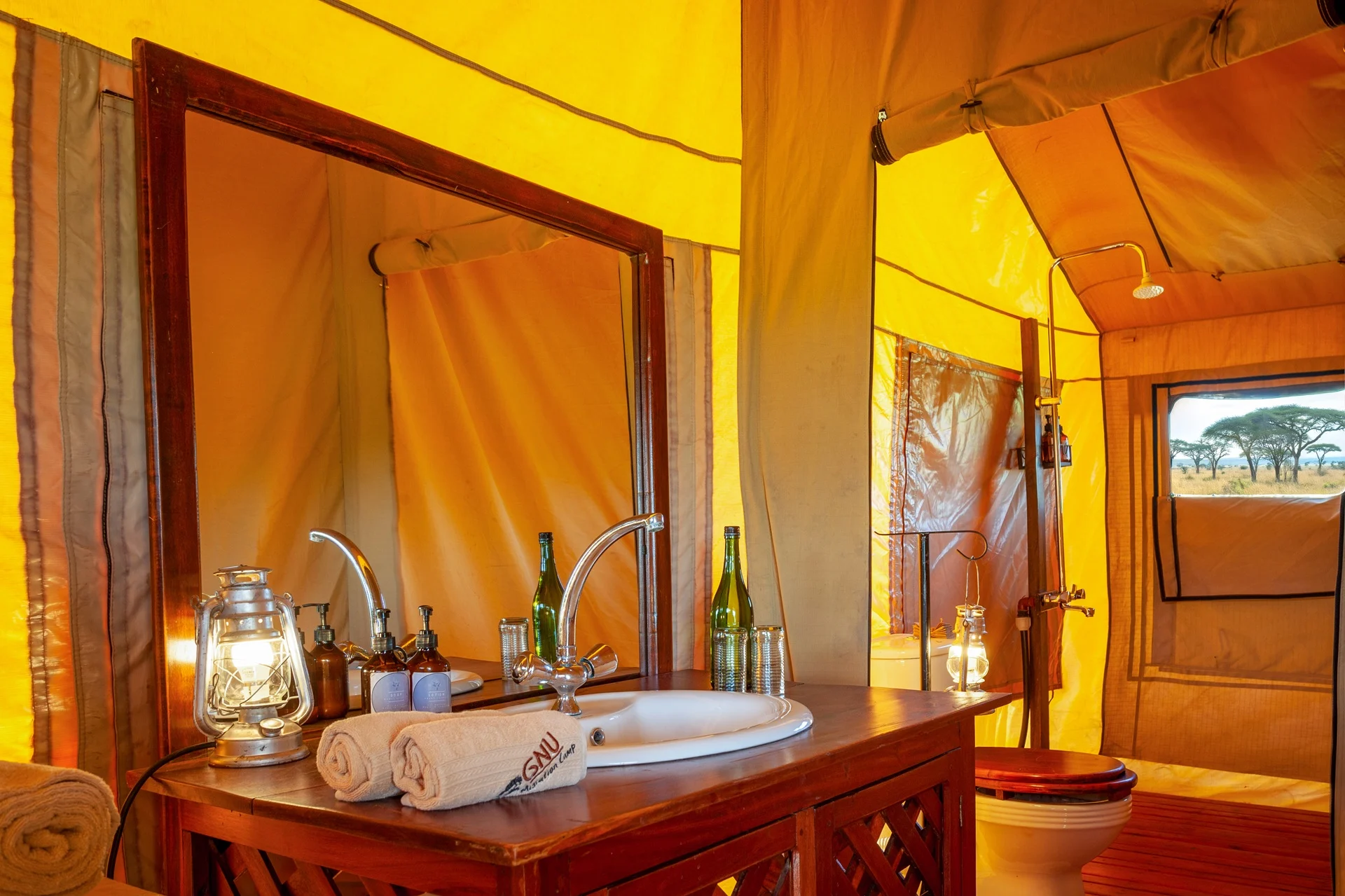
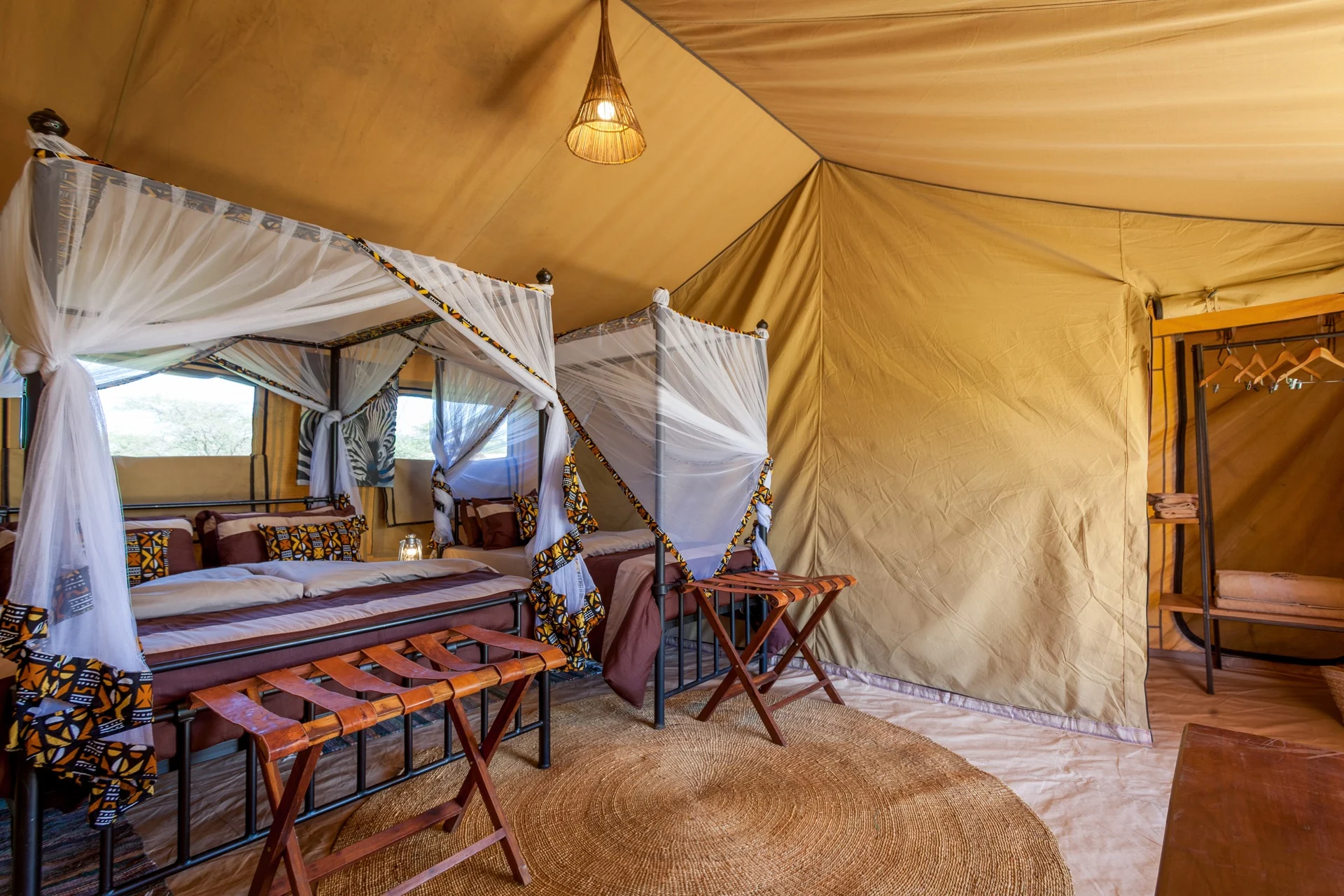
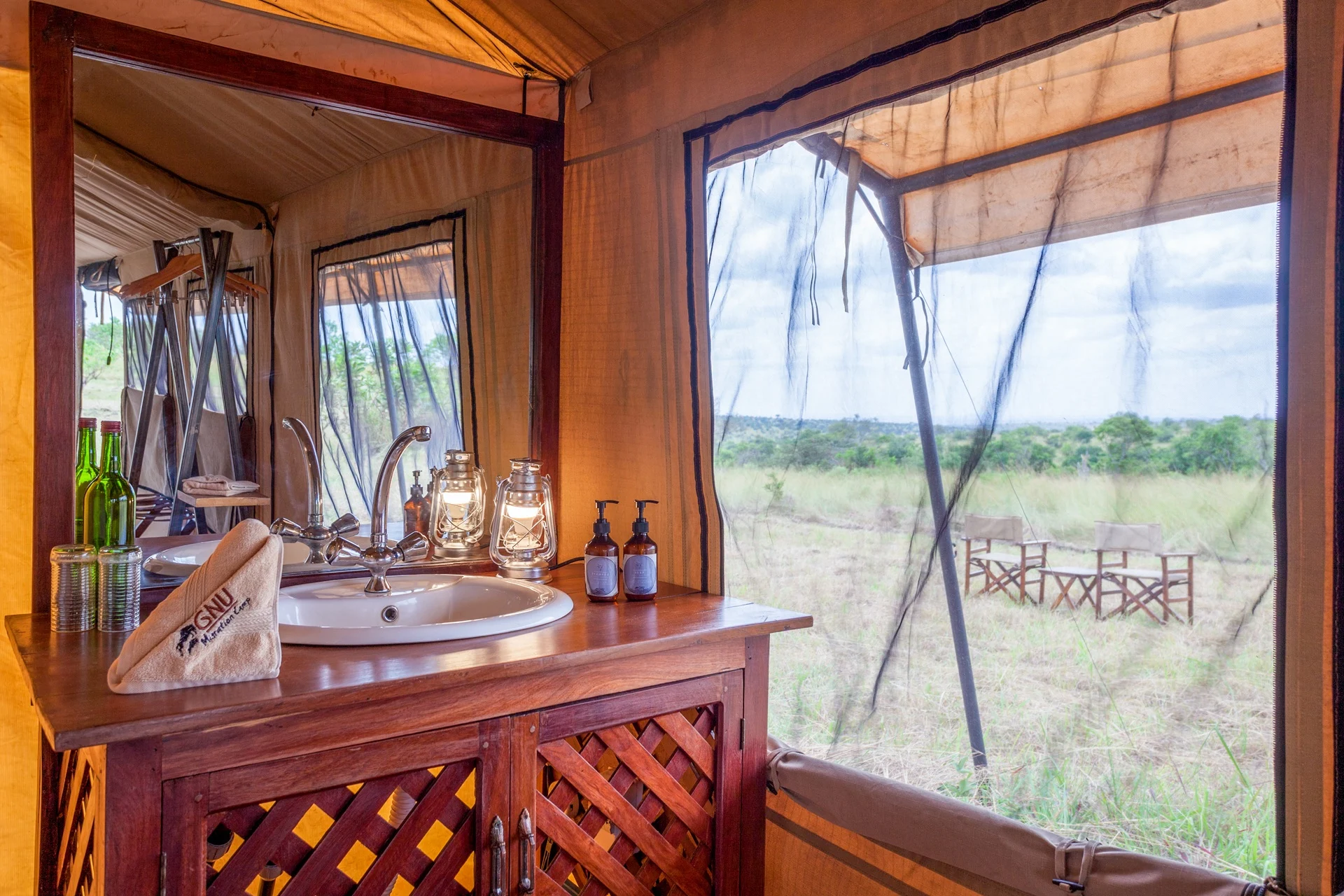
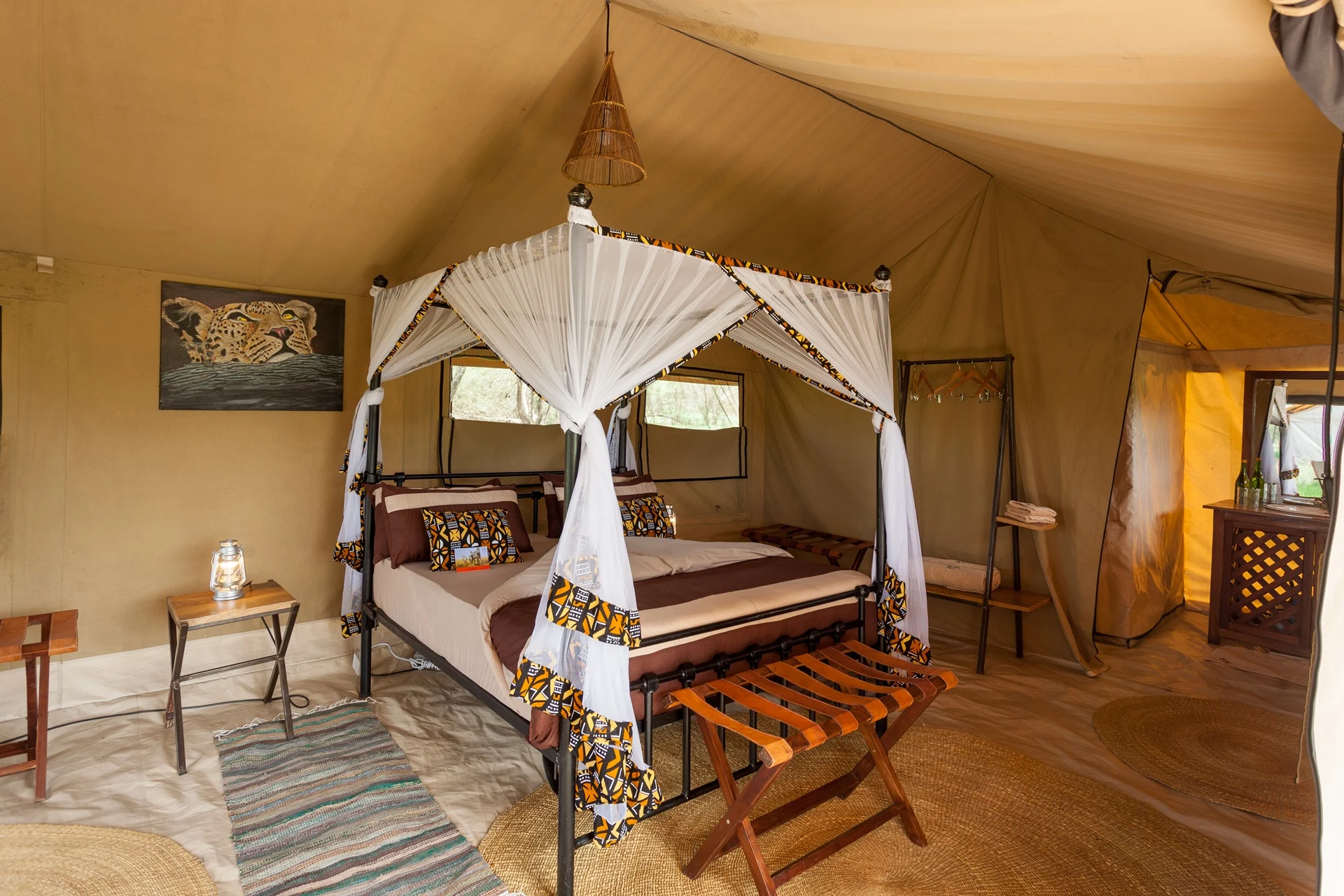
All ten tents are en-suite, with a flush toilet and a hot shower. Solar power runs the camp, so lighting and charging work through the night. Each tent has a deck facing the plains, proper beds with full mosquito nets, bottled water, and daily housekeeping. All tents are non-smoking.
The floors are carpeted, which matters on the cool green-season mornings. The walls are canvas, so you hear the herds and the hyenas at night. The bathrooms are compact, and we would rather tell you that now than surprise you later.
Double or Twin Tent (6 tents)
Our double and twin tents take two guests, with a double bed or two twin beds. Photographers and couples book these most.
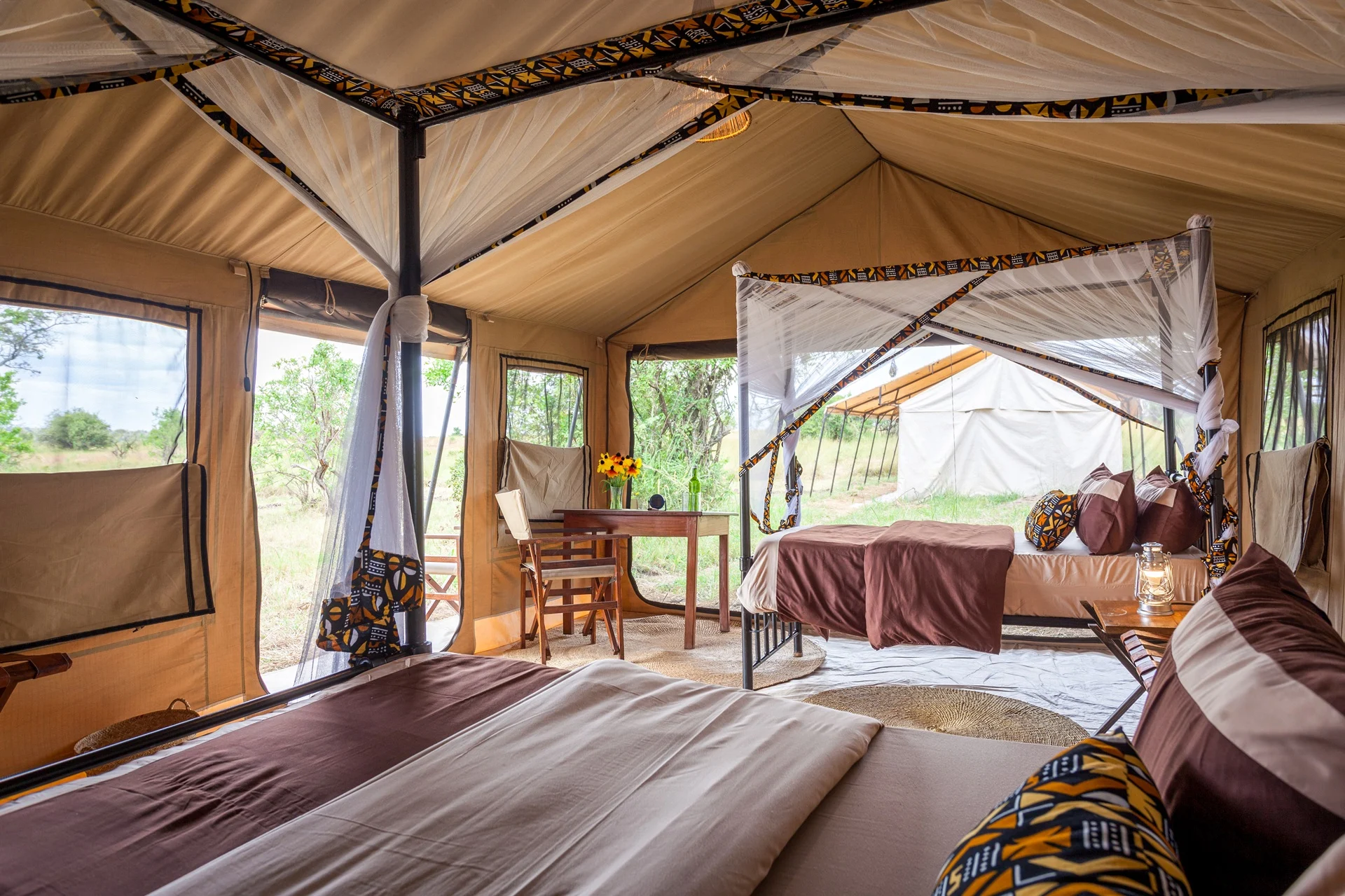
Triple Tent (2 tents)
The triple tents take three guests. Friends travelling together and parents with one child use them most.
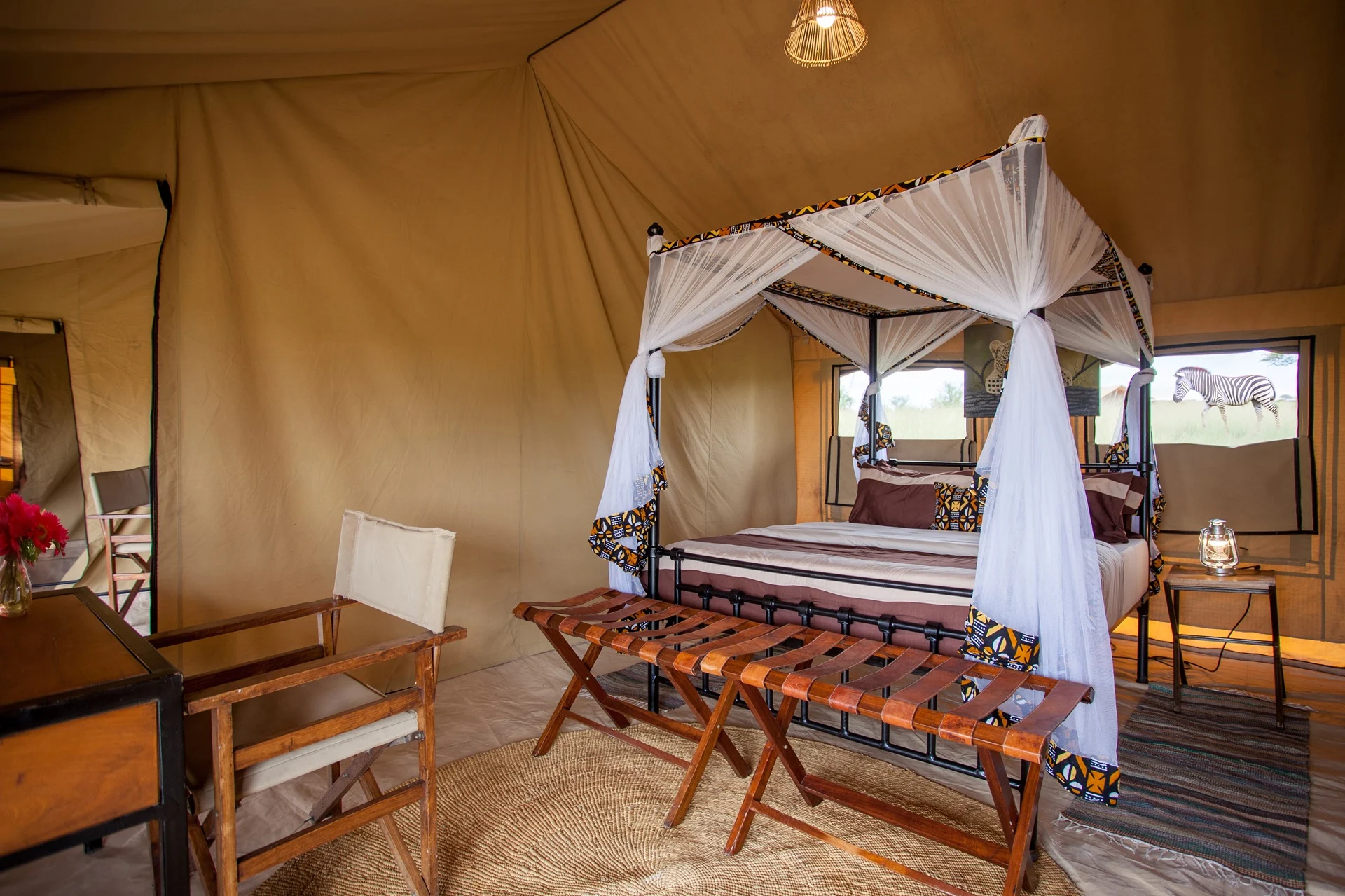
Family Tent (2 tents)
The family tents keep parents and children together in one unit, with separate sleeping areas. Tell us your family size when you enquire, and we will match you to the right tent.
- En-suite bathroom with hot shower
- Solar power with charging points
- Private deck facing the plains
- Carpeted floors
- Mosquito nets and bottled water
- Daily housekeeping
- Escort to your tent after dark
- Laundry service
The Wildebeest Calving Season, Honestly
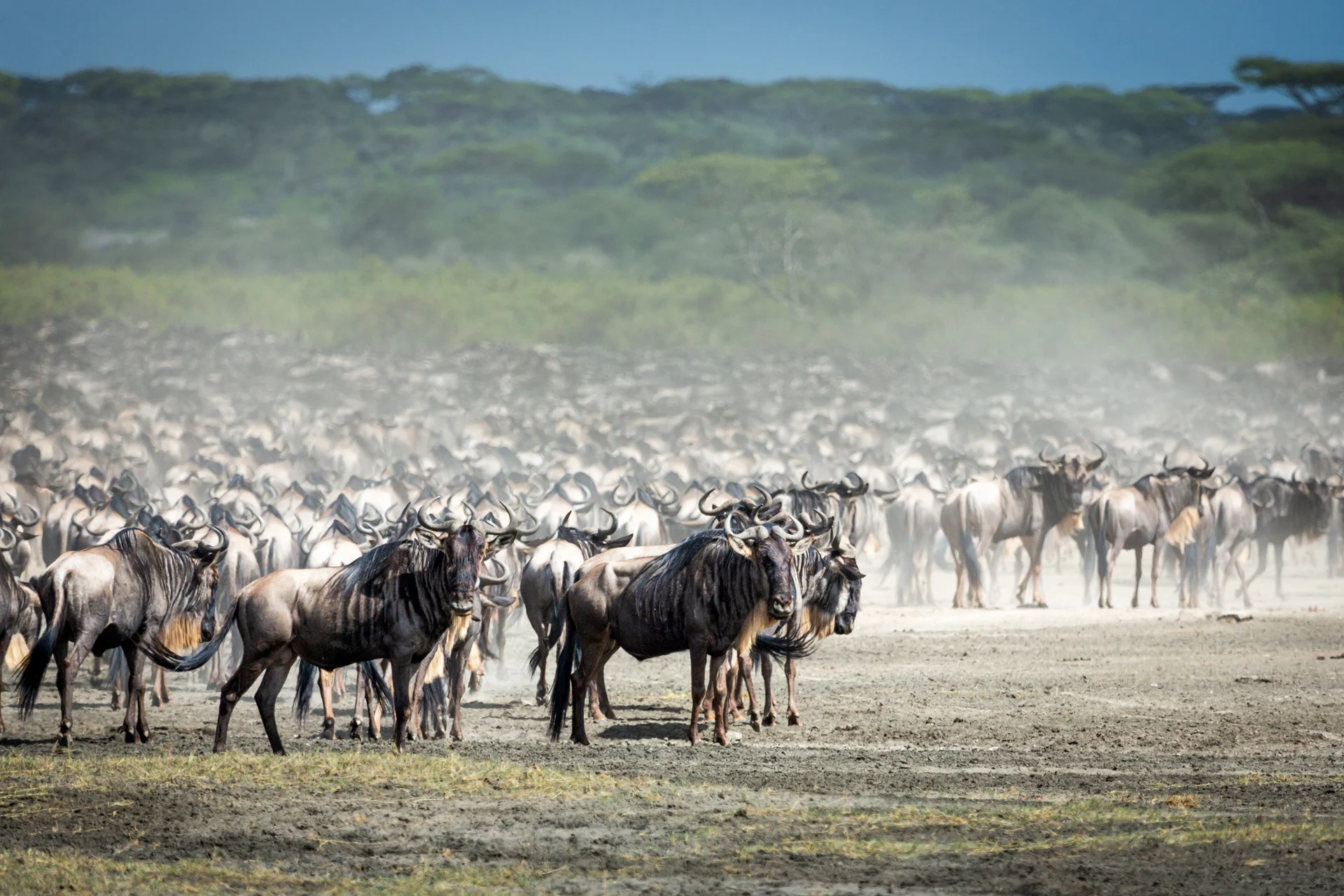
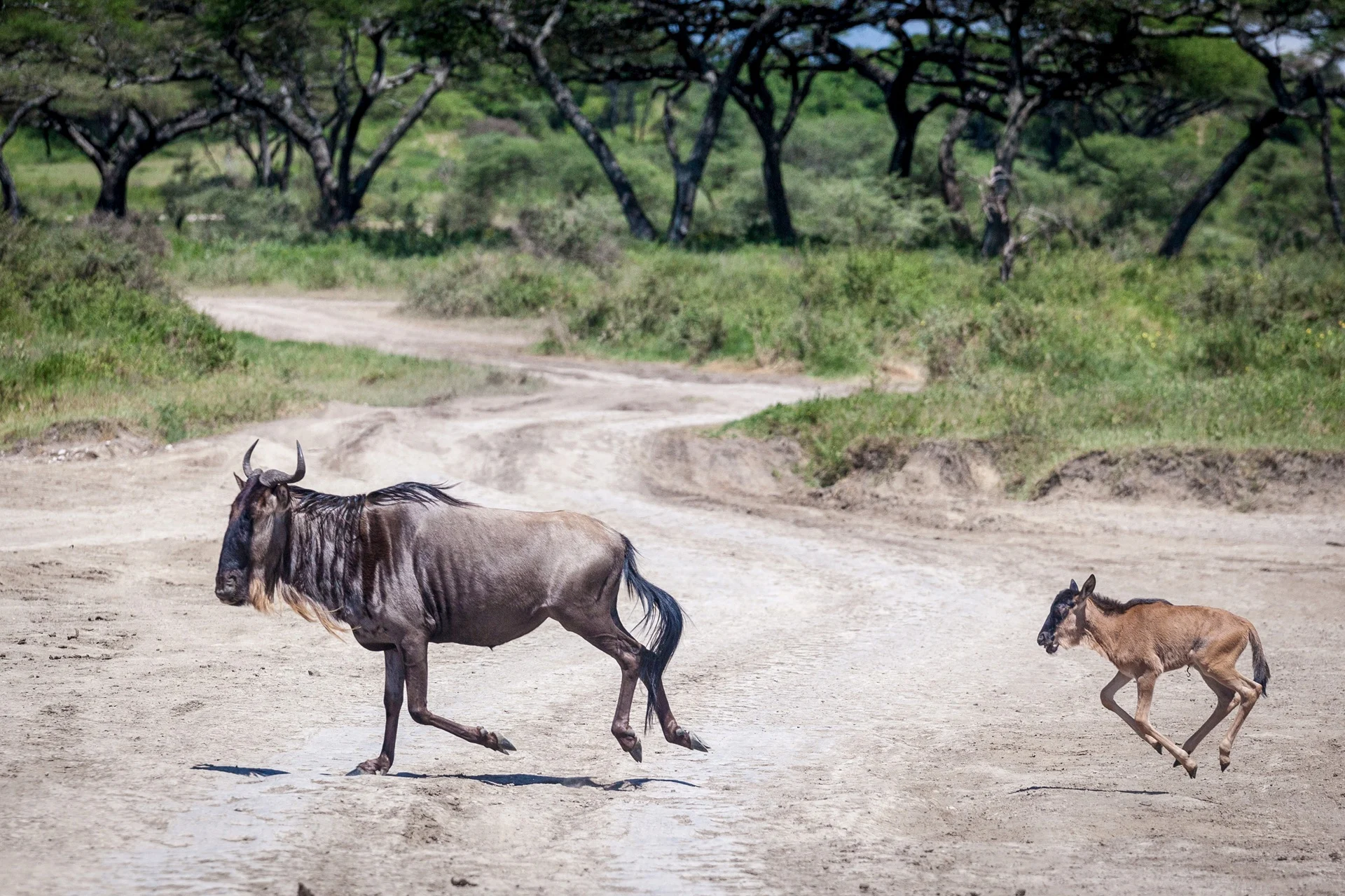
The calving season is the most reliable event in the whole migration. Unlike the river crossings, it does not depend on a single dramatic moment. The herds stay on these plains for weeks, and births happen daily across the season.
Around half a million calves arrive between January and March. Most are born within a few weeks of each other, because the herds calve together for safety. At the peak, you can watch a calf stand and walk within minutes of birth.
Predators respond to that abundance. Lions, cheetahs, leopards, hyenas, and jackals all hunt here through the season, and they hunt in daylight. Guests see more predator action in Ndutu than anywhere else on our circuit.
The honest part is this. Calving is also difficult to watch at times, because predators take newborns in front of you. Families with young children should know that before booking. Most guests find the whole cycle moving rather than upsetting, but the plains do not soften anything.
Facilities & Dining
Facilities and Dining at our Ndutu Camp
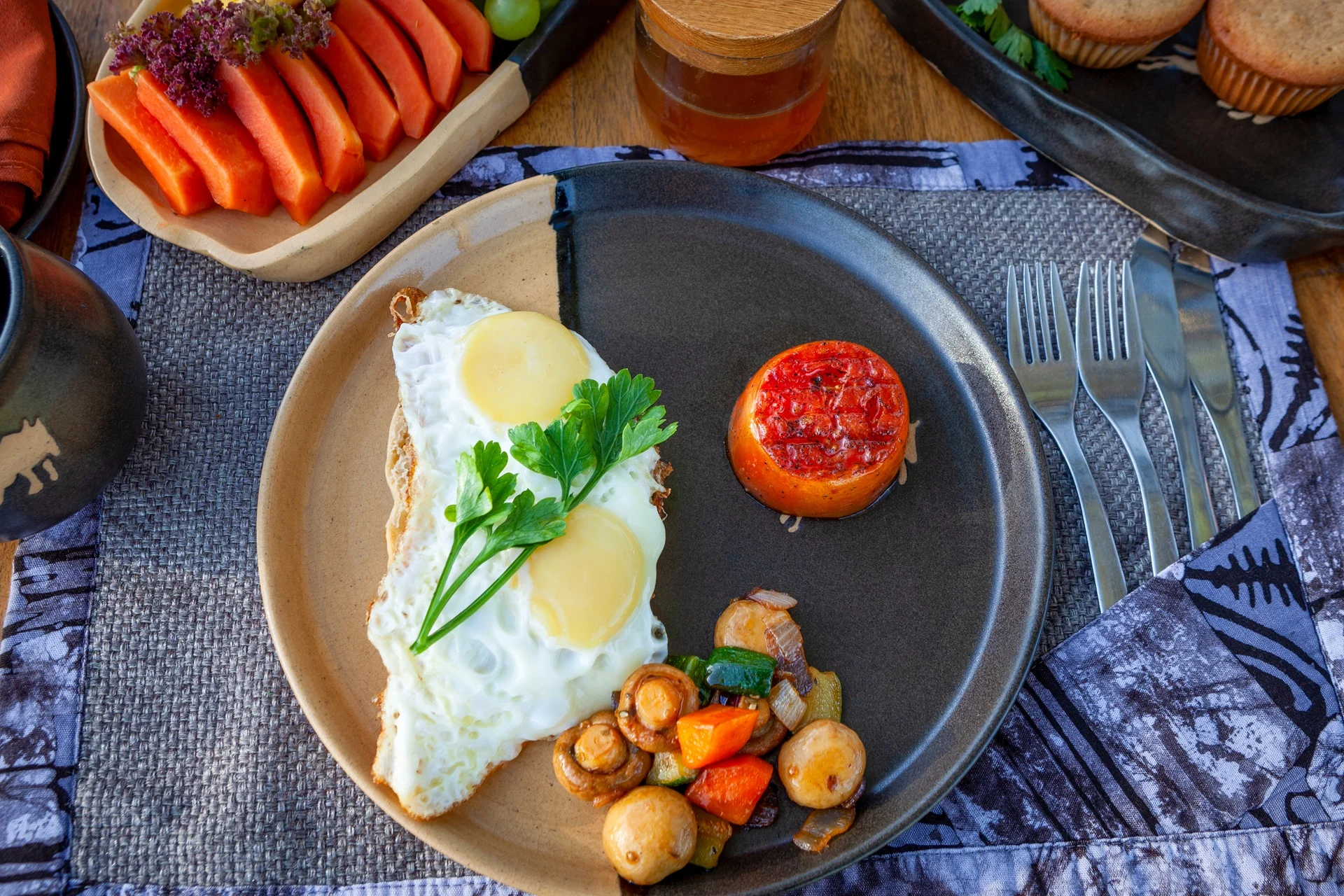
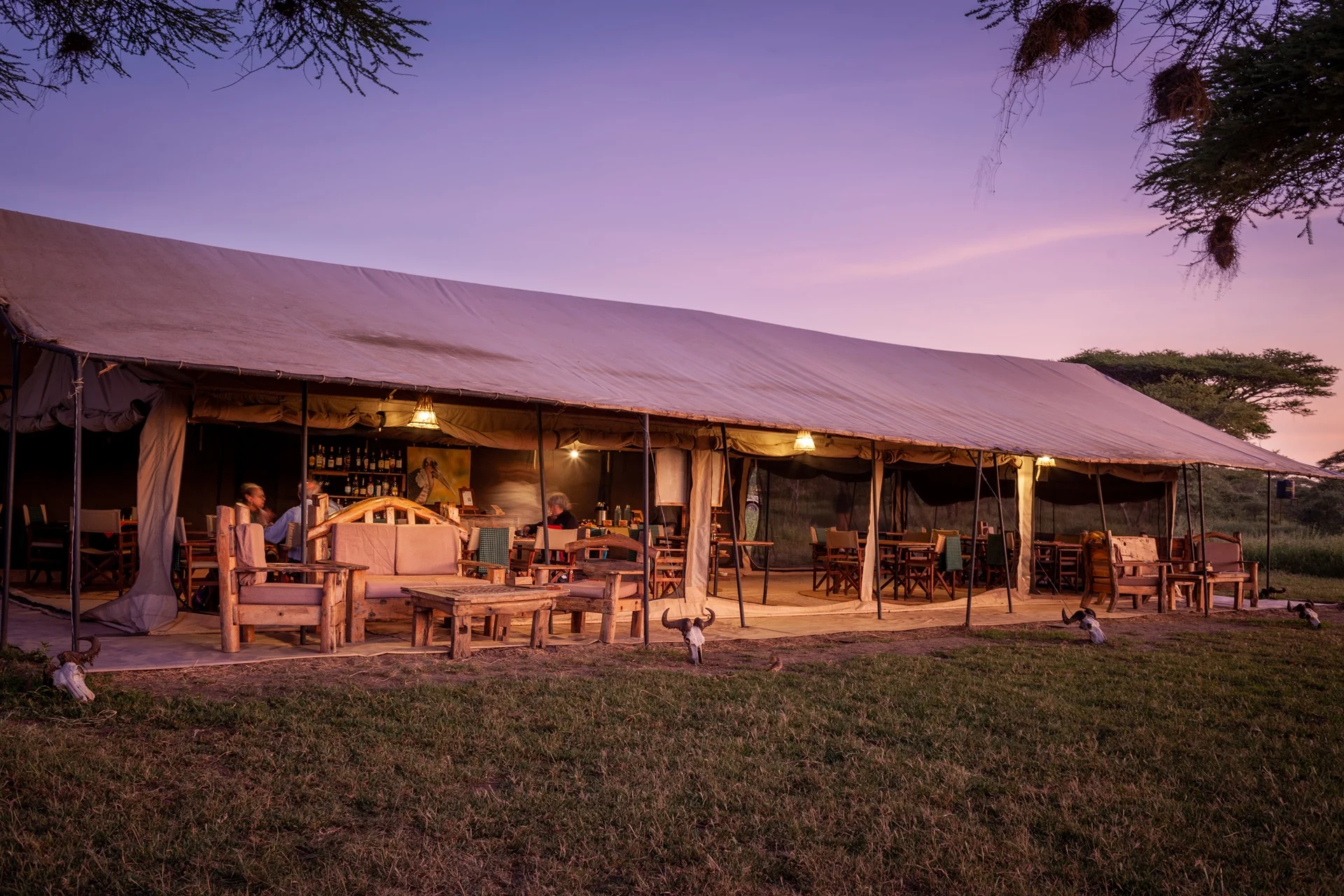
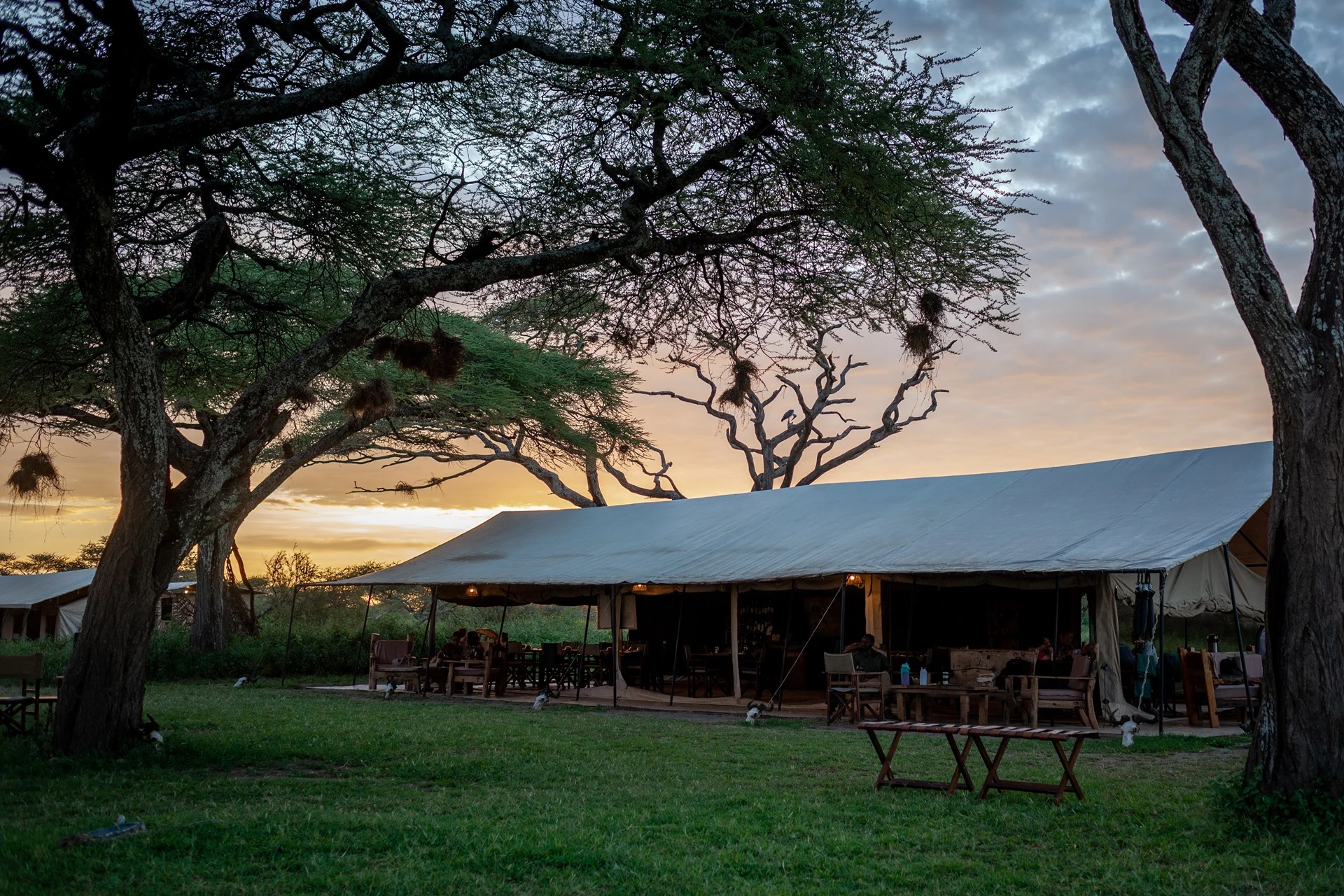
The main tent holds the restaurant, the bar, and a lounge. Breakfast is served early, so you can be out while the light is still soft. Dinner is a full served meal with a choice of dishes, and guests write about the soups more than anything else on the menu.
If you are out for the whole day, the kitchen packs a breakfast or lunch box. Tell us about dietary needs when you book, or when you arrive. Vegetarian, vegan, gluten-free, and most other requests are simple for us.
Your stay at Gnu Ndutu Camp is full board. Breakfast, lunch, and dinner are part of your rate, and drinks from the bar cost extra.
The camp is sustainability certified, and moving twice a year keeps us honest about it. We run on solar power; we keep the camp free of single-use plastic, and waste leaves with us. When the season ends, the site is cleared and restored.
Location
Our Safari Camp in Ndutu, Southern Serengeti
The camp stands in the Ndutu area, where the southern Serengeti plains meet the Ngorongoro Conservation Area. Among the southern Serengeti camps, ours sits close to the calving plains themselves. Lake Ndutu and Lake Masek lie nearby, and their shores draw game and birds all season. The landscape mixes short-grass plains with acacia woodland, which is why the cats hunt so well here.
Most guests fly into Ndutu Airstrip, the nearest airstrip to the camp. By road, Ndutu is about two hours from the central Serengeti, about two hours from Ngorongoro Crater, and roughly five hours from Arusha.
Oldupai Gorge sits on the route between Ndutu and the crater, and Maasai villages in the area welcome visitors. Many guests combine the camp with our Karatu Tented Lodge near Ngorongoro, or with Mawe Tented Camp in the central Serengeti.
Best Time to Stay at our Ndutu Camp
January and February
These are the peak calving weeks. Births happen daily, predator activity is constant, and the plains hold the greatest concentration of animals. Tents sell out first for this window, so book early.
December
The camp opens as the herds arrive from the north. Early births begin from the second week of December. Rates and pressure stay lower, and the plains are green after the short rains.
March
Calving continues into the last week of March, and the calves are strong enough to travel by the end of it. The plains stay green, and the camp is quieter than in February. From April, the herds move north and the camp closes and follows them.
Activities
Things to Do at Gnu Ndutu Camp
Every activity starts at camp, and a safari camp in Ndutu puts you close to all of them. Book ahead where you can, so we can arrange guides and permits.
01 — Game drives on the calving grounds
Game drives on the calving grounds
Game drives run in our 4×4 vehicles with our own guides. Because off-road driving is permitted here, drives follow the herds rather than the roads. Morning drives leave at first light, when the cats are still hunting.
02 — Photographic safaris
Photographic safaris
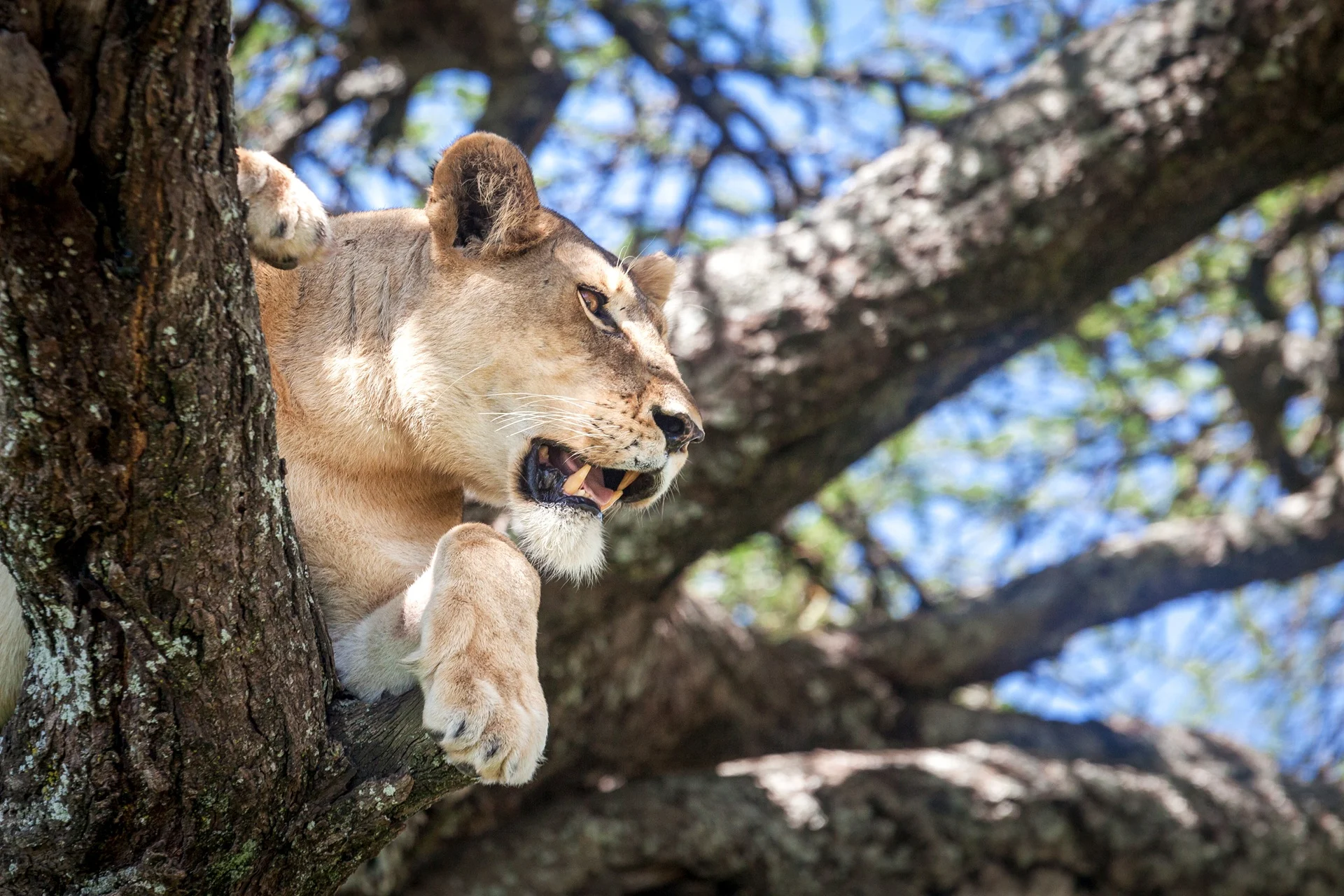
Ndutu suits photographers better than any other stop on our circuit. Low light, open plains, off-road access, and constant action work together here. Tell us your equipment and goals, and we will pair you with the right guide and vehicle seat.
03 — Walking safaris
Walking safaris
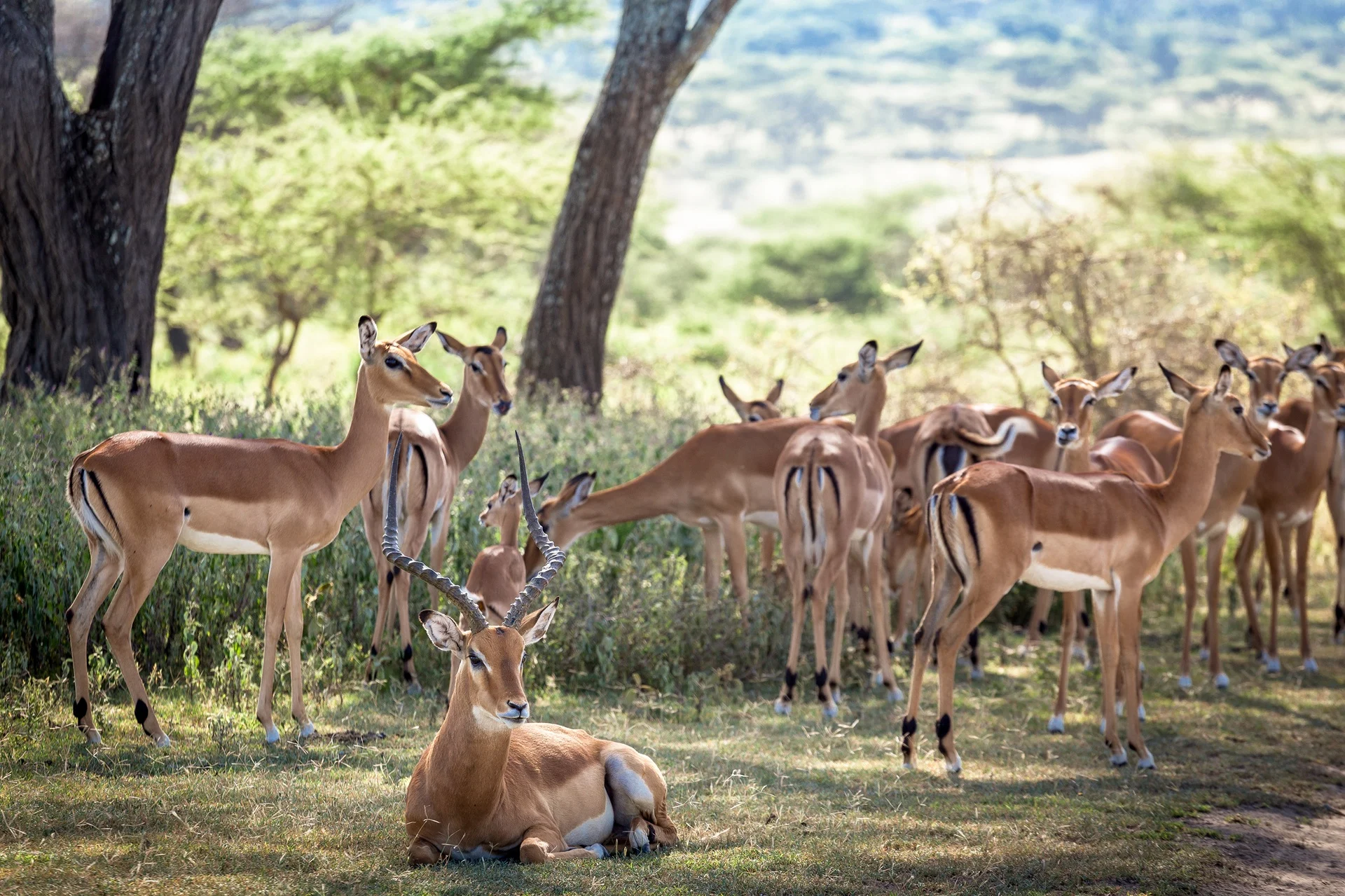
Guided walks show you the plains at ground level, with tracks, plants, and birds that vehicles pass. Walks run in the cool morning hours and need advance booking.
04 — Hot air balloon safari
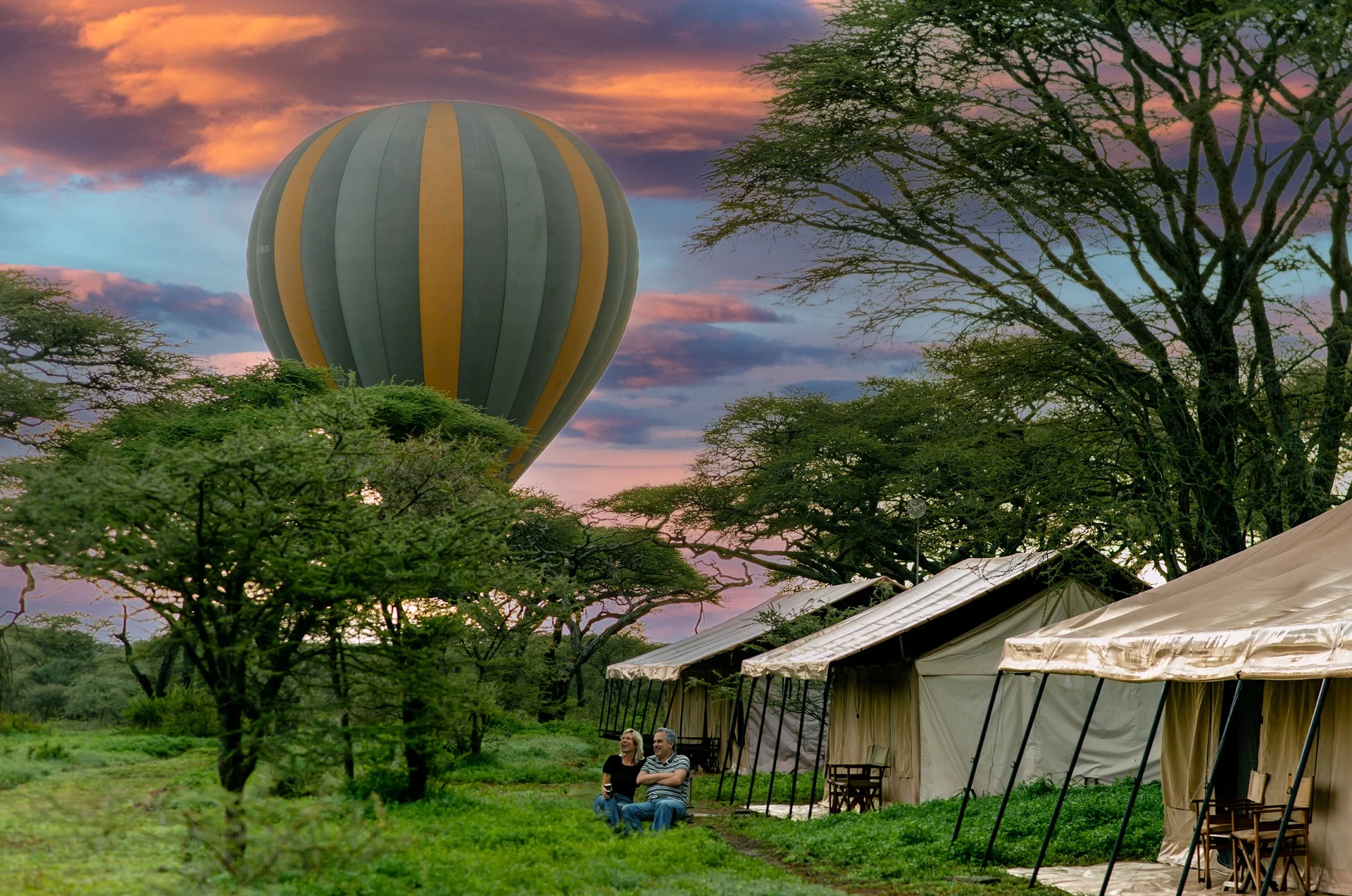
Hot air balloon safari
Balloons fly over the southern plains at dawn, above the herds and the woodland. The flight ends with a bush breakfast. Seats are limited in season, so book well ahead.
05 — Watching from camp
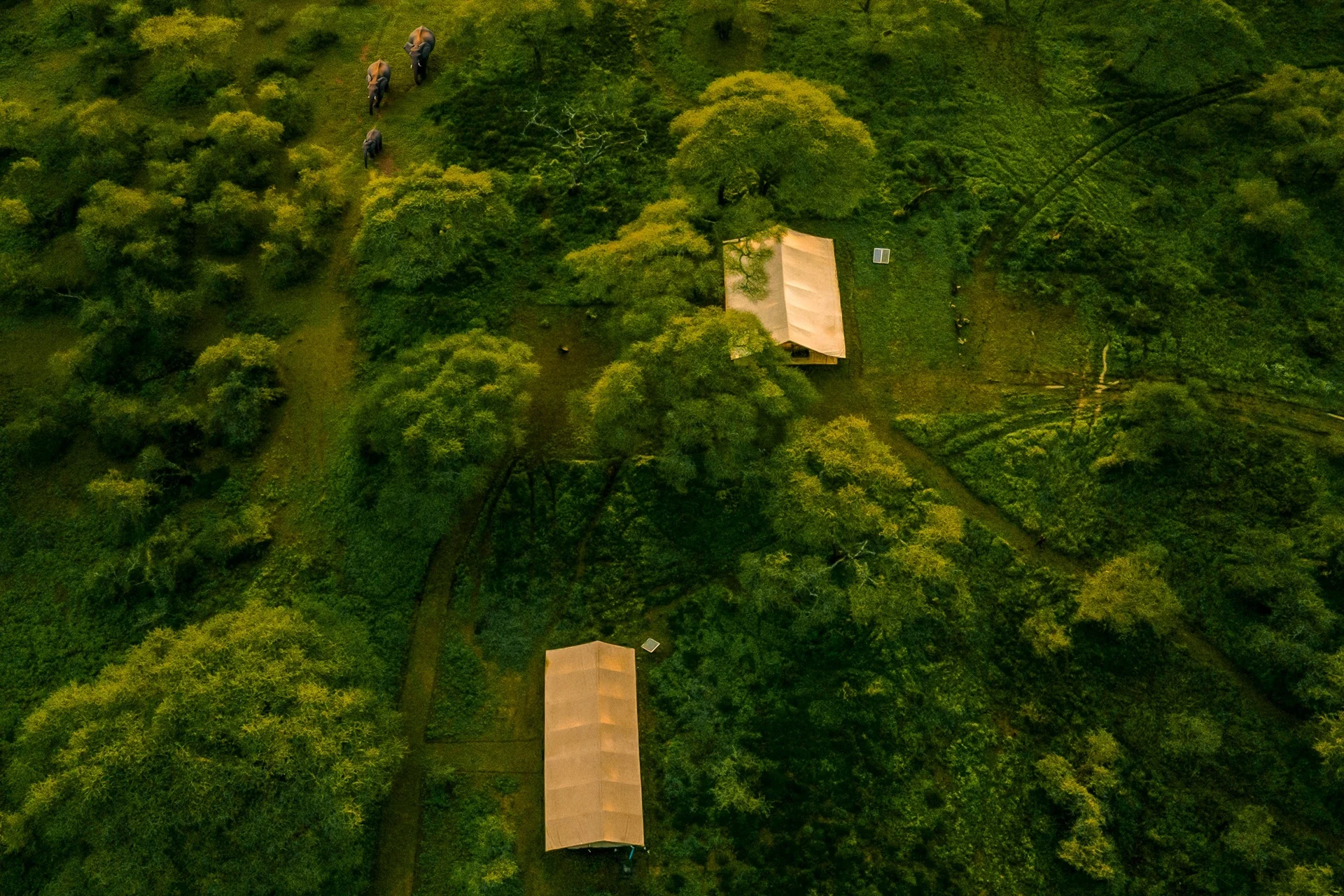
Watching from camp
The herds graze around camp for weeks during calving. Between drives, a chair and binoculars do real work here.
Rates and Booking
Rack rates, per person per night, full board. One rate applies across the season:
Included
Full board meals (breakfast, packed lunch or lunch, dinner), VAT and government fees, parking.
Not included
Ndutu area entrance fees, plus concession and seasonal campsite fees, which the conservation authority collects separately, drinks from the bar, activities such as balloon flights, transfers, gratuities.
For a camp on the calving grounds with off-road access, these rates are best-value luxury. January and February sell out first, so enquire early for those dates.
Check live availability, or send us an enquiry, and we will reply with dates and a full quote.
What Our Guests Say
MarijaMirko, March 2026
Zozi T, Mar 6, 2026
dominikl, Feb 2026
Read all our reviews on TripAdvisor. Guests return most often to three subjects: the staff, the food, and how close the animals come.
Frequently Asked Questions
The season runs from December to the end of March. Births begin from the second week of December, and the peak falls in January and February. The calves are strong enough to travel north by late March.
Stay in the Ndutu area rather than the central Serengeti. The herds calve on these southern plains, and Ndutu permits off-road driving, so your guide can reach the sightings. Look for a camp that operates through the whole season, close to the calving grounds. Ours runs from December to the end of March.
Both descriptions are used, and here is the detail. Ndutu lies on the southern Serengeti plains, on the Ngorongoro Conservation Area side of the boundary. The ecosystem is the same, and the herds move across it freely, but the fees and driving rules follow the conservation area.
Inside the national park, vehicles must stay on the road. In Ndutu, guides may leave the track in designated areas. During calving, that difference decides whether you watch a hunt from a distance or from a proper photographic position.
Ndutu Airstrip is the nearest strip to camp. By road, allow about two hours from the central Serengeti, about two hours from Ngorongoro Crater, and roughly five hours from Arusha.
The camp operates in Ndutu from late December to 31 March. Outside those dates, it moves north and runs as Gnu Mara River Camp in Kogatende, from 1 June to 15 November.
Because the migration moves. Gnu Ndutu Camp is a mobile tented camp, so it follows the herds between the calving grounds in the south and the Mara River in the north. You always book the camp where the migration actually is.
Rates are per person per night, sharing a tent, on full board. A couple in a double tent pays twice the listed rate for the tent. Entrance, concession, and campsite fees are separate, and the conservation authority collects them.
Yes. Two family tents keep parents and children in one unit, and the triple tents suit small families. Please note that predators hunt newborn calves in plain view during this season. Tell us the ages of your children when you enquire, and we will advise honestly.
Yes. We arrange everything from single game drives to complete multi-day safaris across the Northern Circuit, with our own vehicles and guides.
Continue Your Safari With Mawe Lodges
Gnu Ndutu Camp is one of five Mawe properties across northern Tanzania. Many guests link two or three of them in one route.
The same camp in its northern season, for the river crossings.
Resident big cats in the central Serengeti, all year.
Your base near Ngorongoro Crater, two hours away.
Your nights inside Tarangire National Park.
Tanzania · Northern Circuit
Book your stay with Mawe Lodges
Our own lodges and camps, our own guides, our own 4×4 vehicles. One team from arrival to departure.
-
12+
years operating -
Own
lodges & camps -
Own
guides & 4×4 vehicles