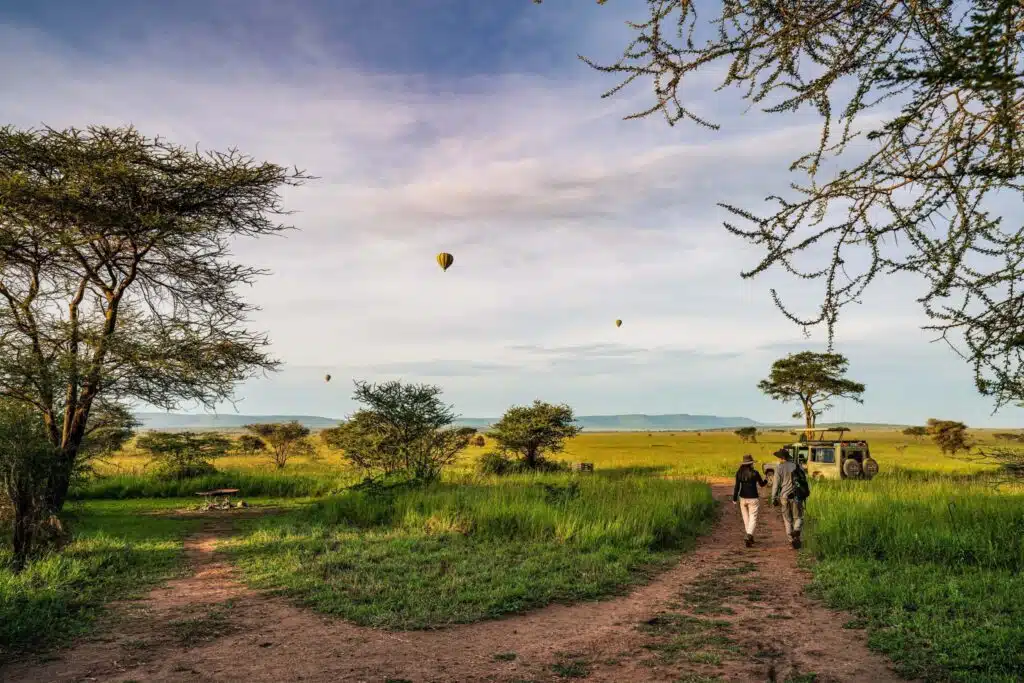
Tanzania in June brings cool mornings and a Northern Circuit that gradually dries after the long rains. Grass still carries colour, while changing water supplies influence where animals gather. Your best camp choice depends on your dates, route and wildlife priorities.
June also creates a useful accommodation choice. Mawe Tented Camp, Baobab Tented Camp and Karatu Tented Lodge retain their lower published rates throughout June. Meanwhile, Gnu Mara River Camp opens its northern season on 1 June. Its opening gives you another base, although migration herds follow rainfall and grazing rather than a camp calendar.
For Tanzania in June, start with the places you want to explore. Then match those places with operating camps, sensible transfers and a complete quotation. The result can combine elephant country, the Ngorongoro highlands and several rewarding Serengeti days.
Is Tanzania in June right for your safari?
Yes, June suits travellers seeking developing dry-season conditions and a varied Northern Circuit safari. It also offers lower published accommodation rates than July at three year-round Mawe properties. However, different parks dry at different speeds, and wildlife movements vary between years.
Choose Tanzania in June if you value resident wildlife alongside possible migration viewing. Tarangire, Ngorongoro and the central Serengeti give your trip several wildlife settings. You can enjoy those settings even when migrating herds move beyond your immediate area.
First-time visitors can favour a compact route with fewer camp changes. Photographers may prefer extra nights around one habitat, rather than lengthy drives between distant sightings. Families can leave room for slower mornings and breaks between outings.
Tanzania in June requires more careful planning when river crossings dominate your wish list. An operating northern camp provides accommodation, rather than a promise about herd arrivals. For a broader seasonal comparison, explore our best time to visit Tanzania guide.
What changes between early and late June?
Early June can retain more moisture from the preceding rainy months. Later dates often bring firmer ground and a stronger dry-season feel. Nevertheless, local showers can interrupt that progression, so neither fortnight follows a fixed timetable.
| Planning point | Early June | Late June |
|---|---|---|
| Ground conditions | Some tracks may retain moisture | More tracks may dry, depending on recent rain |
| Vegetation | Grass can remain green and tall | Grass gradually dries, with local variation |
| Route decisions | Allow flexibility around softer tracks | Recheck access rather than assuming every track opens |
| Camp planning | Check the northern camp's seasonal opening | Check your full sequence of rooms and transfers |
| Wildlife priorities | Balance resident wildlife with current herd reports | Keep the same balance as migration movements develop |
How drying ground changes a game drive
Drying tracks can give guides more practical route choices. However, firm ground does not immediately shorten every grass patch. Some animals still disappear behind vegetation, particularly when they rest below the grass line.
For Tanzania in June, patient viewing matters as much as access. Ask your guide to explain the habitat around a sighting. A quiet stop can reveal movement that a hurried drive misses.
Why late June needs its own availability check
Check every camp in your proposed sequence before fixing flights. One available Serengeti tent cannot confirm the rest of your circuit. Flexible dates can help you find a suitable room sequence for Tanzania in June.
Tanzania in June works best when the accommodation sequence supports the route. Avoid adding a distant camp simply because another property lacks your first-choice room.
June weather across the Northern Circuit
Tanzania weather in June generally reflects the transition beyond the northern long rains. The Tanzania Meteorological Authority describes June within the cooler, generally dry period. That climate pattern helps planning, but it cannot forecast the weather for your particular departure.
Altitude and location matter more than one national temperature. Tarangire's lower landscapes can feel warmer than the Ngorongoro highlands during the same trip. Serengeti conditions also vary across a large area, so pack for changing mornings and afternoons.
For Tanzania in June, plan around three practical possibilities: chilly starts, warmer daylight and occasional rain. You can adjust layers as the vehicle moves between open plains, shaded woodland and higher ground.
Cool mornings at Karatu and Ngorongoro
The Ngorongoro rim rises above the crater floor. That elevation helps explain colder starts around the highlands. Bring a warm layer for an early departure, especially when an open vehicle exposes you to moving air.
Karatu also deserves more than beach clothing. Keep your fleece or light insulated jacket within reach, rather than beneath packed luggage. After sunrise, lighter layers can make the onward drive more comfortable.
Rainfall and road conditions across the Serengeti
June usually brings fewer rainy-season interruptions, although an isolated shower can still soften local tracks. Ask about recent conditions in the camp area, rather than relying on an airport forecast.
Tanzania in June can retain green scenery alongside increasingly dusty roads. Protect camera equipment accordingly, and carry a light rain shell. Give road transfers enough flexibility for conditions and wildlife stops.
Before departure, check a current regional forecast. Then let your guide adjust each day's route using local information. That approach keeps a typical seasonal pattern separate from the conditions you actually encounter.
Where might you find the wildebeest herds in June?
June migration planning often involves the central and western Serengeti, including the Grumeti area. However, rainfall and grazing influence herd movements, so their exact distribution changes between years. Groups can occupy different areas simultaneously.
For Tanzania in June, distinguish seeing migrating animals from watching a river crossing. Herds may graze, rest or move across open country without crossing during your visit. Each behaviour offers something different to observe.
The Western Corridor and Grumeti
The Western Corridor deserves attention when current reports place herds around Grumeti. It lies apart from the northern Mara River area. A northern camp therefore cannot substitute automatically for accommodation near western sightings.
Mawe does not operate a Western Corridor property. If western migration viewing leads your plans, discuss distances and suitable arrangements before choosing your accommodation. Our Grumeti River guide introduces the area.
Why a northern opening does not guarantee a crossing
Gnu Mara River Camp starts its published season on 1 June. That date describes camp operation, rather than the migration's arrival. Choose northern nights in Tanzania in June for a route that suits your interests and current wildlife information.
Keep expectations flexible, particularly when a crossing represents your main goal. Use our Great Migration guide for wider planning context. Tanzania in June deserves its own route assessment, rather than a copy of a July migration programme.
Which parks deserve time on a June route?
Tarangire, the central Serengeti and Ngorongoro can anchor a balanced June circuit. They offer different landscapes and resident wildlife, while their locations support a logical progression through northern Tanzania. Add other stops only when they serve your interests.
| Your priority | Area to consider | Suitable Mawe base | June planning point |
|---|---|---|---|
| Elephants and varied woodland | Tarangire | Baobab Tented Camp | Dry-season concentration develops gradually |
| Resident Serengeti wildlife | Central and eastern Serengeti | Mawe Tented Camp | Allow several drives around different habitats |
| Crater wildlife and highland scenery | Ngorongoro and Karatu | Karatu Tented Lodge | Plan an early departure with warm clothing |
| Northern Serengeti landscapes | Kogatende area | Gnu Mara River Camp | Check herd reports separately from camp opening |
| An additional lake or cultural stop | Manyara or Lake Eyasi | Karatu Tented Lodge | Confirm conditions, access and visit arrangements |
Tarangire as dry-season viewing develops
Tarangire in June starts moving towards its better-known dry-season pattern. As surrounding water sources diminish, the river corridor becomes increasingly important to wildlife. June does not necessarily match the stronger concentrations of later dry-season months.
For Tanzania in June, give Tarangire time beyond a rushed transit visit. Two nights can support a fuller day between arrival and departure. That breathing space lets your guide explore riverine areas and woodland without constantly watching the transfer schedule.
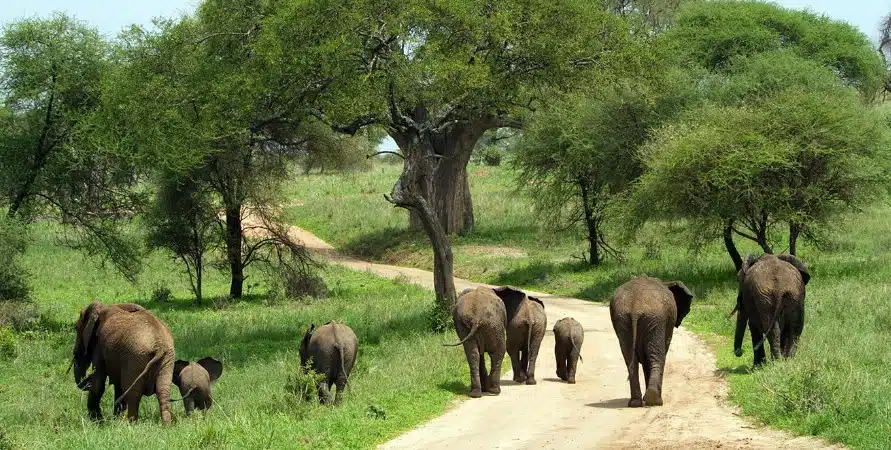
Elephants may lead your wish list, but look beyond the largest animals. Buffaloes and zebras also help reveal the relationship between water and wildlife. Watch how animals move between drinking areas, shade and feeding grounds. Different habitats also reward attention to birds and smaller antelope.
Central and eastern Serengeti for resident wildlife
Serengeti in June offers more than the migrating herds. Resident animals continue using the plains, rocky outcrops and riverine habitats. Lions, leopards and cheetahs add different viewing possibilities across these habitats. Around central and eastern areas, your guide can shape drives around recent sightings and suitable tracks.
Ask how cover, prey and light affect the day's search. That conversation can make a quiet stretch of driving more interesting. Planning Tanzania in June around resident wildlife gives your route value beyond changing migration locations.
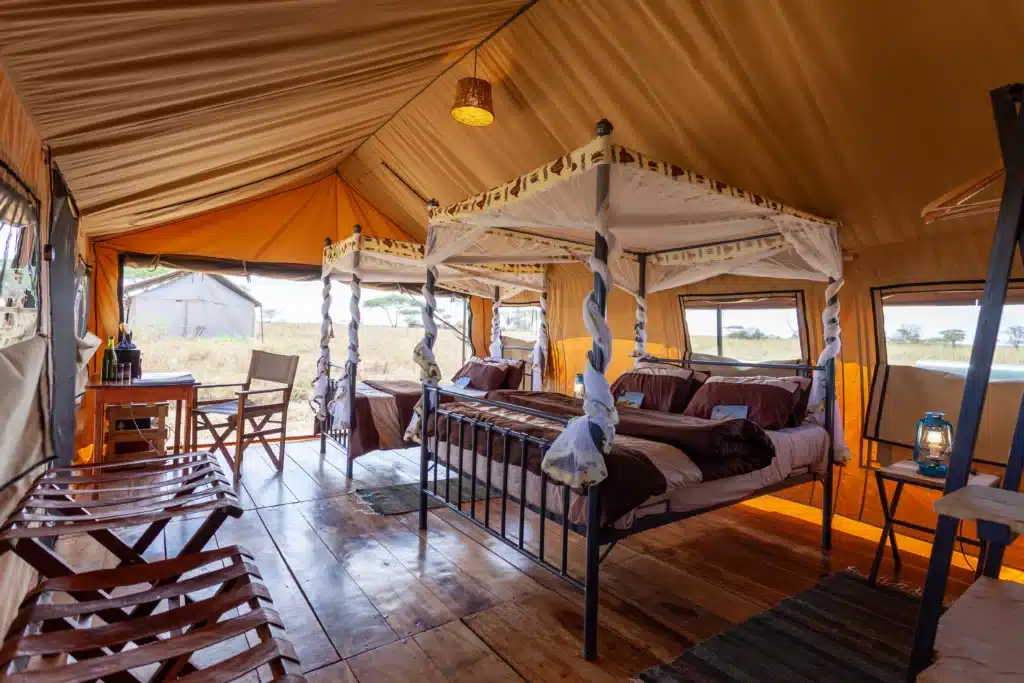
Mawe Tented Camp provides a base in the Soit Le Motonyi area. Several nights allow you to revisit promising country under changing light. Wildlife still sets its own pace, so avoid measuring every drive against a list of guaranteed sightings.
Ngorongoro and the Karatu base
Ngorongoro adds a different landscape to Tanzania in June. Its crater floor contrasts with Serengeti plains and Tarangire woodland. Karatu Tented Lodge provides a highland circuit base, rather than accommodation inside the crater.
Plan the crater visit around access, permits and your onward journey. Keep the preceding evening comfortable when an early start follows. Avoid combining too many distant stops with the same day's crater drive.
Consider Lake Manyara or Lake Eyasi when your timetable allows a focused visit. Confirm current lake conditions and community arrangements first. Tanzania in June benefits from purposeful stops, rather than collecting every destination on a map.
Which Mawe camps can you book in June?
Four Mawe properties operate during June under their published calendars. Three operate year-round, while Gnu Mara River Camp begins its northern season on 1 June. Gnu Ndutu Camp falls outside its published operating season.
| Property | Location and route role | Published operation | June choice |
|---|---|---|---|
| Mawe Tented Camp | Soit Le Motonyi, central and eastern Serengeti | Year-round | Resident wildlife and several Serengeti nights |
| Baobab Tented Camp | Tarangire, Lake Burunge corridor | Year-round | Tarangire drives with less daily commuting |
| Karatu Tented Lodge | Karatu highland circuit | Year-round | Ngorongoro access and nearby optional stops |
| Gnu Mara River Camp | Kogatende, northern Serengeti | 1 June to 15 November | Northern stays, with realistic migration expectations |
| Gnu Ndutu Camp | Ndutu plains | Late December to 31 March | Choose another operating property for June |
Three year-round properties
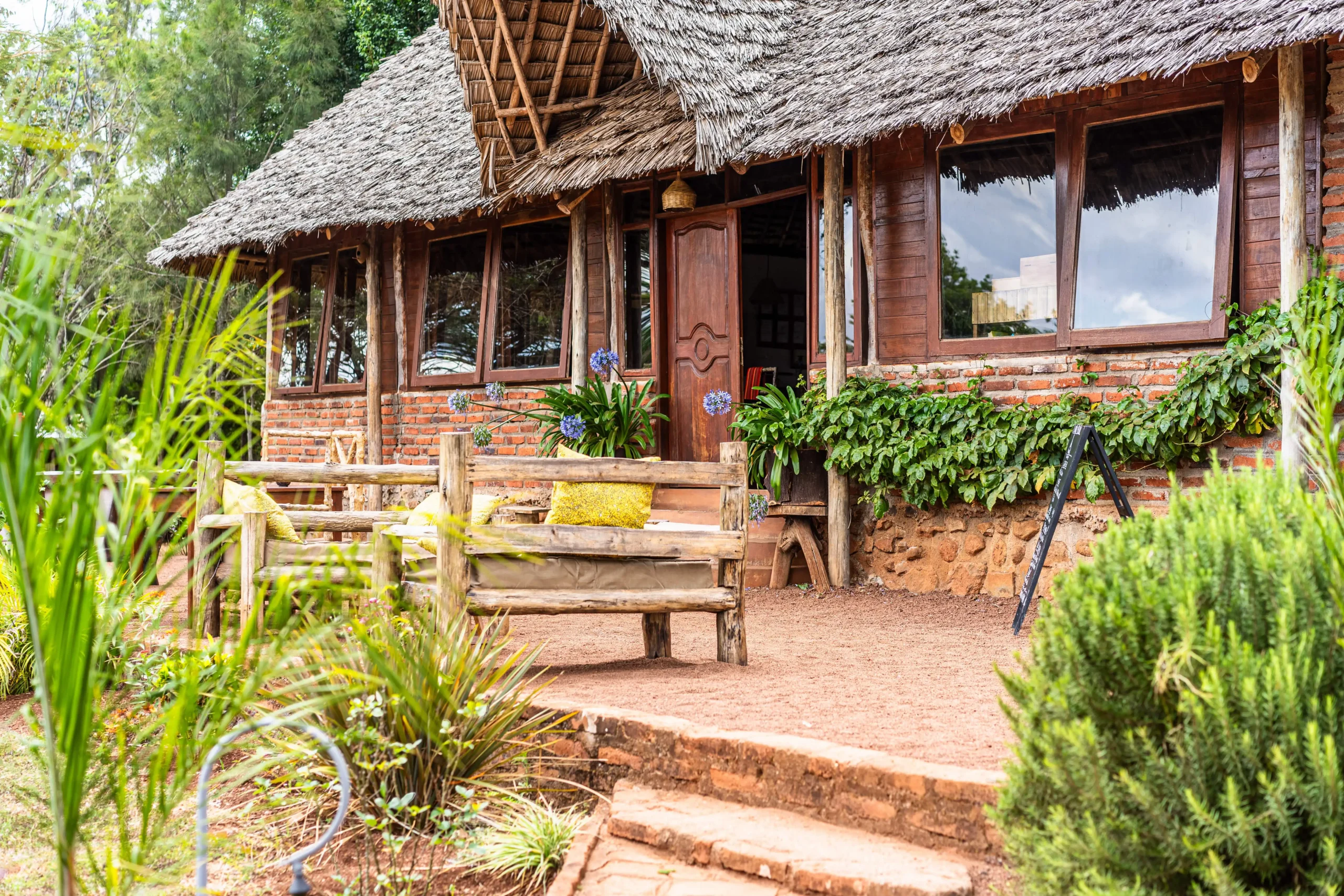
When deciding where to stay in Tanzania in June, match each property to its surrounding area. Baobab Tented Camp supports Tarangire nights. Karatu Tented Lodge supports the highland section. Mawe Tented Camp supports the central and eastern Serengeti.
At Mawe, we operate these three properties throughout the year. Their locations let you build a June circuit around distinct landscapes. Choose the sequence first, then review room categories on each property page.
Gnu Mara's northern season
Gnu Mara River Camp adds a northern option for Tanzania in June. Include it when the northern area justifies the extra travel and nights. Its published calendar does not guarantee a particular wildlife event.
Tanzania in June still requires a live availability check. Operating dates show when a camp normally welcomes guests, rather than which rooms remain free. Confirm your full itinerary before purchasing connecting transport.
How do June accommodation rates compare with July?
June costs less than July at Mawe's three year-round properties under the published room-rate bands. Gnu Mara uses one published seasonal rate, so its comparison differs. Always compare the same occupancy, board basis and room category.
Three properties change rate bands after June
The following rates cover double or twin sharing with full board. Each figure shows USD per person, per night, rather than the total room price.
| Property | June rate | July rate | Difference per person, per night |
|---|---|---|---|
| Mawe Tented Camp | USD 195 | USD 280 | USD 85 |
| Baobab Tented Camp | USD 194 | USD 256 | USD 62 |
| Karatu Tented Lodge | USD 118 | USD 144 | USD 26 |
| Gnu Mara River Camp | USD 286 | USD 286 | USD 0 |
We checked these published figures on 6 October 2026. Request a current quotation for your travel dates, room category and party composition. Rates can change, especially when you plan a future season.
Consider three sharing nights at Mawe Tented Camp. June totals USD 585 per person, while July totals USD 840. The difference reaches USD 255 per person before other safari costs.
That calculation gives Tanzania in June a concrete accommodation advantage for this particular stay. It does not establish the cheapest overall trip. Airfares, transport choices and extra activities can change the final comparison.
Why a room rate is not a complete safari quote
Full board covers the accommodation and stated meals. Your complete June safari costs also depend on vehicle arrangements, guide services, transfers and authority charges. Confirm drinks and optional activities separately.
Ask the quotation to identify conservation, concession or campsite charges where relevant. Also check crater-related charges and internal flights when your route includes them. Party size and children's ages can affect the calculation.
For Tanzania in June, compare complete quotations alongside the room table. Our Tanzania safari cost guide explains the wider budget. A lower accommodation figure should help your decision, without hiding another necessary cost.
Should you drive or fly between your June camps?
Driving can suit a compact Tarangire, Karatu and central Serengeti circuit. Flying can help when the northern Serengeti adds a long transfer. Compare the total journey, including airstrip pickups and connection time, rather than flight duration alone.
For Tanzania in June, a road route gives you continuity between changing landscapes. However, transfer days still consume time, even when they include wildlife viewing. Leave enough daylight and avoid treating every kilometre as a dedicated game drive.
When the northern leg needs extra time
Kogatende lies in the northern Serengeti, beyond the central circuit. Adding it changes the balance between driving and staying. Two camp nights provide only one full day between arrival and departure.
Three northern nights can give the extension more purpose. Nevertheless, your overall schedule must allow for the preceding transfer. Ask for a realistic day plan before adding the north to Tanzania in June.
What an internal flight changes
Seronera serves the central Serengeti, while Kogatende serves the northern area. Check the suitable airstrip with your camp and flight operator. A flight can shorten one journey while adding baggage limits and connection requirements.
For example, Coastal's standard luggage allowance permits 15 kilograms, including hand baggage. The operator requests soft bags. Confirm your booked airline's allowance, particularly when camera equipment adds weight.
A Tanzania safari in June should balance travel time with time in the field. Price both options and compare how many useful camp nights each preserves.
How many nights should you allow in June?
Seven camp nights can support a balanced resident-wildlife circuit. Nine or more can create space for a northern extension. Arrival timing, departure flights and your preferred pace should determine the final length.
Use the examples below as starting points. The reservation team should confirm availability, transfer arrangements and each day's practical timing.
Seven nights across three bases
Begin with two nights at Baobab Tented Camp. That gives Tarangire a full day between transfers and keeps the first wildlife section focused. Next, spend two nights at Karatu Tented Lodge for a crater visit and a comfortable highland pause.
Finish with three nights at Mawe Tented Camp. You then gain two full days between arrival and departure. Those days can explore central and eastern habitats without requiring another camp move.
This plan suits Tanzania in June when varied resident wildlife matters more than reaching every migration area. The accommodation calculation also gives you a useful budget starting point.
Using the published sharing rates, those seven nights total USD 1,209 per person in June. The equivalent July accommodation totals USD 1,640. June saves USD 431 per person on this example's accommodation component.
Vehicle services, flights, authority fees and optional activities add to both totals. Request a complete quote before comparing final trip prices.
Nine nights with a northern extension
Consider two Baobab nights, one Karatu night, three Mawe nights and three Gnu Mara nights. Plan the crater visit carefully around the onward Serengeti journey. If that day feels too compressed, add another Karatu night.
Tanzania in June can reward the longer plan when you want both central and northern landscapes. Check current wildlife information before fixing the northern portion. A flight may help the transfer, depending on schedules and your budget.
Keep arrival and departure accommodation outside these examples when your international flights require it. Tanzania in June deserves a timetable that allows you to enjoy the places you actually reach.
What can you do beyond daytime game drives?
Balloon flights, guided walks and selected night drives can add variety to a June safari. Their locations, permits and operating conditions differ. Choose an activity that reveals another side of the area around your camp.
Consider a balloon flight or a guided walk
A balloon flight offers a wider view of plains and movement below. Confirm the launch area, pickup arrangement and operator before booking. Weather conditions govern whether a particular flight can proceed.
A guided walk changes your attention from distant animals to tracks, plants and smaller details. Ask which permitted area suits your route and dates. Qualified guides and required rangers should determine the activity's format.
Tanzania in June offers changing textures for photographers, from remaining green grass to drying ground. Choose an activity for its perspective, rather than adding every available option to your schedule.
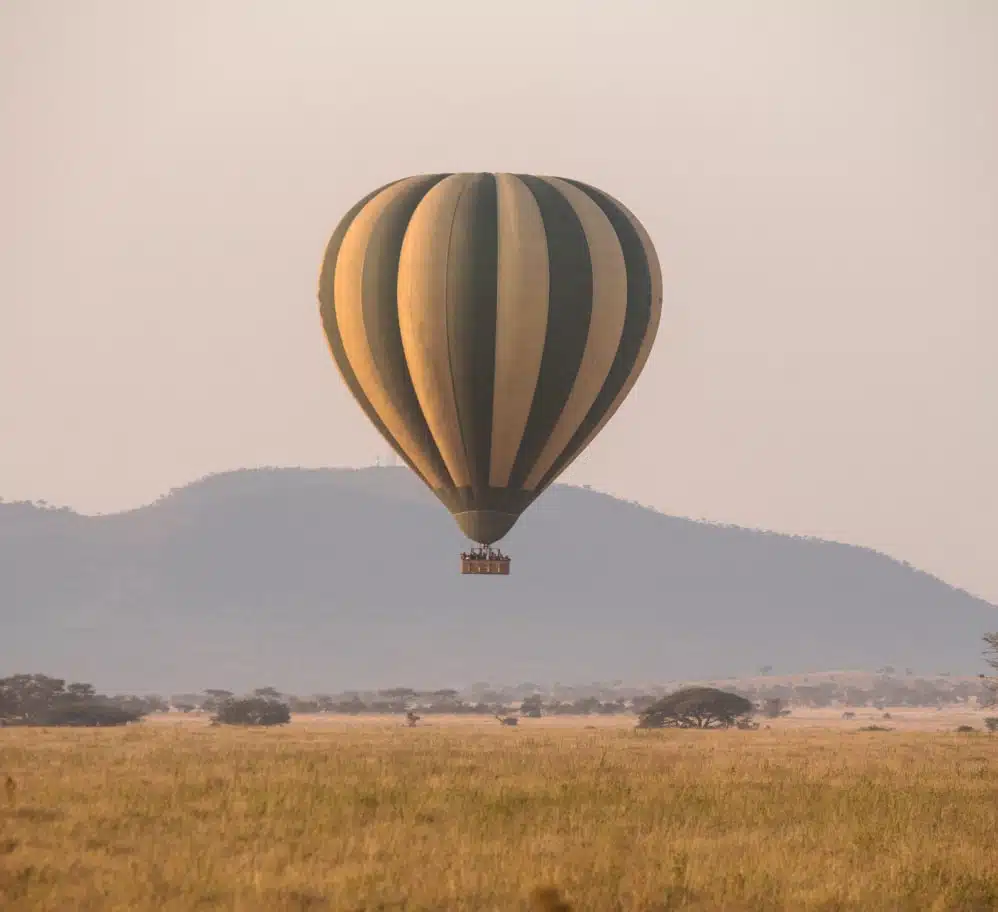
Add a different Tarangire perspective
Baobab's published activity options include night drives and guided walking arrangements. Confirm availability and the applicable permits before arrival. Night viewing in Tanzania in June can reveal behaviour that daylight drives miss.
Do not transfer that activity assumption automatically to another park. Each protected area sets its own access rules. Keep your chosen activity attached to the location where the operator can arrange it.
For birding, ask your guide to explore the habitat rather than promise a particular species. For photography, allow time to revisit useful light and backgrounds. Tanzania in June rewards attention to smaller details alongside the larger wildlife scenes.
Community visits around the highland circuit can also add context. Agree the visit through appropriate local hosts, with clear arrangements and respectful photography choices.
What should you pack for cool mornings and drying tracks?
Pack warm dawn layers, light daytime clothing, sun protection and a compact rain shell. Tanzania in June combines cooler starts with changing daytime conditions. Keep the items you need during a drive inside your day bag.
For Tanzania in June, begin with a breathable base layer and a fleece or light jacket. Add a warmer option if you feel cold easily. A hat and comfortable closed shoes also suit the highland section.
As the day warms, remove a layer rather than carrying one heavy outfit for every condition. Bring sunscreen and sunglasses for exposed viewing. A reusable water bottle helps you keep water close during longer drives.
Protect equipment without overpacking
Carry a dust cover or protective pouch for cameras and binoculars. Close equipment bags between sightings when vehicles travel over dry tracks. Keep a cleaning cloth handy, and avoid changing lenses in blowing dust.
Bring the chargers your devices require, plus spare camera power where useful. Ask your camp about charging arrangements before packing multiple adapters. Check flight baggage allowances before adding a heavy second camera setup.
Tanzania in June can still bring a shower, so protect documents and electronics from moisture. A small waterproof pouch takes little space. Soft luggage also helps when your itinerary includes a light aircraft.
Our safari packing guide covers the complete checklist. Use this June section to prioritise layers and equipment protection, then tailor the rest to your route.
Can June work with Zanzibar or a Kilimanjaro climb?
Yes, you can combine a June safari with either extension when your timetable and budget allow. However, coastal weather and mountain conditions need their own checks. A Northern Circuit forecast cannot describe either destination accurately.
For Tanzania in June, finish the safari route before adding extra travel. Then check the connecting flight, arrival time and accommodation sequence. Beach nights should provide enough time to settle in after the safari.
Mawe can discuss Zanzibar accommodation through partner hotels. Trekking specialists should plan a Kilimanjaro climb, including route length and acclimatisation. Allow the climb the days it needs rather than fitting it into leftover time.
Tanzania in June can support a varied holiday while keeping each section realistic. Choose the extension that best matches your interests and energy. Confirm its separate arrangements before finalising your safari departure.
Should you choose June, May or July?
Choose June when developing dry-season conditions and the published accommodation comparison suit your priorities. Consider May if you accept more rainy-season uncertainty. Consider July when your preferred dates, wildlife plans or camp availability point towards that month.
For Tanzania in June, the key distinction involves several moving parts. Ground conditions can improve while grass remains substantial. Northern accommodation operates, but that opening says little about a particular river crossing.
| Decision | May | June | July |
|---|---|---|---|
| Northern rain pattern | Long-rain transition can affect plans | Generally drier, with local variation | Dry-season conditions usually develop further |
| Three year-round Mawe properties | Lower published rate band | Same lower band through 30 June | Peak published band starts 1 July |
| Gnu Mara operation | Outside its published season | Published opening on 1 June | Within its published season |
| Migration planning | Check current herd distribution | Check central, western and northern reports | Check current locations and suitable northern plans |
Our Tanzania in May guide gives that month its own planning context. For annual Serengeti comparisons, use our Serengeti timing guide.
If you face a June or July safari choice, request equivalent quotations for the same route. Then compare accommodation, transport and the wildlife priorities behind each proposal. Tanzania in June can offer better accommodation value without answering every traveller's timing question.
June safari questions
Does Gnu Mara open before the main crossing season?
Yes, Gnu Mara's published season begins on 1 June. Camp opening and herd arrival follow different schedules. For Tanzania in June, choose northern nights using current wildlife information and your wider interests. Discuss a later departure if a Mara River crossing dominates your plans.
Does every Mawe camp cost less in June than July?
No, the published comparison varies by property. Mawe, Baobab and Karatu move into higher room-rate bands on 1 July. Gnu Mara lists one seasonal rate. Compare matching room categories and occupancy, then request a current quotation for the full trip.
Can I stay at Gnu Ndutu in June?
No, Gnu Ndutu's published season runs from late December through 31 March. June falls outside that calendar. For Tanzania in June, choose an operating Mawe property that supports your route. Northern Gnu Mara and central Mawe Tented Camp serve different Serengeti areas.
Should I book early or late June?
Choose according to your available camps, route and preferred balance of conditions. Early dates may retain more moisture, while later dates often feel drier. Neither period guarantees particular sightings. Compare the actual room sequence and recent conditions before deciding which fortnight suits your trip.
Can I combine central and northern Serengeti in one week?
Yes, a Serengeti-focused week can accommodate both areas with sensible transfers. Adding Tarangire and Ngorongoro changes that balance. Avoid reducing every stop to one night. An internal flight or extra nights can help, depending on schedules, availability and your budget.
Is June suitable for my first safari?
Yes, Tanzania in June can suit a first safari with a balanced resident-wildlife route. Tarangire, Ngorongoro and central Serengeti provide contrasting settings. Allow several camp nights and set realistic migration expectations. Choose your route around wildlife interests rather than a crossing guarantee.
Choose Mawe camps for your June dates
Start with your travel dates, party size and the wildlife you most want to see. Then choose the camps that support those priorities. Share children's ages, preferred pace and any internal flight plans when requesting your quote.
Contact the Mawe team to check availability and build your route for Tanzania in June. Ask for matching room categories, clear inclusions and sensible transfer days. A well-paced circuit gives you time to watch, listen and enjoy each landscape.