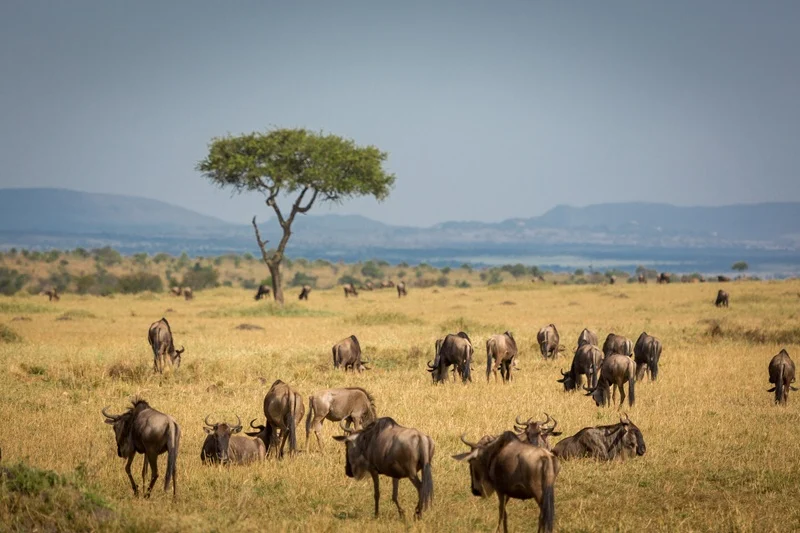
The best time to visit Tanzania is June to October, when the northern circuit dries out, the grass drops short and animals gather at whatever water is left. For general game viewing that is the right answer.
It is also incomplete. February beats it for calving and predator activity. April and May cost less and put far fewer vehicles at every sighting.
Those guides leave out one thing. Two of our five camps close for part of the year, because the herds they were built for have moved on. So the month you choose also decides which camps you can book.
The short answer
When is the best time to go to Tanzania?
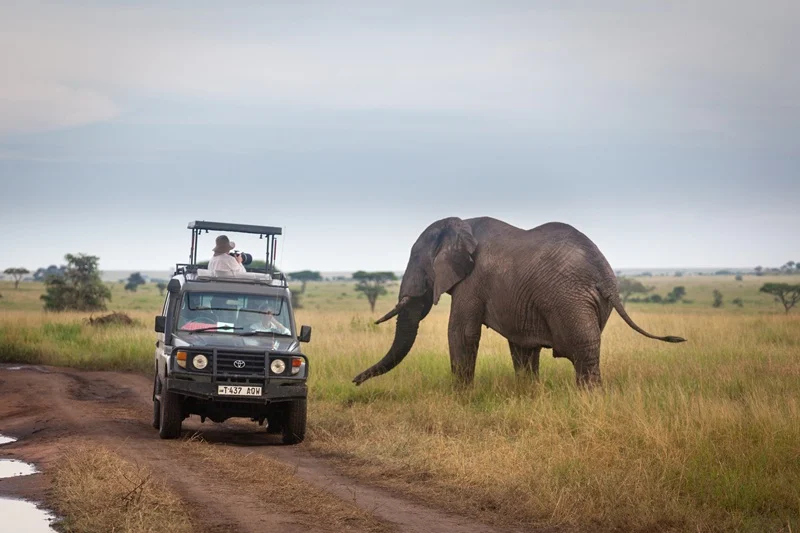
June to October for general game viewing, and February if you want the calving season. Those two windows suit different trips. The dry months give you short grass and concentrated animals across every park. February puts you at Ndutu for the peak of calving, when nearly 500,000 calves arrive in about three weeks, and every predator on the southern plains working that one food source.
Everything below covers Tanzania’s northern circuit, which is the group of parks in the north of the country. It takes in the Serengeti, the Ngorongoro Conservation Area, Tarangire, Lake Manyara, Karatu and Lake Eyasi, and it is where most Tanzania safaris happen.
Best time by what you want to see in Tanzania
| What you want | Best months | Where |
|---|---|---|
| General game viewing and the Big Five | June to October | Across the northern circuit |
| Wildebeest calving | Late January to February | Ndutu, in the Ngorongoro Conservation Area |
| Mara River crossings | August to October | Kogatende, northern Serengeti |
| Ngorongoro Crater | June to October | Ngorongoro |
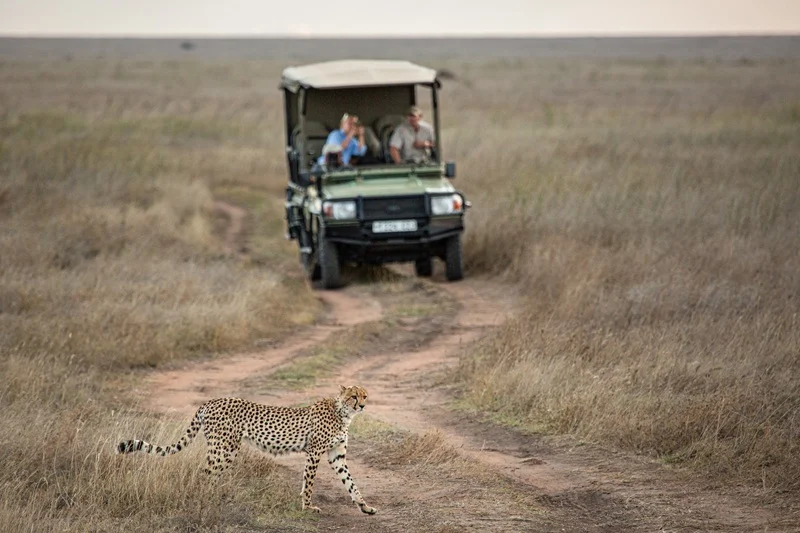
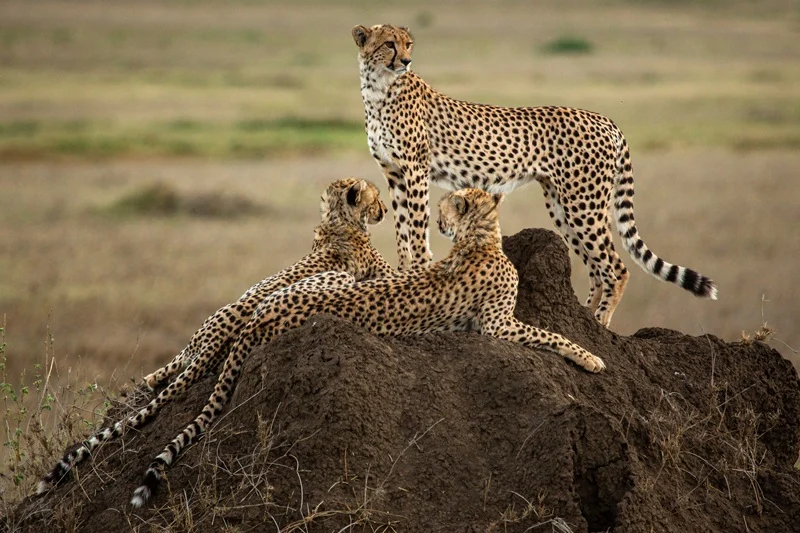
| Big cats | Every month | Soit Le Motonyi, eastern Serengeti |
| Elephant herds | June to October | Tarangire, along the Lake Burunge corridor |
| Night game drives | Every month | Tarangire only, they are not permitted in the Serengeti |
| Fewest vehicles and lowest rates | April, May and November | Across the northern circuit |
The four seasons
| Season | Months | Weather | Vehicles | Rates |
|---|---|---|---|---|
| Long dry season | June to October | Dry, cold mornings, almost no rain | Most | Highest |
| Short rains | November to December | Short afternoon showers, green tracks | Moderate | Moderate |
| Short dry season | January to February | Warm and dry, calving underway | Heavy at Ndutu only | High |
| Long rains | March to May | The heaviest rain, muddy tracks, some camps come down | Fewest | Lowest |
Why the answers you find contradict each other
Search when to go to Tanzania and you will get three different answers, and all three are right. They answer different questions.
Go in June to October if you want to see as many species as possible without working for it, because the thin grass and the shortage of water do the work for you. Go in January or February if you want everything happening in one place, which is what calving gives you. Go in the Tanzania green season, meaning the rains, if cost and crowds matter to you more than how hard the animals are to find.
So work out what matters most to you before you pick a month. If you want a general first safari, take the dry season. If you want predators hunting, take February. If the budget is the binding constraint, take April, May or November and accept that you will work harder for sightings.
Tanzania month by month
Four windows, each with its own trade-off. If you are working out when to go to Tanzania, this is where the wildlife is, what the weather does, and which of our camps is standing.
January and February
January and February : Tanzania Short Dry Season
Rain eases after the short rains and the southern plains dry out. The herds are on the Ndutu grasslands and calving builds through late January into February, which is the densest predator activity of the year anywhere on the circuit. Gnu Ndutu Camp is open through this window, from $262 per person.
Daytime heat is real but the mornings are comfortable. Ndutu gets busy in February and the rest of the circuit does not, so pairing Ndutu with the central Serengeti keeps half your trip away from the vehicles.
March to May
March to May: Tanzania Wet Season
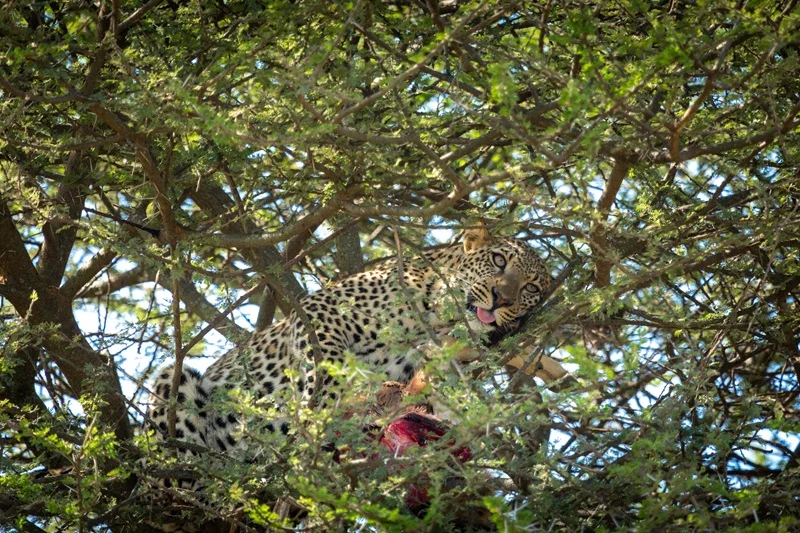
March to May is Tanzania’s main rainy season, the one people mean when they say the long rains. March itself is a transition month. Calving finishes, the herds break up and move north, and the rain builds behind them. April and May carry the heaviest rain of the year, often as afternoon storms rather than all-day drizzle.
This is the cheapest and emptiest time to travel, and it is the only time some camps come down. Gnu Ndutu Camp closes on 31 March. Tracks turn heavy, particularly on black cotton soil around Ndutu and the southern plains.
June to October
June to October: Tanzania long dry season
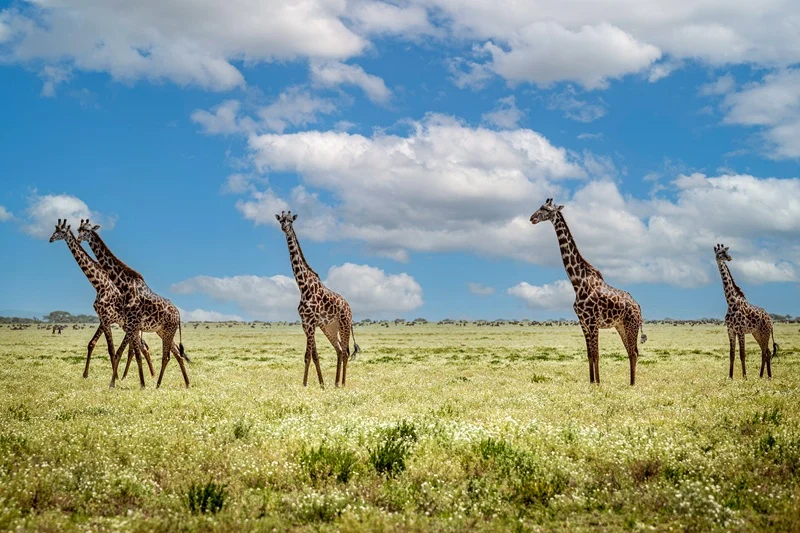
The circuit dries out from June. Grass drops, leaves thin, water shrinks to the permanent rivers and swamps, and animals come to them. Tarangire is at its strongest now, with elephant herds along the Lake Burunge corridor. The Ngorongoro Crater is at its most reliable. The Mara River crossings happen from August into October in the north.
Gnu Mara River Camp is open 1 June to 15 November, from $262 per person. Mornings at altitude are cold enough that our team puts hot water bottles in the beds each evening before guests turn in.
This is peak season. Rates are at their highest across the industry and so are vehicle numbers at the well-known sightings.
November and December
November and December: Tanzania Short Rainy Season
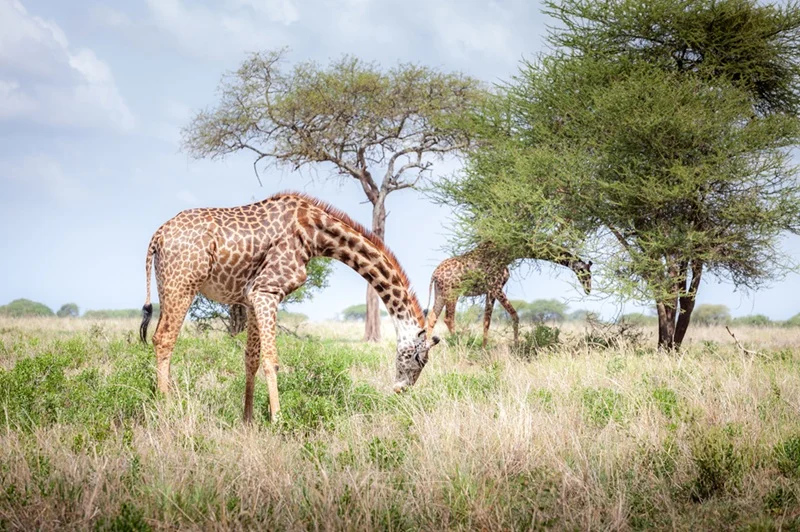
Short afternoon showers green everything up without shutting anything down. The herds turn south through the eastern Serengeti, passing Soit Le Motonyi in November and again in January. Gnu Mara River Camp closes on 15 November. Gnu Ndutu Camp is open again from late December.
December splits in two. The first three weeks are green and reasonably calm. From about the 20th the festive period fills camps across the circuit and rates rise with it. We cover a December safari in Tanzania in its own guide.
The full year
| Month | Weather | What is happening | Vehicles | Our camps |
|---|---|---|---|---|
| January | Warm, drying out | Calving starts at Ndutu | Moderate | All five open |
| February | Warm, dry | Peak calving, peak predator activity | Heavy at Ndutu | All five open |
| March | Rain building | Calving ends, herds move north | Light | Gnu Ndutu closes 31 March |
| April | Heaviest rain | Herds scattered, central Serengeti | Fewest | Three open |
| May | Heavy rain easing late | Herds moving north and west | Fewest | Three open |
| June | Drying, cold mornings | Grumeti and Western Corridor | Building | Gnu Mara River open from 1 June |
| July | Dry, cold mornings | Herds reach the north | Heavy | Four open |
| August | Dry | Mara River crossings | Heaviest | Four open |
| September | Dry | Crossings continue | Heavy | Four open |
| October | Dry, warming | Crossings taper, herds start south | Moderate | Four open |
| November | Short rains start | Herds through the eastern Serengeti | Light | Gnu Mara River closes 15 Nov |
| December | Short rains, green | Herds reach the south, calving begins | Light, then heavy from the 20th | Gnu Ndutu open from late December |
Tanzania weather and temperatures by park
Altitude decides the temperature here, not the month. The Ngorongoro Crater rim is roughly 2,200 metres (7,200 feet) and cold at dawn all year, cold enough that guests are regularly caught out by it. The Serengeti plains are around 1,500 metres (4,900 feet) and mild. Tarangire drops to about 1,100 metres (3,600 feet) and is the hottest park on the circuit in the middle of the day.
So Tanzania weather by month is a rainfall question more than a temperature one. The month you pick changes how much rain you get, not how hot it is. Daytime highs across the Serengeti stay within a narrow band all year. The mornings are the surprise. June and July are the coldest of the year, and people who packed for equatorial Africa feel it at six in the morning.
How the parks compare
Temperature is rarely what decides the best time to visit Tanzania. It decides what you pack.
| Park or area | Roughly how high | First light | Middle of the day | What to pack for it |
|---|---|---|---|---|
| Ngorongoro Crater rim | About 2,200 m (7,200 ft) | Cold, gloves in June and July | Mild, with strong sun | Fleece and a windproof layer |
| Karatu highlands | About 1,500 m (4,900 ft) | Cool and often damp | Mild | Long sleeves for the evenings |
| Serengeti plains | About 1,500 m (4,900 ft) | Cool, colder in an open vehicle | Warm to hot | Layers you can shed by nine |
| Ndutu and the southern plains | About 1,600 m (5,200 ft) | Cool | Warm, humid in the calving months | A rain shell from January to March |
| Tarangire | About 1,100 m (3,600 ft) | The mildest first light on the circuit | The hottest of any park here | Sun hat and light shirts |
| Lake Manyara | About 960 m (3,150 ft) | Mild | Warm and humid near the lake | Insect repellent |
The shape of the day is the same in all of them: cold at first light, warm by mid-morning, hot in the middle of the day, cool again once the sun drops. Altitude decides how cold the cold end gets. On the crater rim in July you will want gloves for the first hour. In Tarangire that same week you will be in shirt sleeves by eight.
The mornings are the part people get wrong
Game drives leave before sunrise, and the first hour is the coldest of the day in every month of the year. In an open vehicle at speed, a still morning at 1,500 metres feels a good deal colder than the thermometer suggests. That is why our vehicles carry blankets, and why the team at Gnu Mara River Camp puts hot water bottles in the beds through the crossing season. By nine the layers come off. By midday the shade is the only comfortable place to be, which is where the animals go as well, and it is why most drives break for lunch and pick up again in the afternoon.
We have kept numbers out of that table deliberately. An average temperature published for a whole park means very little when the crater rim and the crater floor sit hundreds of metres apart, and we would rather tell you what the mornings feel like from the vehicle than repeat figures we cannot stand behind. If you want station records, the Tanzania Meteorological Authority publishes them.
What the rain then does to the tracks, the airstrips and the game viewing is a separate question, and it is the next one.
What the rains do to a safari day
The rain affects the ground far more than it affects the animals. The northern circuit has large areas of black cotton soil, which is firm when dry and behaves like grease when wet. Vehicles get stuck. In March 2026 our Ndutu team went out and pushed a guest’s vehicle free themselves. That is a normal March event, not a disaster, and it is also a good reason to book January or early February rather than March, so you are not spending a morning digging a vehicle out.
Airstrips are the other constraint. Light aircraft schedules across the park can shift with the weather, and a wet strip changes departure times more often than it cancels flights. Build a buffer day before an international departure if you travel in April or May.
Game viewing itself holds up better than people expect. Grass is long and animals disperse, so you work harder, but the rain mostly falls in the afternoon and clears. The birding is at its best in these months, and the light for photography is the best of the year.
Which camps are open, and which close
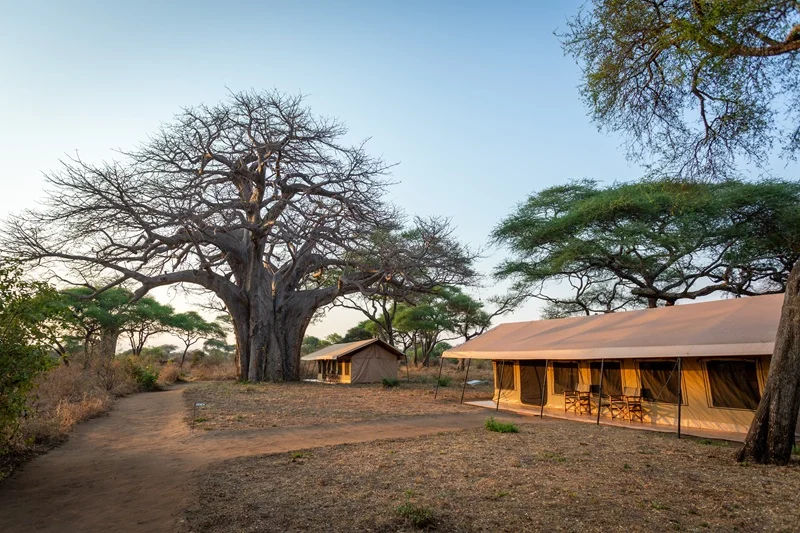
Three of our five camps are open every month of the year. Two are seasonal, because they are mobile camps built to follow the herds, and they come down when the herds leave the ground they were put up for.
| Camp | Where | Open | Closed |
|---|---|---|---|
| Mawe Tented Camp | Soit Le Motonyi, central and eastern Serengeti | All year | Never |
| Baobab Tented Camp | Inside Tarangire, Lake Burunge corridor | All year | Never |
| Karatu Tented Lodge | Karatu, 30 minutes from the Ngorongoro Crater rim | All year | Never |
| Gnu Ndutu Camp | Ndutu, Ngorongoro Conservation Area | Late December to 31 March | 1 April to late December |
| Gnu Mara River Camp | Kogatende, northern Serengeti | 1 June to 15 November | 16 November to 31 May |
If you travel in April or May, three of the five are open and the itinerary is built around those three. In August, four are open. Only in the second half of December are all five up at once. You can see all five camps and lodges with what each one covers.
What the season does to the price
Our rates start at $101 per person per night for three people sharing at Karatu Tented Lodge, $182 at Mawe Tented Camp and Baobab Tented Camp, and $262 at Gnu Ndutu Camp and Gnu Mara River Camp. We book direct, so those are the rates you pay.
| Camp | From | Season |
|---|---|---|
| Karatu Tented Lodge | $101 pp | All year |
| Mawe Tented Camp | $182 pp | All year |
| Baobab Tented Camp | $182 pp | All year |
| Gnu Ndutu Camp | $262 pp | Late December to 31 March |
| Gnu Mara River Camp | $262 pp | 1 June to 15 November |
Park fees are charged separately and they do not move with the season. Inside the parks that is $82.60 per adult per 24 hours in the Serengeti and $70.80 in the Ngorongoro Conservation Area, plus a $295 crater service fee per vehicle. Two different bodies collect them. Tanzania National Parks, or TANAPA, charges for the Serengeti, Tarangire and Lake Manyara. The Ngorongoro Conservation Area Authority charges for the Ngorongoro Crater and for Ndutu. If your route covers both, you pay both, and that is worth knowing before you compare quotes. We set out how park fees are paid in Tanzania in full.
What a full trip costs
Those are bed rates. Most guests book the whole trip instead, which is priced per person and covers a private guide, a private 4×4, every game drive, full board at our own camps and transfers at both ends. The larger the group, the less each person pays.
| Trip | 2 travellers | 3 travellers | 4 travellers | 6+ travellers |
|---|---|---|---|---|
| 5 days, Manyara, Tarangire and the crater | $2,114 pp | $2,064 pp | $1,885 pp | $1,790 pp |
| 7 days, adding the Serengeti | $4,360 pp | $4,290 pp | $3,480 pp | $3,190 pp |
| 9 days, the same parks with more nights | $5,605 pp | $5,515 pp | $4,474 pp | $4,105 pp |
| 10 days, Serengeti, crater and Tarangire | $6,230 pp | $6,130 pp | $4,980 pp | $4,560 pp |
Every trip we run is private and tailored, so treat those as the price of a set route rather than a menu. Tell us your dates and we will confirm what sits inside the price for that route and what sits outside it.
The season moves the bed rate inside that total. The guide, the vehicle and the park fees do not move with it at all, which is why an April trip costs less than an August one, but by less than the nightly rates on their own suggest. You can check which dates are open at each camp on our availability calendar.
Best time to visit Tanzania by park
June to October works for every park on the northern circuit. The exceptions are worth knowing. Ndutu is a late December to March destination, because that is when the herds are on those plains and our camp is up. Lake Manyara is at its best for birds in the wet months, when everywhere else is at its worst.
| Park | Best months | Why | Nearest of our properties |
|---|---|---|---|
| Serengeti | June to October, plus January and February | Crossings in the north, calving in the south, big cats all year in the east | Three camps |
| Ngorongoro | June to October | Crater floor game viewing is reliable all year and easiest when dry | Karatu Tented Lodge, 30 minutes from the rim |
| Tarangire | June to October | Elephant herds concentrate on the river and the Burunge corridor | Baobab Tented Camp, inside the park |
| Lake Manyara | June to October, and November to April for birds | Compact park, strong birding in the wet months | Day trip from Karatu |
| Karatu | All year | Highland base, cooler, works in any season | Karatu Tented Lodge |
| Lake Eyasi | June to October | Dry-season access is easier for cultural visits | Day trip from Karatu |
Best time for the Great Migration
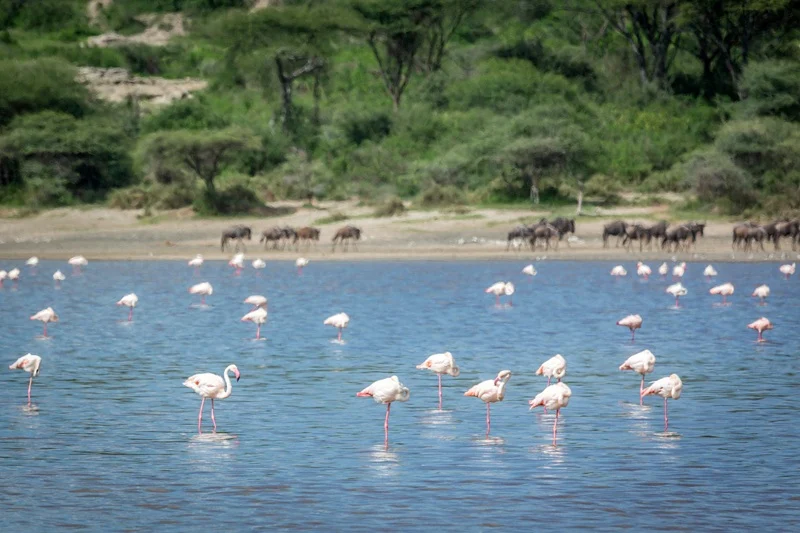
The herds are somewhere in the Serengeti ecosystem every month of the year, so you cannot really miss the migration itself. But where they are changes with the month, and so does what they are doing. That is the part worth planning around, because the best month for the Great Migration depends on which part of it you want to see. Calving is late December to March at Ndutu, the move north is April and May, the Grumeti is June and July, and the Mara River crossings are August to October.
We cover all of it, month by month with drive times and camp positions, in our guide to the Great Migration in Tanzania.
What this guide covers
The timing advice here comes from our own guides and our own camps, and all five of them are on the northern circuit. So when we talk about the best time for a Tanzania safari, we mean that circuit rather than the country as a whole.
We do not run beach trips or mountain treks, and we do not operate in southern or western Tanzania, so this guide does not advise on them. If your trip includes those, plan them with an operator who does. We can tell you exactly what the northern circuit is like in the month you are thinking about, because we are in it every day of the year.
Our pick
So which month would we pick?
If you want one answer to the best time to visit Tanzania, we would take February. Calving at Ndutu concentrates more wildlife into a smaller area than any other event on the circuit, and it pulls in every predator on the southern plains with it. The weather is warm and dry. Gnu Ndutu Camp is open. And you avoid both the July to October price peak and the long rains.
The trade-off is honest: February is busy at Ndutu specifically, and it is a high-rate month. If crowds bother you more than anything else, take November instead, when the herds are moving south through the eastern Serengeti, rates are moderate and the tracks are close to empty.
If you want the crossings, none of this applies and you go in August or September. That is the one thing February cannot give you.