December in Tanzania marks the beginning of the green season, when the rains bring life back to the plains and the landscapes turn green again. Tanzania in December also carries the sharpest internal split in the calendar, and that split is the first thing worth understanding before you look at dates.
Two things change inside the month, and they change within a day of each other. Peak season rates begin on 22 December. And the camp down at Ndutu opens in late December, because that is when the herds arrive there. So the fortnight before Christmas and the fortnight after it are the same weather, the same parks and two different prices.
A Tanzania safari in December is, in practice, a green season trip with a holiday week bolted onto the end of it. The rest of this guide takes the two halves separately.
The two dates that split Tanzania in December
| 1 to 21 December | 22 to 31 December | |
|---|---|---|
| Our rate band | Low, the same band as November | Peak, the same band as July to October |
| Rain | Short rains, usually late afternoon showers | The same, easing toward the end of the month |
| Where the herds are | Arriving on the southern short grass plains | Settled at Ndutu, first calves at the very end |
| Our camp at Ndutu | Not yet open | Open from late December |
| Parks | Quiet. The quietest fortnight of the whole green season | Filling, and the crater floor is busy by the 27th |
| Availability | Usually bookable at short notice | The busiest week of the year with us |
Nothing about the weather or the wildlife changes on 22 December. What changes is the price and the number of vehicles, and both changes are driven by school holidays in Europe and North America rather than by anything happening in Tanzania. If your dates are flexible by two weeks, that is the single most valuable piece of flexibility you have in this month.
Weather and rain patterns in December
The weather in Tanzania in December is characterized by the short rains, typically light showers falling in the late afternoon or evening. These rains refresh the landscape without significantly disrupting activities, which is what makes the month a workable safari time rather than a compromise. Mornings are usually clear, the showers build through the afternoon, and a drive is rarely lost to weather. The greenery the rain produces is also what makes December one of the better months of the year for photography, because the light is clean and the backgrounds are green instead of bleached.
Temperatures stay warm and pleasant, in the region of 20°C (68°F) in the cooler mornings to 30°C (86°F) in the afternoons. That range covers the whole northern circuit, and altitude is what moves it. The Ngorongoro rim and Karatu are the cool end of it, the Serengeti plains the warm end, and the coast warmer and far more humid than either.
What you wear, and when you take it off
December asks less of your packing than the long rains do, and the reason is that the showers are short.
A fleece for a six o’clock start on the crater rim, off by eight once the sun is over the wall. Short sleeves for the rest of the day on the plains, where a December afternoon is warm without being punishing and the nights are mild enough to sleep with the tent open. One light waterproof layer that packs down small, for the afternoon drive that gets caught out, rather than a heavy shell you will carry unused all week. Closed shoes, and a single pair is usually enough, because the ground dries between showers instead of holding water for days.
Where the wildebeest herds are in December
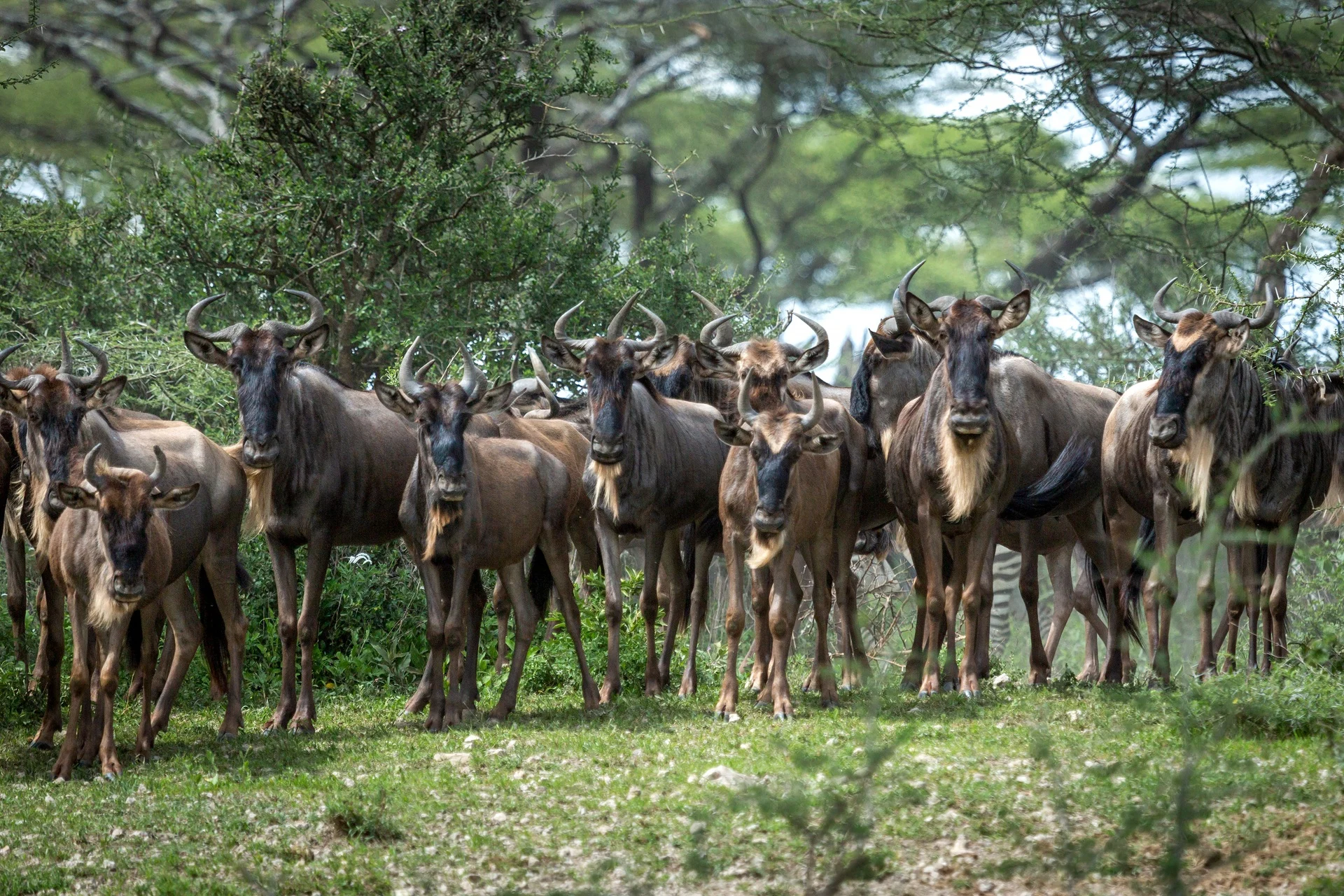
The herds are on the southern short grass plains, at Ndutu and in the southern Serengeti. The herds move back down through the eastern Serengeti during November as the rains begin, and December is the month they arrive and settle.
Calving is barely a December event. A few early calves drop on the plains in the last days of the month, the peak is late January into February, and it finishes in the first half of March. December delivers the gathering instead of the birth: large numbers of animals on open, newly green ground, with predators following them down. Our guide to the wildebeest calving season sets out the timing in full.
The practical point for a December route is that the plains are open and the grass is short, so the herds are visible from a long way off. That is the opposite of the problem the long rains create, which is one of the strongest arguments for this month.
Wildlife highlights, park by park
Tarangire
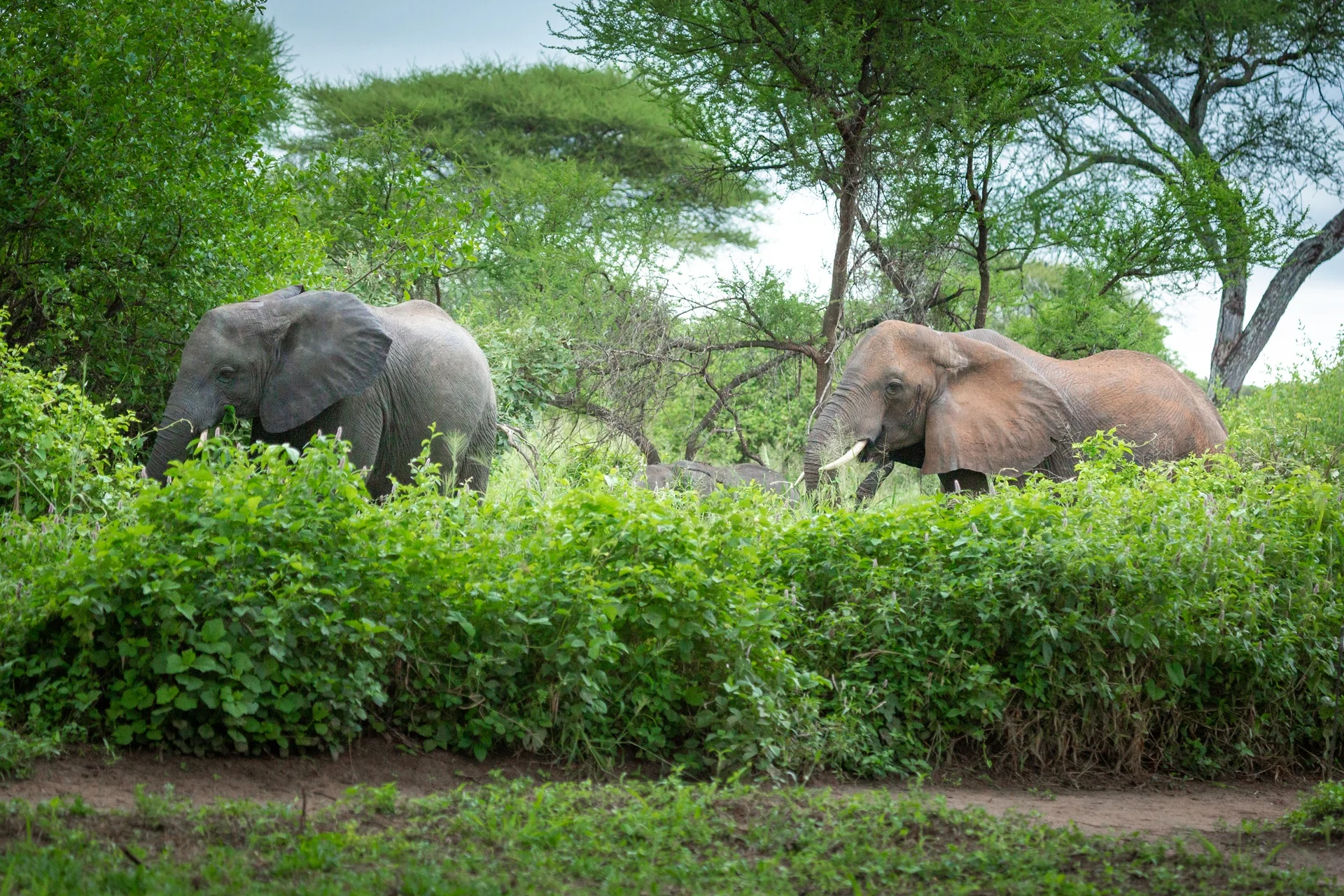
The short rains bring migratory wildlife back to Tarangire, and Baobab Tented Camp is inside the park on the Lake Burunge corridor, where elephants pass through the year. Elephants, zebras and wildebeests are commonly seen across the green plains, and birdwatchers do well here on the migratory species that arrive with the rain.
One honest qualification. Tarangire’s very large dry season concentrations along the river build from June, when water elsewhere has gone. December works the other way round: water returns, animals spread out, and the park gets green and quiet. Our Tarangire National Park page covers it month by month.
Central and eastern Serengeti
At Mawe Tented Camp the Serengeti holds wildlife whatever the month is doing. Lions, leopards and cheetahs are resident and active, and this is one of the highest density areas for cheetah in the park. The green season also makes young animals easier to find, because several resident species time their young to the fresh grazing that the short rains produce.
The camp is at Soit Le Motonyi, where the southern short grass plains meet the acacia woodland, and the underground Ngare Nanyuki River creates pockets of permanent water that attract wildlife all year round. In a month when there is water in every shallow pan, ground that holds animals anyway is worth building a route around.
Ndutu and the southern plains
As the migration moves south to the Ndutu region, Gnu Ndutu Camp opens for the season. The camp operates at Ndutu on the Ngorongoro side from late December until 31 March each year, with ten en suite tents, built for the herds and for the calving that follows in the new year.
Guests arriving in the last week of December see the beginning of that cycle: the plains filling, the predators moving in behind the herds, and the short grass that makes the whole southern Serengeti the easiest country in Tanzania to watch a hunt on. The Great Migration calendar has the twelve month pattern.
Ngorongoro Crater
December is a good month inside the crater. The floor is green from the November and December rain, which usually falls in brief afternoon showers and rarely interfere with a game drive. The Ngorongoro Conservation Area Authority counts around 25,000 large animals on the floor and records wildlife there in every month of the year, including black rhino and 60 to 70 lions in prides, so warm weather and fresh grazing add young animals to a population that is already there.
The floor is short grass whatever the season, so December costs you nothing in sightlines. The one thing to plan for is the descent road, which is slower after a night of rain, and the last week of the month, when the crater is at its busiest. Our Ngorongoro page has the detail.
Lake Manyara
December is a green month at Lake Manyara, with brief rains that help rather than hinder the viewing. Flamingos and more than 350 bird species recorded by Tanzania National Parks are here, alongside elephants, hippos, olive baboons, blue monkeys and the tree climbing lions the park is known for. With fewer vehicles and the Rift Valley wall above you, it is a good half day for birdwatching and photography.
Karatu Tented Lodge is the base for both Manyara and the crater, 20 minutes from one and 30 minutes from the Loduare gate. Our Lake Manyara page covers the park.
Lake Eyasi
The lake carries shallow water in December and the country around it is green, which brings in a wide range of birds including flamingos. This is one of the better times of year for birdwatching at Lake Eyasi, and at 45 minutes from Karatu it fits into a morning without moving camp.
The handover, and what it means for your route
There is a way of reading Tanzania in December that makes the route obvious, and most guides to the month miss it because they describe the parks one at a time.
December is a handover. Through the dry months, Tarangire and the permanent water hold the animals and the short grass country is empty. The short rains reverse that: grass and standing water appear everywhere, Tarangire’s river loses its monopoly, and Ndutu and the south fill up for the first time since March. December is the few weeks in which both halves of that are partly true at once.
What that gives you. The southern plains with short grass and long sightlines, which is the best open country viewing in Tanzania, plus a Tarangire that is green and almost empty of vehicles, plus a crater floor that does not follow the season at all. Giraffe, buffalo, eland, impala, gazelle, warthog and dik dik are across the plains and the woodland and you will see them without trying. Zebra move with the wildebeest, so the southern plains carry them in numbers.
What it costs you. Tarangire is not at its peak, and it will not be until the dry season empties the surrounding country again. If elephants along the Tarangire River in their hundreds are the thing you have come for, December is not the month that delivers it, and no amount of green makes up for that.
The one that nobody promises. Black rhino, in December as in every other month, and the crater floor is where your chance is.
Getting there and getting around in December
You fly into Kilimanjaro International Airport, about an hour from Arusha, and it serves the whole northern circuit. Arusha to Karatu is about two hours over 130 kilometers (81 miles) on paved road. From Karatu it is 20 minutes to Lake Manyara, 30 minutes to the Loduare gate and about an hour down to the crater floor, an hour to Tarangire and 45 minutes to Lake Eyasi.
Ndutu is the long leg, and December is the month it comes back onto the map. It is about two and a half hours from Karatu, two hours off the crater rim, two hours from the central Serengeti and about five hours from Arusha. Coastal Aviation flies Arusha to Ndutu in an hour and five minutes for $343 an adult plus $32 in taxes, which is the way to buy back most of a day.
Two things about getting around are specific to Tanzania in December. Showers soften the unpaved tracks for a few hours after a shower rather than for days, so drive times hold up better than they do in the long rains. And the international flights into Kilimanjaro over Christmas and New Year are the ones that sell out first, usually well before the camps do, so book the flight before you fix the itinerary.
Which camps are open in Tanzania in December
Four of our five properties are open in December, and the month is the only one in the year when a camp opens rather than closes.
Mawe Tented Camp in the central eastern Serengeti, Baobab Tented Camp inside Tarangire and Karatu Tented Lodge on the Rift Valley escarpment are open every month of the year. Gnu Ndutu Camp opens in late December and closes on 31 March.
The one that is closed is Gnu Mara River Camp at Kogatende, which operates from 1 June to 15 November, because it exists for the Mara River crossings and there are none in December. Each property has ten tents or cottages, which is why the holiday fortnight books out long before the rest of the month does.
Accommodation rates in December
December is split between two of our four rate bands, and that is the whole of the pricing story for the month.
| Property | 1 to 21 December, low band | 22 to 31 December, peak band |
|---|---|---|
| Karatu Tented Lodge | $118 | $144 |
| Baobab Tented Camp | $194 | $256 |
| Mawe Tented Camp | $195 | $280 |
| Gnu Ndutu Camp, from late December | $286 | $286 |
All figures are per person per night for a double or twin, full board. Gnu Ndutu Camp carries one rate across its whole season, so it is the one property where the 22 December step does not apply. Single, triple and family suite rates differ and are quoted on each property page.
What the 22 December step adds to a week
Take the same four nights in the Serengeti and three at Karatu, for two people sharing, and price it on either side of the date.
| 1 to 21 December | 22 to 31 December | Difference | |
|---|---|---|---|
| Four nights, Mawe Tented Camp | $780 | $1,120 | $340 |
| Three nights, Karatu Tented Lodge | $354 | $432 | $78 |
| Accommodation, per person | $1,134 | $1,566 | $418 |
So the holiday fortnight costs about $418 a head more on a seven night route, before park fees and before the game drive. For two people that is roughly $836, which is real money and is worth knowing before you settle on dates. What you get for it is nothing the camp controls: the same tents, the same food and the same guides, on the dates that fit a school holiday.
Park fees in December
Park fees in December are collected by the authorities and are never inside an accommodation rate or a game drive rate.
| Park | Non resident adult, per 24 hours | Note |
|---|---|---|
| Serengeti | $70, which is $82.60 with 18 percent VAT | Tanzania National Parks charges its lower rate only from 15 March to 15 May, so December is on the standard figure |
| Ngorongoro Conservation Area | $70.80 per adult, VAT included | Plus a crater service fee of $295 per vehicle for one entry within 24 hours. No seasonal split |
| Tarangire | $70 on the park page | The published sources disagree on this one. Confirm at the gate |
| Lake Manyara | About $50 plus VAT, roughly $59 | No published seasonal split |
Two things to hold on to. Fees are charged per 24 hour period rather than per calendar day, so your own total moves with what time you reach the gate. And the schedule above was valid to 30 June 2024 and is still the most recent one Tanzania National Parks publishes, so confirm the current figure before you budget. Our guide on how to pay park fees in Tanzania covers the mechanics, and the full cost picture is on our Tanzania safari cost page.
The claim that park fees in December are the same as the rest of the year is close but not exact, so here is the accurate version: Ngorongoro, Tarangire and Lake Manyara have no published seasonal split at all, while the Serengeti has one narrow low window in March to May that December has nothing to do with.
Occupancy, and how far ahead to book
Occupancy is moderate for most of the month, which gives you an uncrowded safari with room at the sightings. The last ten days are the exception. Peak occupancy covers 22 December to 5 January, and in that window the pressure is on beds rather than on parks.
Book early for anything inside the holiday fortnight, and book Gnu Ndutu Camp earliest of all, because it has ten tents, it opens at the end of the month, and the herds are on its doorstep. For the first three weeks of December, two months is usually enough notice, and a late decision is often still possible.
Activities to enjoy in December
The green season takes very little off the list, and December adds one thing back that the long rains take away.
Game drives. The green landscapes and active wildlife make December drives productive, and early morning and late afternoon are the two windows that earn most. Down at Ndutu the short grass means you can watch a stalk from the beginning rather than picking it up halfway.
Birdwatching. Migratory birds arrive with the short rains, and the seasonal pans they fill are what holds the waterbirds. Tarangire and the Serengeti are both strong in December, and the groundwater forest at Lake Manyara is the third.
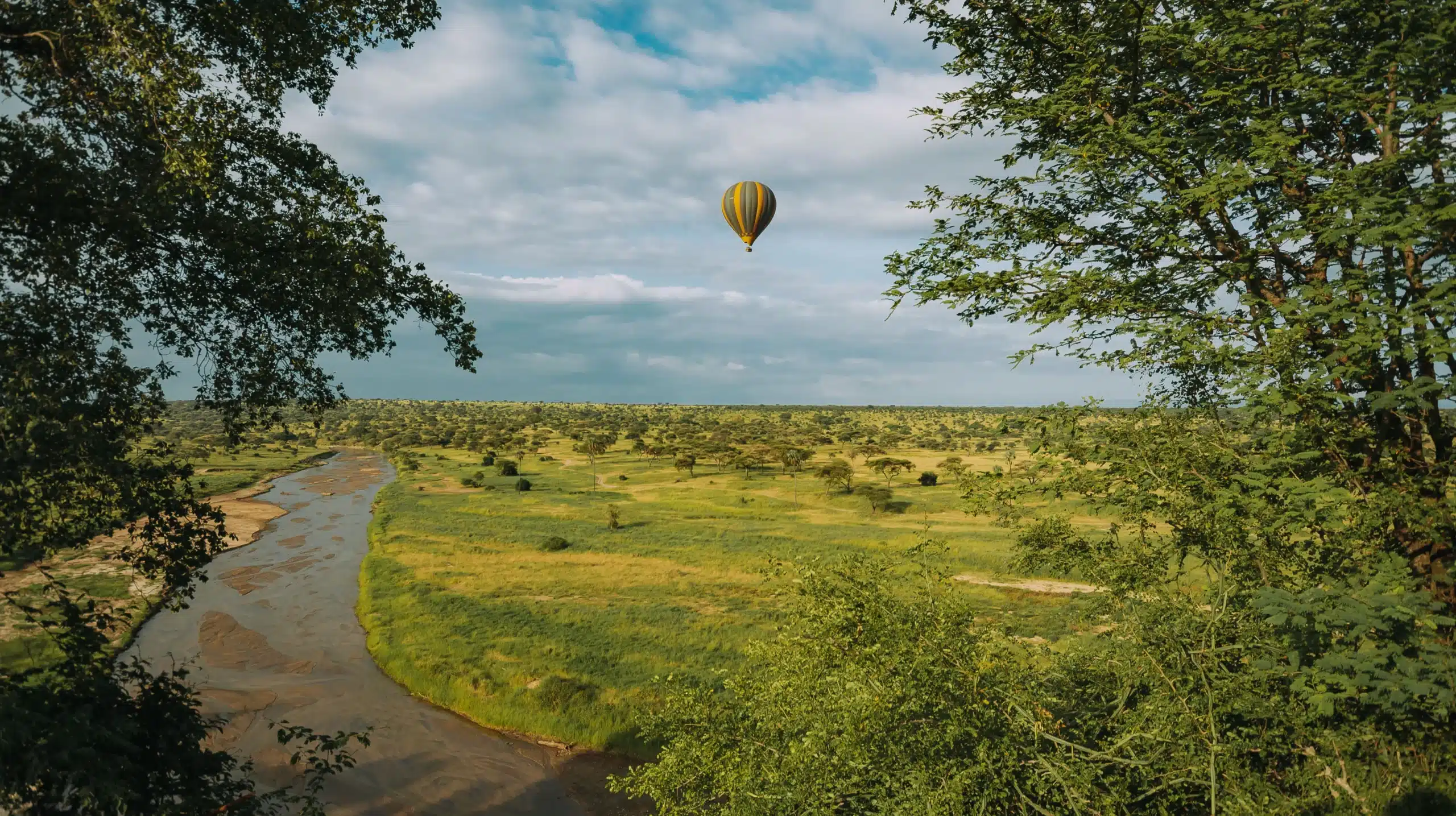
Balloon flights. December is the month balloon launches over Ndutu restart, alongside the central Serengeti and Tarangire, which fly year round. From $599 per person for the transfer, an hour in the air and a champagne breakfast on the ground. Children under seven cannot fly. Our hot air balloon page has the rest.
Night game drives. Tarangire is the only park on our routes that permits driving after dark, and the drive leaves from Baobab Tented Camp. Two to three hours after sunset, $94.50 per person plus a $59 per person activity fee to Tanzania National Parks, and the drive is how you see the bush babies, genets and the cats that do not show themselves in daylight.
Cultural mornings. Maasai communities near Tarangire, Lake Eyasi and Ngorongoro, where daily life is still built around the land and the seasons. At Eyasi the Hadzabe leave on the hunt before sunrise and the Datoga work iron by hand, and the coffee farms above Karatu are nearer again.
Whale sharks off Mafia Island. December is the season for swimming with whale sharks on the southern coast, which is a genuine reason to add days at the end of a trip. We are a northern circuit operator and have no property down there, so this is an extension we would arrange with a partner and name before you book anything.
Birding in Tanzania in December
Birding in Tanzania in December works on one mechanism: the short rains finish filling the seasonal pans, and that is what brings the waterbirds. Palearctic migrants are in by now, resident species are breeding on the fresh grazing, and the insect life that green cover supports feeds the whole of it.
The three places to spend real time are the Tarangire swamps, the groundwater forest at Lake Manyara, where Tanzania National Parks records more than 350 species, and the shallow water at Lake Eyasi for flamingos. The open grassland is the weakest of the birding ground and the strongest of the mammal ones, which is a useful split when you are deciding where the days go.
Before you travel
Apply online for the tourist visa before you fly, using the official portal, which publishes the current fee and the conditions attached to a single entry. Allow longer than usual for anything submitted in the second half of December, because processing slows over the holidays at both ends.
Malaria is present across northern Tanzania in every month, and the rain means more standing water and more mosquitoes than in the dry season, so speak to a travel clinic with time to spare rather than the week before you fly. Whether you need a yellow fever certificate depends on the countries you route through rather than on Tanzania. Insurance should cover medical evacuation.
What to pack for Tanzania in December
Packing for Tanzania in December starts with a light waterproof layer that goes into a daypack, rather than the heavy shell the long rains call for. A fleece for dawn on the crater rim and at Karatu. Neutral colors, long sleeves and long legs for the tsetse country in Tarangire.
Closed shoes, insect repellent, and something waterproof to keep a camera body in, because the showers arrive quickly even though they do not last. Sunglasses and high factor sun cream matter as much in December as in the dry months, because the cloud is broken rather than solid. Our safari packing list covers the rest of the year.
Zanzibar and Kilimanjaro in December
The islands are dry and hot for most of December, with the heaviest of their rain behind them and the last ten days the busiest and most expensive of their year. We have no property out there, so a beach extension is a partner hotel we name before anything is booked.
December is one of the more popular months on Kilimanjaro, with short rains rather than long ones and a good chance of clear mornings on the upper mountain. It is also busy over the holidays. We are not a trekking operator and would put you with a specialist, then collect you at the bottom.
Public holidays and events in December
Three dates to plan around. Independence Day falls on 9 December and is a national public holiday. Christmas Day on 25 December and Boxing Day on 26 December are both public holidays.
On all three, government offices and banks close while parks, camps, transfers and game drives keep their normal schedule. The practical effect lands on anything needing an office, not on your safari: visa queries, bank transfers and permit corrections are slower in that week, so get them done in the first half of the month.
Tanzania tours in December
A route through Tanzania in December is built around the southern plains and around the date you travel. Before the 22nd, the month rewards a longer route at a low rate, and the herds are gathering on open ground where you can see them. After the 22nd, the camp at Ndutu is open, the plains are the strongest ground in the country, and you are paying peak rates for the privilege.
Our five day trip is $2,114 per person for two people sharing and the nine day is $5,605 on the same basis, both with a private vehicle and a guide throughout. Park fees, international flights and visas are quoted separately. The longer route is the one that gets you to Ndutu without spending half the week driving, and the route is on our 9 day Tanzania safari page.
Why a Tanzania safari in December is special
Tanzania in December combines green season landscapes, wildlife that is gathering rather than dispersing, and a wider range of activities than any wet month has a right to. The rains bring the country back, the herds come south, and the short grass on the southern plains gives you the clearest viewing conditions in the Tanzanian year.
Set against that, the holiday fortnight is the most expensive and most heavily booked week we sell, and Tarangire is not at its best. Both halves of that are true at once, which is exactly why the date you choose inside the month matters more here than it does in most months.
Who December suits, and who it does not
Come in December if you want short grass and long sightlines without dry season prices, if you photograph and would rather have green backgrounds than dust, or if your dates fall in the first three weeks and you want the emptiest parks of the green season. It is a strong month for a first safari, because the animals are on open ground and you spend the week watching instead of searching. It also suits anyone who wants the crater at its greenest without giving up the density on the floor.
Think harder if the holiday fortnight is your only window and your budget is fixed, because that is the most expensive rate band we publish and the busiest time on the crater floor. December is the wrong month if you have come specifically for the calving, which peaks five or six weeks later, or for a river crossing, which belongs to July through October in the far north. And if hundreds of elephants along the Tarangire River is the picture in your head, that builds from June.
If none of those rules it out, the first three weeks of December are one of the best value fortnights in the Tanzanian calendar.
Frequently asked questions
December is the only month of the year when one of our camps opens rather than closes, and Gnu Ndutu Camp opens for the herds arriving on the southern plains.