Tanzania Honeymoon Safari
You have just got married. Now you want somewhere that feels private, unhurried and a long way from a resort corridor.
Tanzania gives you that. We own five small camps across the northern circuit, and each one holds ten tents. You travel between them in your own vehicle, with your own guide, on your own schedule. Nobody else climbs in.
This page covers how we build a Tanzania honeymoon safari. You will find where to go, what a tent is like and what it costs. The beach comes near the end.

Why couples pick a Tanzania honeymoon safari
Plenty of honeymoon destinations promise privacy. Few deliver it once you arrive. Here is what actually changes the experience.
You get the vehicle to yourselves
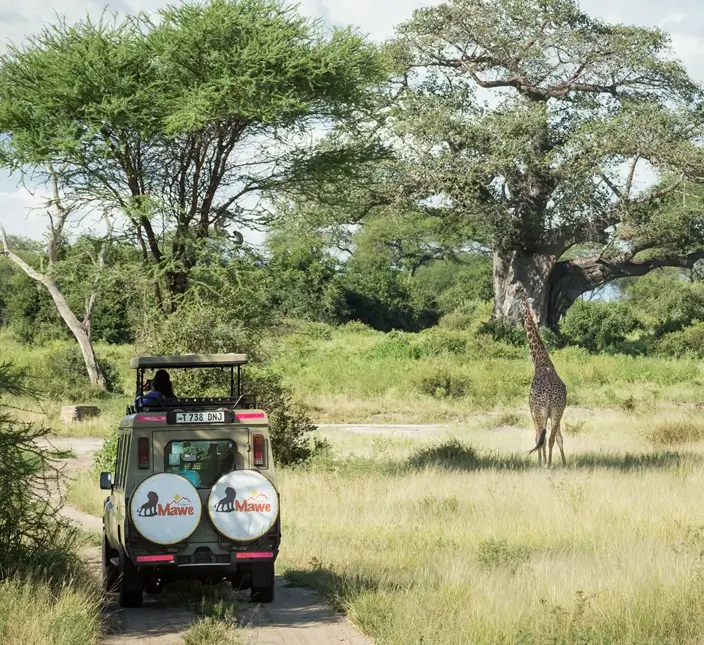
Every drive happens in a private 4×4 Toyota Land Cruiser with a pop-up roof. That is our standard, not an upgrade. So when a leopard climbs down at dusk, you stay as long as you like. Nobody asks the guide to head back for dinner.
Our guides work for us directly. They know our camps, our vehicles and the ground between them. A full-day game drive starts from $300, which covers the private 4×4, your guide and fuel.
This matters more than couples expect. On a shared vehicle, your morning belongs to whoever booked loudest.
Ten tents, and that is the whole camp
Each of our properties holds ten tents or cottages. Dinner therefore involves a handful of tables, not a dining hall. You will learn the other guests’ names by the second night, or you will quietly avoid them. Both work.
The migration decides where you sleep
Our two Gnu camps move with the herds. Gnu Ndutu Camp opens on the southern plains from late December to 31 March, during calving. Gnu Mara River Camp opens in the north from 1 June to 15 November, for the river crossings. You book the season, and the camp is already there.
Where to go on your honeymoon
Most couples combine three parks over seven to ten nights. Here is how each one earns its place.
Central Serengeti
Mawe Tented Camp stays open year-round near Seronera, beside the Ngarenanyuki River. Resident lions, leopards and cheetahs live in this stretch permanently. So you do not need to time your wedding around the migration to see big cats.
Five of the ten tents take a double or twin bed. Book early if you want the double.
Southern Serengeti and the calving season
From late December to March, the calving season takes over the Serengeti short-grass plains. Nearly 500,000 calves arrive in about three weeks, according to research published in Scientific Reports in 2018. Predators follow them closely.
Gnu Ndutu Camp puts you in the middle of that. It is roughly two hours from central Serengeti and the same from the Ngorongoro Crater.
It is dramatic. Honestly, it is not for every couple. Kills happen in daylight, close to the vehicle, and some guests find that hard.
Northern Serengeti and the Mara River
Between June and November, the herds reach Kogatende. Gnu Mara River Camp gives every tent a private deck facing the bush. Crossings happen without warning, so you wait, often for hours. Bring a book and low expectations, and the payoff lands harder.
Tarangire
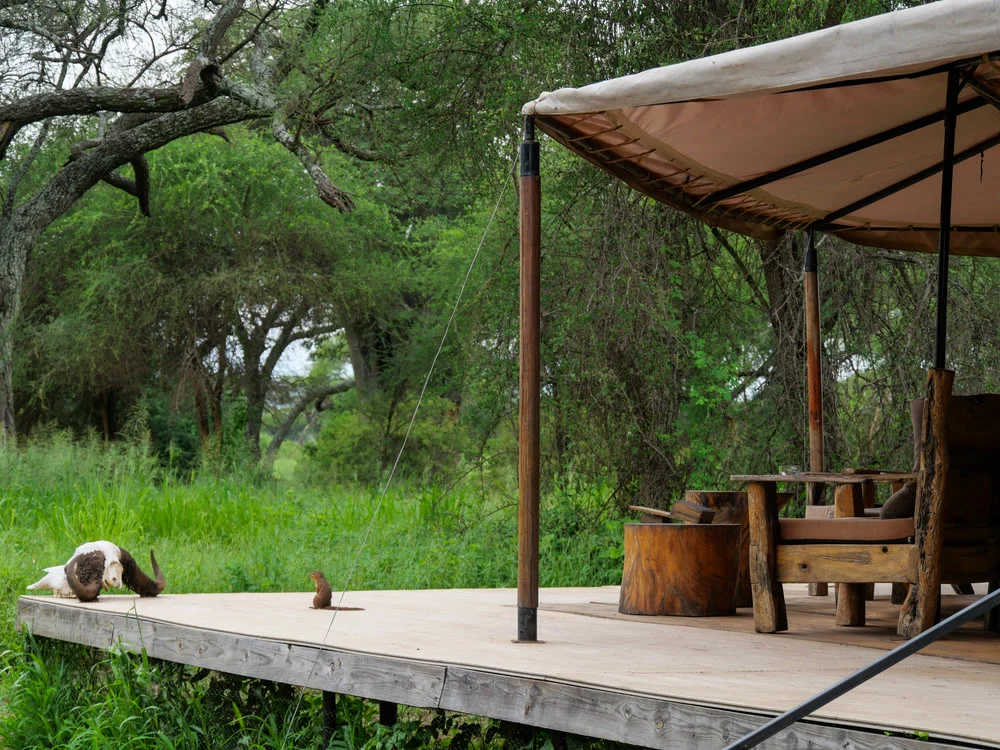
Baobab Tented Camp stands inside Tarangire National Park on the Lake Burunge corridor. Elephant herds gather here through the dry months. Meanwhile the baobabs make late-afternoon light extraordinary. Because you sleep inside the park, you also qualify for night drives.
Ngorongoro and the Karatu highlands
Karatu Tented Lodge gives you ten cottages in a garden above the Rift Valley. Each one has a private terrace. There is a pool, a fireplace and an outdoor barbecue. The Ngorongoro gate is thirty minutes away.
This is where most couples exhale. After four nights of early starts, a slow morning by the pool beats another game drive.
What the tents are actually like
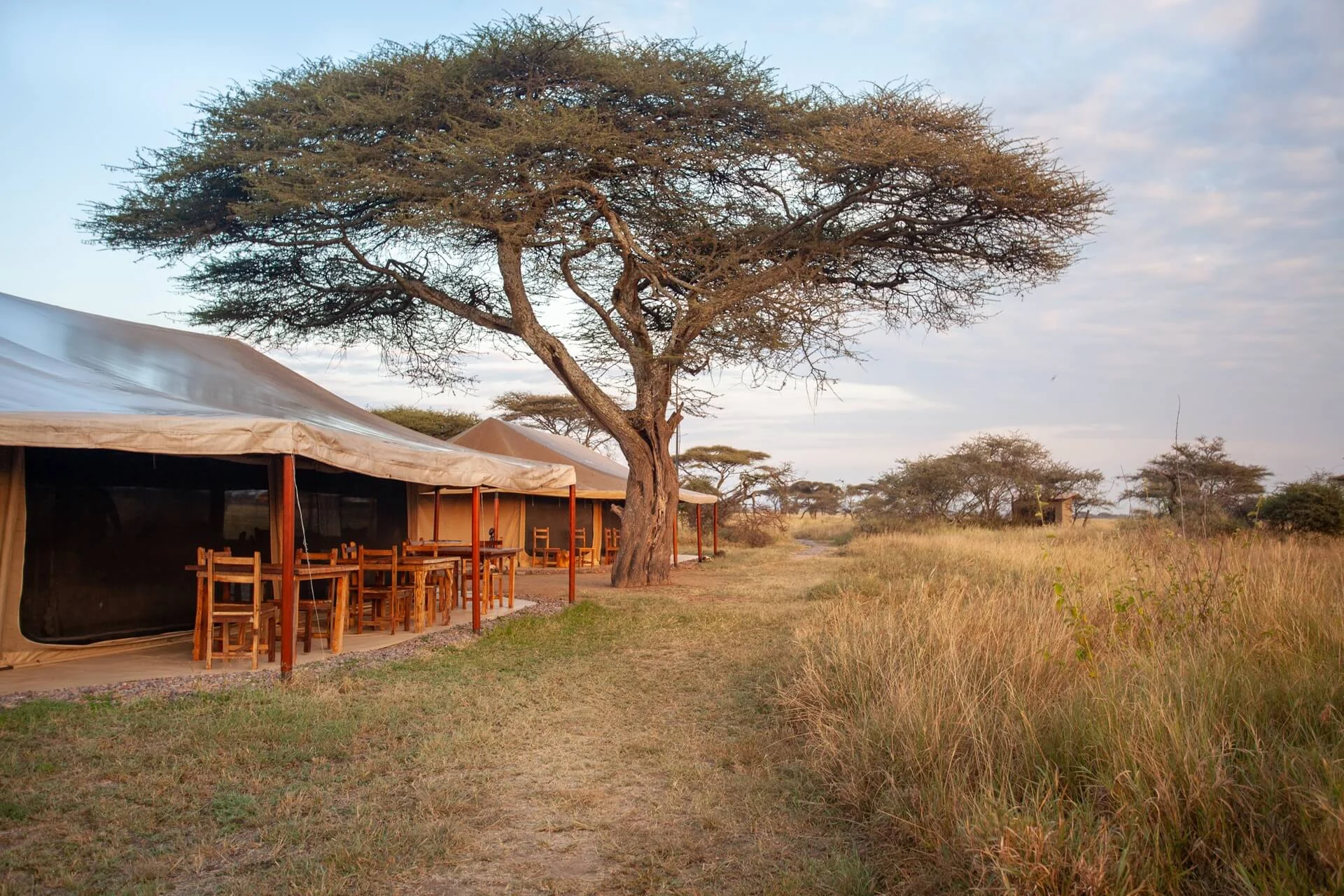
Couples searching for a Tanzania safari luxury lodge honeymoon usually picture either a canvas hut or a hotel suite. Ours land somewhere else entirely.
Inside a double tent
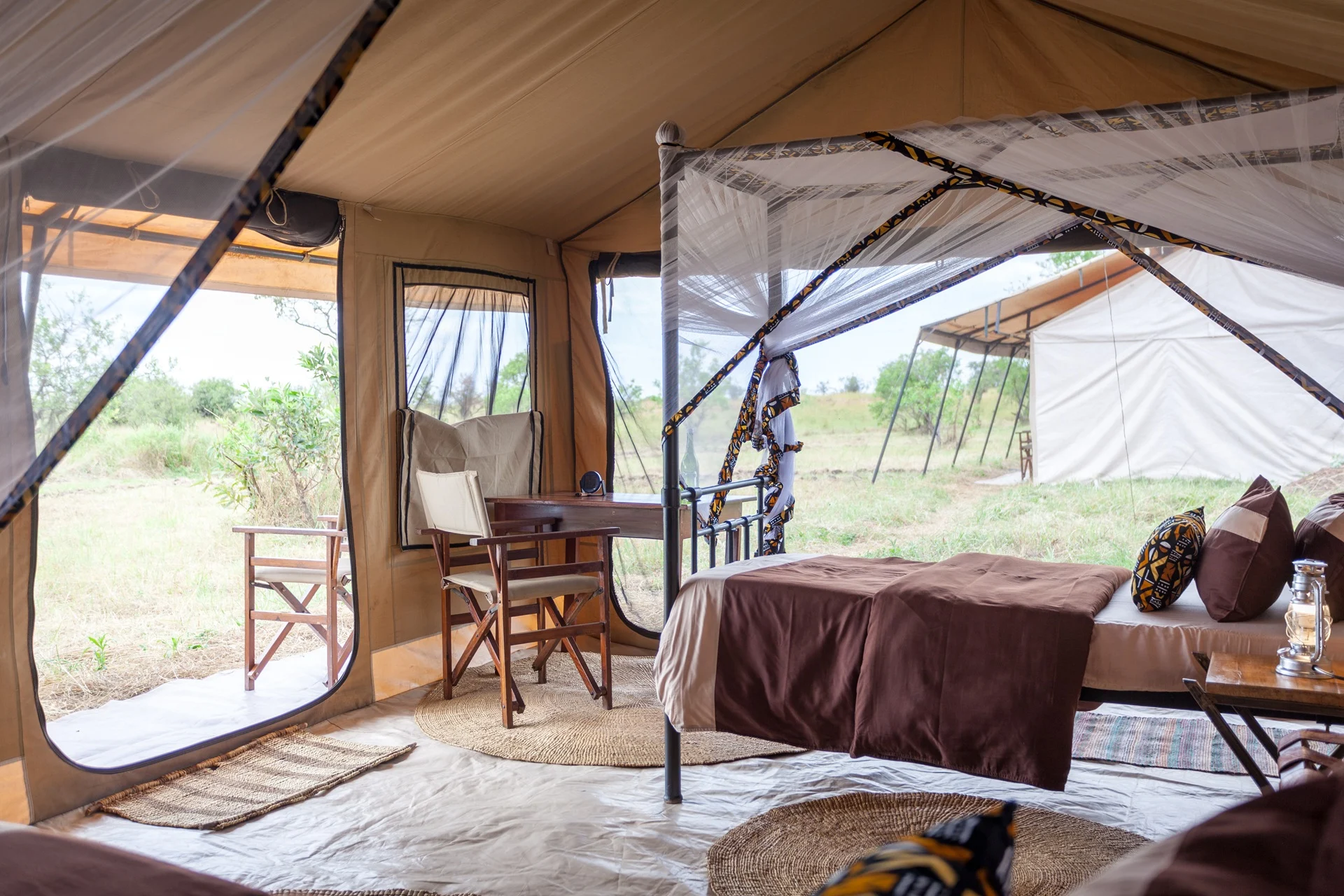
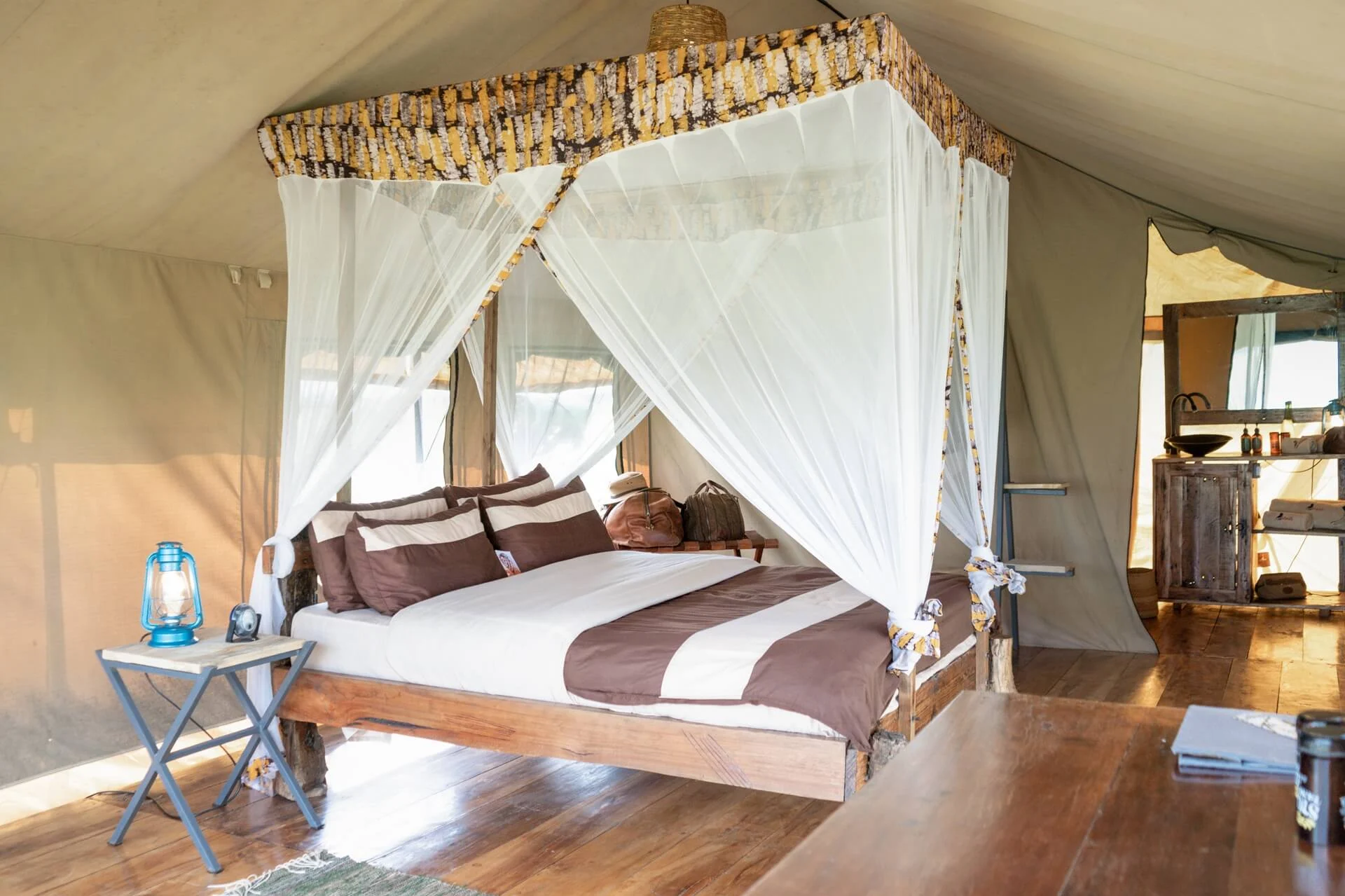
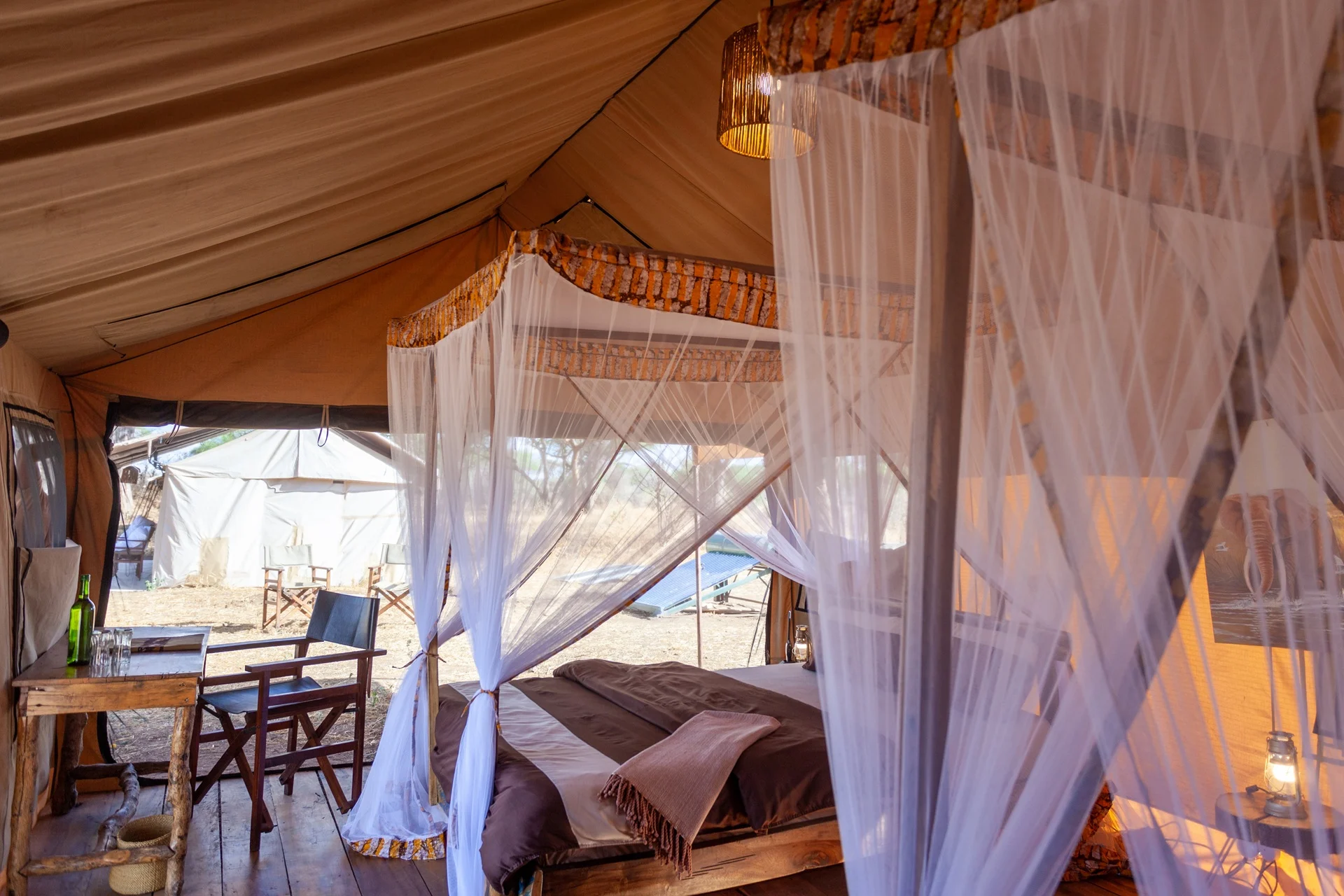
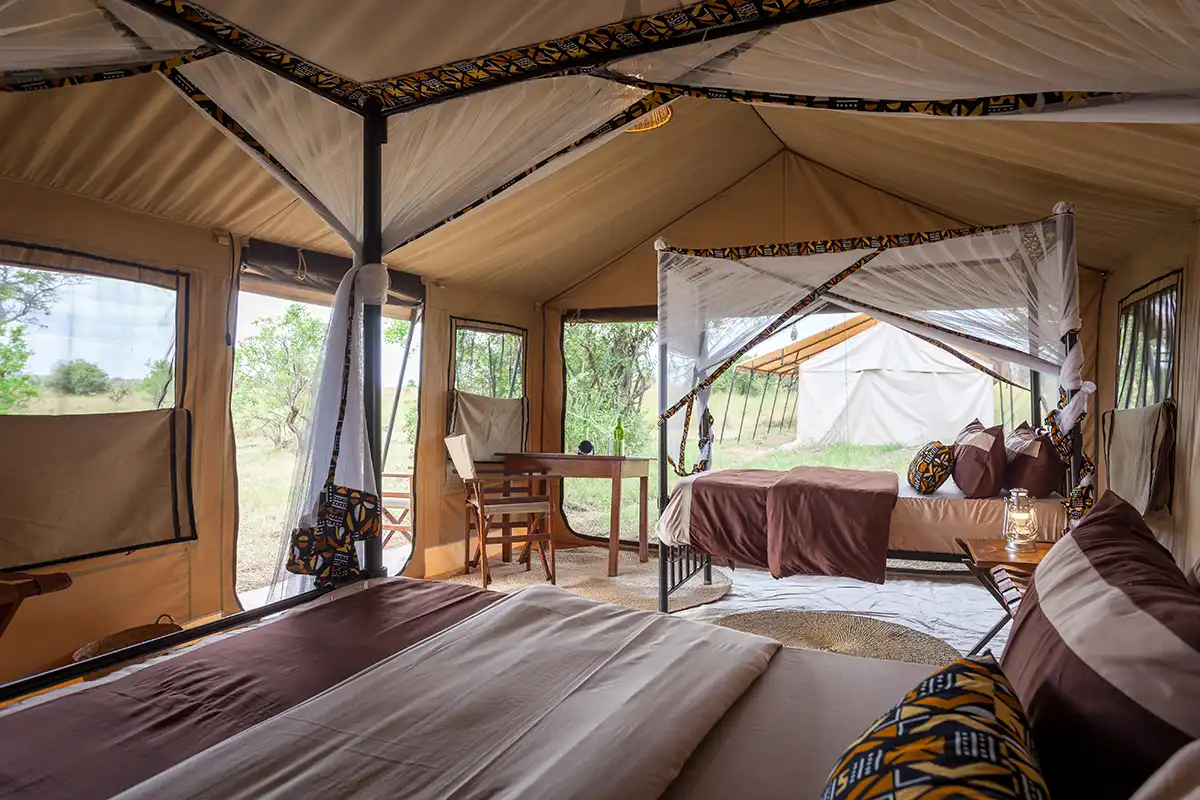
Every tent is en-suite. What you get as standard:
- ›A hot shower and a flush toilet
- ›Solar power with charging points
- ›Mosquito nets and filtered water in glass bottles
- ›Daily housekeeping, and bed warmers on cold nights at Mawe Tented Camp
- ›A member of staff to walk you back to your tent after dark
Tents at Gnu Mara River Camp add a private deck and carpeted floors. Cottages at Karatu Tented Lodge have solid walls, a terrace and mains electricity.
What you will not find is air conditioning, a spa or a television. We are not pretending otherwise.
Meals and evenings
Every rate covers full board. Breakfast brings fruit, breads, eggs and pancakes, with filter coffee before sunrise. Dinner is three courses with a choice of dishes. Our kitchens handle vegetarian, vegan and gluten-free diets, so tell us when you book.
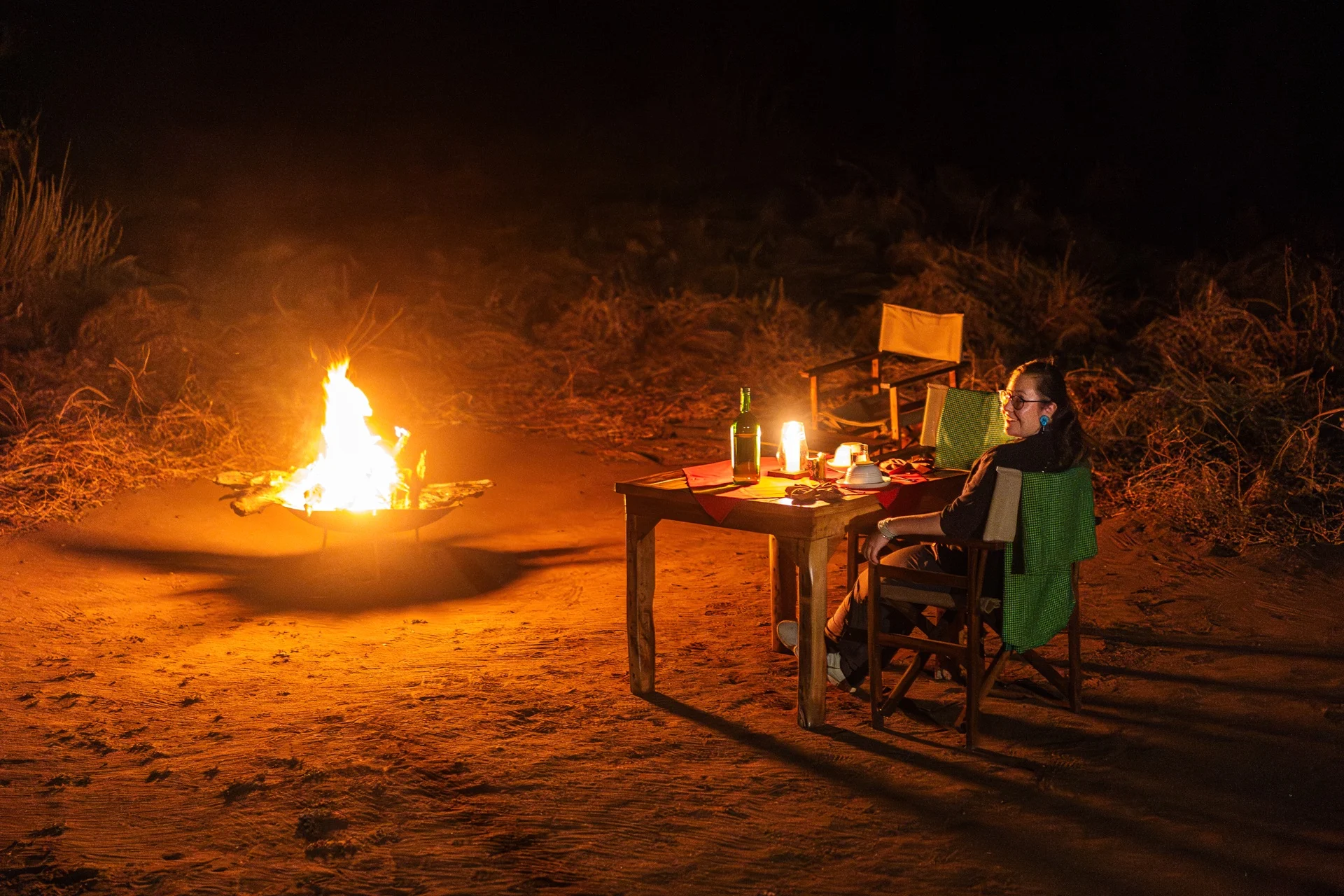
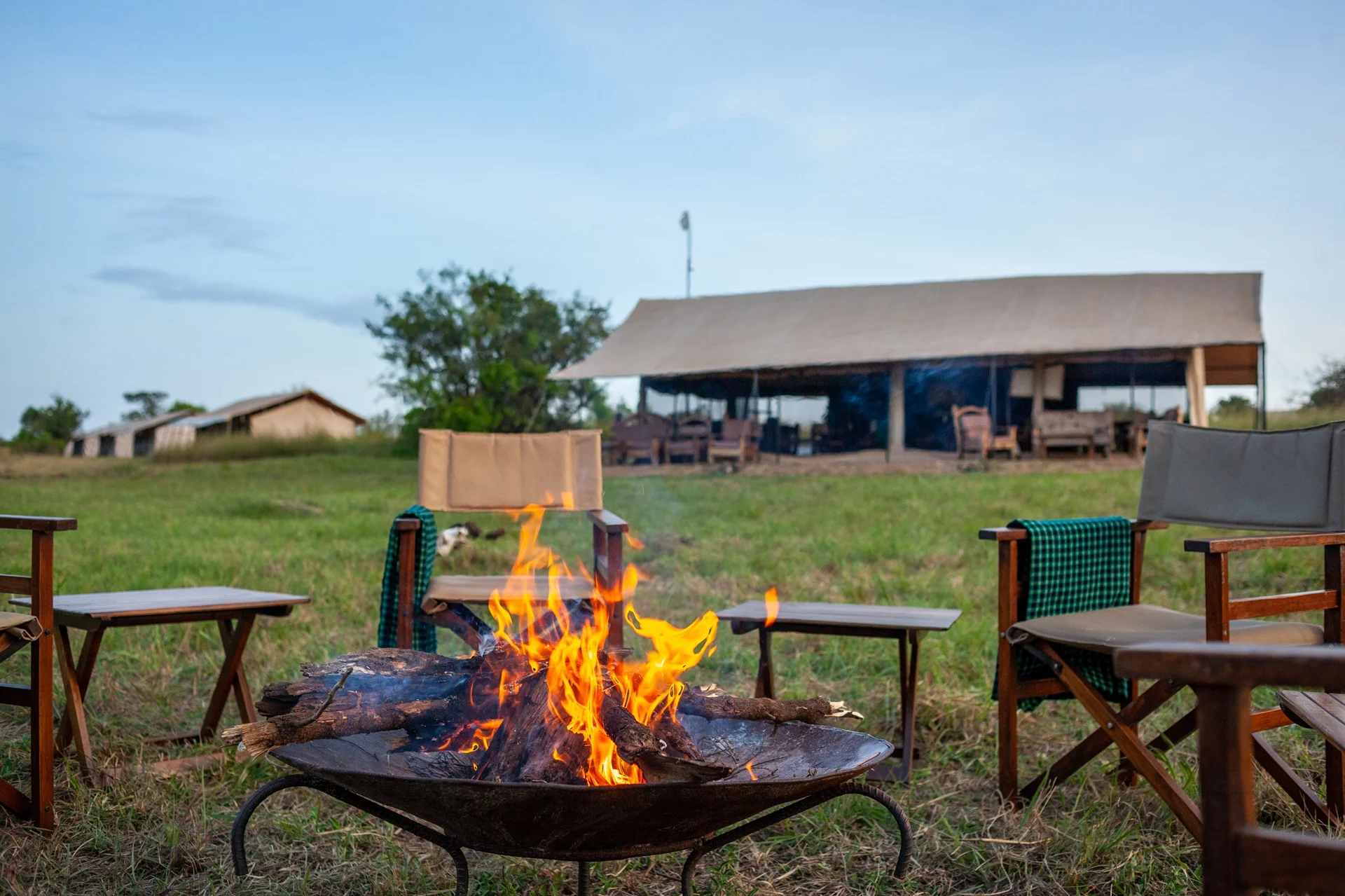
Afterwards, most couples end up at the campfire. It is the closest thing we have to a bar scene, and it suits the setting.
What the rate covers
Our published rates cover meals, Wi-Fi in the main areas, VAT, government fees and parking. They do not cover park entrance fees, bar drinks, activities, transfers or gratuities.
Keep that split in mind before you compare us with an all-inclusive beach resort. The two figures measure different things, so line them up properly first.
Romantic experiences worth adding
Every Tanzania safari honeymoon couple asks what to add beyond the drives. These four come up most.
Walking safaris cost $80 per person for a two to three hour bush walk. A half-day walk costs $180 per person and includes a guide, an armed ranger, water and a bush breakfast. Groups stay at six guests or fewer, and walkers must be twelve or older.
Hot air balloon flights start from $599 per person. That covers your transfer, an hour in the air and a champagne bush breakfast on landing. One thing to know upfront: baskets carry twelve to sixteen passengers. So the flight is spectacular, but it is not private.
Night game drives in Tarangire leave camp around 9pm and last about two hours. A shared drive costs $94.50 per person, plus a TANAPA night permit at $59 per person. Genets, civets, bush babies and occasionally leopards appear in the spotlight.
Cultural mornings around Lake Eyasi put you with Hadzabe and Datoga communities before the heat builds. Ask us when you book, because timings shift with the season.
Tanzania honeymoon safari packages: how long to stay
Seven days works. Ten days works better. The best luxury honeymoon safari packages Tanzania offers share one trait. They move you slowly, with at least three nights in one place.
Short trips fail for a simple reason. Every transfer day costs you a morning drive and an afternoon one.
Five days, the short circuit
Lake Manyara, Ngorongoro Crater and Tarangire, with two nights at Karatu Tented Lodge and two at Baobab Tented Camp. It suits couples who are adding a longer beach stay.
Seven days, the Big Five circuit
Our 7-day safari opens at Lake Manyara. You then get two nights at Mawe Tented Camp in the central Serengeti. The Ngorongoro Crater and Tarangire follow. This is the most popular shape, and it earns that.
Ten days, migration-led
Our 10-day safari adds three nights tracking the herds. In the calving season you sleep at Gnu Ndutu Camp. Between June and November you head north to Gnu Mara River Camp instead.
What a Tanzania honeymoon safari costs
Our safari packages are all-inclusive. One price covers your accommodation, all meals, the private vehicle, your guide, fuel, and every park and crater fee. Road and airport transfers come free.
Package prices for two sharing
Honeymooners travel as a pair, so these are the two-person rates. Larger groups pay less per head, because you share the vehicle.
| Itinerary | From, per person |
|---|---|
| 5 days | $2,114 |
| 7 days | $4,360 |
| 9 days | $5,605 |
| 10 days | $6,230 |
International flights, visas, bar drinks, tips and optional activities are extra. So are internal flights, which cost $250 to $400 per person one way within the northern circuit.
Our nightly camp rates
Some couples prefer to book the camps alone and arrange the rest themselves. These nightly rates cover accommodation on full board only. Park fees, the vehicle, your guide and transfers stay outside them. So please do not read these rates against the package prices above.
Our rates start from $118 per person per night at Karatu Tented Lodge in low season. All figures assume two people sharing.
| Camp | Low season | High season | Peak season |
|---|---|---|---|
| Karatu Tented Lodge | $118 | $130 | $144 |
| Baobab Tented Camp | $194 | $218 | $256 |
| Mawe Tented Camp | $195 | $247 | $280 |
| Gnu Ndutu Camp | $286 | $286 | $286 |
| Gnu Mara River Camp | $286 | $286 | $286 |
Low season covers 1 March to 30 June and 1 November to 21 December. High season covers 6 January to 28 February. Peak season covers 1 July to 31 October, plus 22 December to 5 January.
Booking the camps on their own
Building the trip yourself? A private Land Cruiser with a guide and fuel costs $300 per vehicle per day. Park and crater fees come on top. The authorities charge those per person per 24 hours. Our Tanzania safari cost breakdown lists the current fee for each park.
Tips and the smaller extras
Tipping stays discretionary, though guidance helps. For your driver-guide, allow $20 to $25 per vehicle per day. For camp staff, allow $10 to $15 per guest per day. Across a week, budget roughly $150 to $205 per person.
Our circuit discount
Booking the camps directly rather than as a package? Stay at three or more of our properties for at least four nights and you save 5% on accommodation. The offer applies year-round, subject to availability, and works for direct bookings as well as through agents.
Booking direct or through an agent
Both channels work, and they sell different things. Booking direct gets you our rates and a conversation with the people who operate the camps.
A good agent or DMC does something else. They bundle flights, park fees, vehicles and the beach leg into one contract. They also carry the risk if something changes mid-trip. Pick whichever suits how much you want to organise yourselves.
Tanzania safari and beach honeymoon: adding Zanzibar
Most couples finish on the coast, and we think that order is right. Do the early starts while you still have energy.
How the Zanzibar arrangement works
We do not own a property on Zanzibar. Instead, we arrange your beach stay with partner hotels and quote it alongside your safari. So you get one itinerary and one point of contact, while the hotel itself is somebody else’s. We will tell you plainly which parts we operate and which we book on your behalf.
Your flight leaves from a Serengeti airstrip or Kilimanjaro, depending on where you finish. Ask us for current routings and fares when you enquire, because schedules change each season.
When to fly to the coast
Three to five nights suits most couples. Anything shorter feels rushed after the transfer day. The coast stays warm year-round, though the long rains in April and May bring heavier downpours.
If you plan to climb Kilimanjaro instead of driving the northern circuit, we quote the Zanzibar extension separately. The two trips start and end in different places, so the flights and timings do not overlap.
Best time for a Tanzania honeymoon safari
There is no bad month, only trade-offs.
| Months | What you get | Rates |
|---|---|---|
| June to October | Dry weather, thinner grass and easier sightings. Book roughly a year out. | Peak |
| November to early December | Short rains stay brief and the parks feel empty. A genuine sweet spot. | Low |
| January and February | The calving season on the southern plains. | High, slightly softer |
| March to May | The long rains, and very few vehicles. | Lowest |
If you can pick your dates freely, November and early December are the sweet spot for a Tanzania honeymoon safari. Our guide to the best time to visit Tanzania covers each month in detail.
One caveat on the rains. Tracks get slower and a few close, yet the parks stay open and green. Several couples tell us afterwards that May was the best value they found.
Frequently asked questions
How far ahead should we book?
+
For peak season, twelve months. For low and high season, six to nine months usually works. Our camps hold ten tents each, so availability disappears faster than at larger lodges.
Can we get a double bed?
+
Yes, but confirm it when you book. Each camp holds a limited number of double or twin tents, and we allocate them in order.
Is a Zanzibar Tanzania honeymoon worth the extra flight?
+
For most couples, yes. The safari days start before dawn and end after dark, and the beach gives you somewhere to process it all. If you only have seven nights total, stay on safari instead.
Do you offer a honeymoon package with extras?
+
We do not currently publish a honeymoon-specific rate. Instead, every Tanzania honeymoon safari includes a private vehicle as standard. Our camps also stay small enough to arrange things quietly. Tell us it is your honeymoon when you book.
Are the camps suitable if we have never camped?
+
Yes. Every tent has a proper bed and a private bathroom with proper plumbing. You are sleeping under canvas, not roughing it.
What if it rains?
+
Game drives continue. Roads get slower, and some tracks close in the Serengeti during heavy rain. Your guide reroutes around them.
Can you arrange a private dinner or a surprise?
+
Talk to us first. Bush dinners are available at Gnu Mara River Camp as a paid extra. Smaller touches depend on the camp, so ask before you arrive rather than on the night.
Do we need vaccinations or a visa?
+
Both, usually. Most nationalities need a visa, and Tanzania issues them online ahead of travel. A yellow fever certificate is only asked for if you arrive from a country with yellow fever risk, or transit one for more than 12 hours. Your own requirements depend on your passport and where you have been recently.
Tanzania · Northern Circuit
Book your stay with Mawe Lodges
Our own lodges and camps, our own guides, our own 4×4 vehicles. One team from arrival to departure.
-
12+
years operating -
Own
lodges & camps -
Own
guides & 4×4 vehicles