Tanzania · Ndutu
Ndutu Safari
A Ndutu safari puts you inside the Ngorongoro Conservation Area, not inside Serengeti National Park. The plains look identical in both directions, the wildebeest calve on both sides of the line, and that is why you’ll see the place described both ways. Both descriptions are half correct.
UNESCO’s listing for the conservation area says the herds calve on short grass plains that cross the boundary between the two. Nearly 500,000 calves arrive in about three weeks.
The boundary still matters, for one practical reason. On the Ndutu side your guide can leave the road and follow an animal. Cross into Serengeti National Park and he has to stay on it.
The Plains
What a Ndutu Safari is?
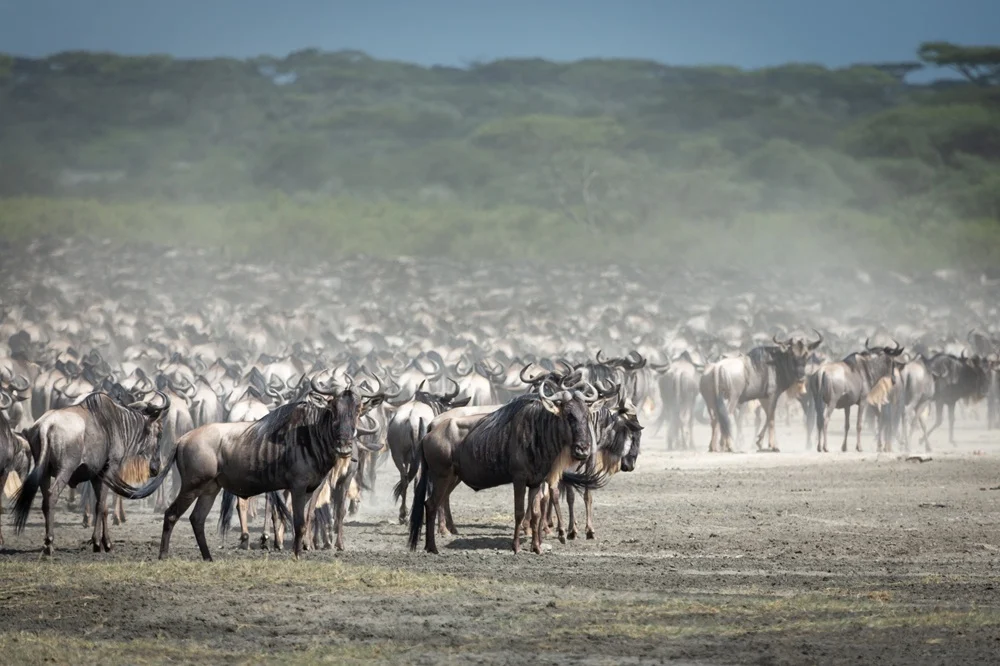
A Ndutu safari is a game-viewing trip to the short grass plains at the southern end of the Serengeti ecosystem, inside the Ngorongoro Conservation Area. People book it mainly for the wildebeest calving season between late December and March, when the herds are on those plains and the predators are hunting them daily.
The Ngorongoro Conservation Area Authority manages this land and collects the fees. Its own description puts the Ndutu plains inside the conservation area, on the outskirts of the southern Serengeti plains. That area covers 809,440 hectares, or 8,094 square kilometers (3,125 square miles), and Ndutu is one corner of it in the northwest. You will see that 8,000 figure quoted as the size of Ndutu itself, and it is not. It measures the whole of Ngorongoro, of which Ndutu is one corner.
Serengeti National Park is next door and separately managed, under Tanzania National Parks. The two share an unfenced boundary and the animals ignore it. UNESCO’s listing says the wildebeest calve on short grass plains that cross the line between the two.
So both answers are correct. The Ndutu area is administered by the conservation authority. The calving grounds are on both sides.
The Boundary
Ndutu, the Serengeti and the Crater Compared
Ndutu
Serengeti National Park
Ngorongoro Crater
Managed by
Ndutu
Conservation Area Authority
Serengeti National Park
Tanzania National Parks
Ngorongoro Crater
Conservation Area Authority
Adult entry, per 24 hours
Ndutu
$70.80
Serengeti National Park
Set separately by Tanzania National Parks
Ngorongoro Crater
$70.80
Off-road driving
Ndutu
Permitted
Serengeti National Park
Not permitted
Ngorongoro Crater
Not permitted
Mainly booked for
Ndutu
Calving, late December to March
Serengeti National Park
The migration and year-round game
Ngorongoro Crater
Crater floor game viewing in a day
There Is No Ndutu National Park
Ndutu isn’t a national park and never has been. Tanzania National Parks does not list one. The land falls under Ngorongoro, which is a different category of protected land. People, livestock and wildlife share it, and that is why the driving rules differ from park rules.
Off-Road
Why Off-Road Driving Changes a Ndutu Safari
Off-road driving is the practical difference between these plains and the park next door, and it changes your game drive.
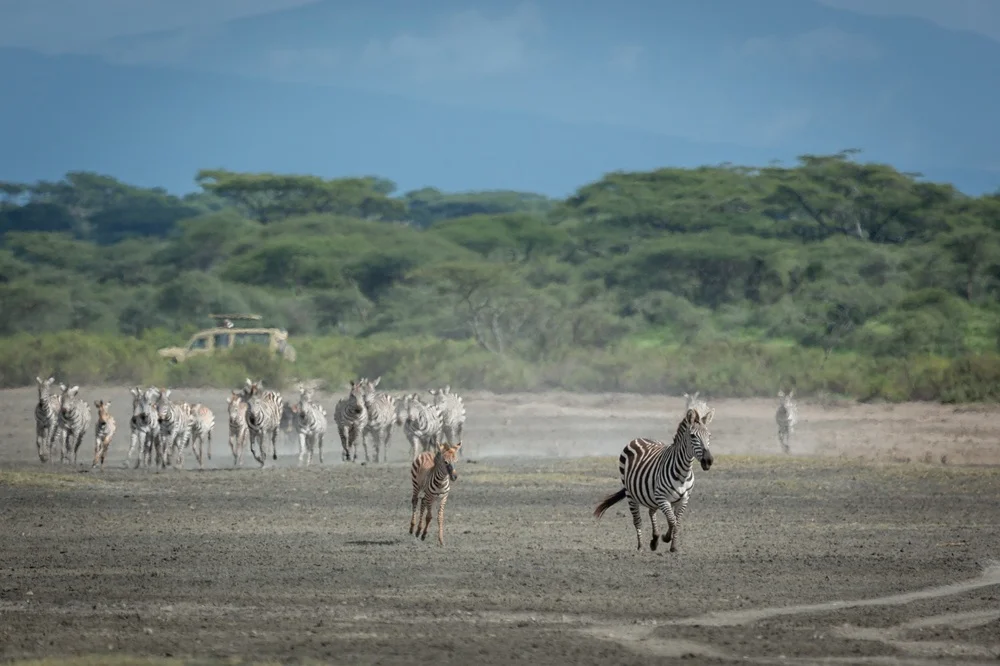
Inside the park your driver stays on the track. If a cheetah walks away from the road, you watch her go. At Ndutu our guides take the vehicle off the track and follow her. That matters most in the hour after dawn, when the cats are still hunting and a chase can start well away from any track.
It also changes the angle you get. Off the track you can put the vehicle low and side-on to the animal instead of shooting down at it from above. That is why photographers pick these plains over the central Serengeti in February.
When to Go
When to Go on a Ndutu Safari
Late December to March. The herds are on the plains through those months, calving peaks in late January and February, and our camp is open for the whole window. From April the grass is finished, the herds go north and the camp comes down.
A Ndutu migration safari and a Mara River trip are two different holidays at opposite ends of the year. The crossings are a northern Serengeti event from July to October. Calving is a southern plains event from late December to March. You can’t do both on one visit, and when to be in the Serengeti sets out how the year splits.
Month
What is on the plains
Our camp
Late December
What is on the plains
Herds arriving, first births from mid-month
Our camp
Open
January
What is on the plains
Births daily, building through the month
Our camp
Open
February
What is on the plains
Peak calving, peak predator activity
Our camp
Open
March
What is on the plains
Calving finishes, calves strong enough to travel
Our camp
Open until 31 March
April to November
What is on the plains
Resident game only, herds gone north
Our camp
Closed
Rain sets these dates and rain changes from year to year. In a wet year the herds arrive early and stay late. In a dry one they arrive late and leave quickly. Treat every date here as two or three weeks either side.
Calving
Ndutu Calving Season Safari
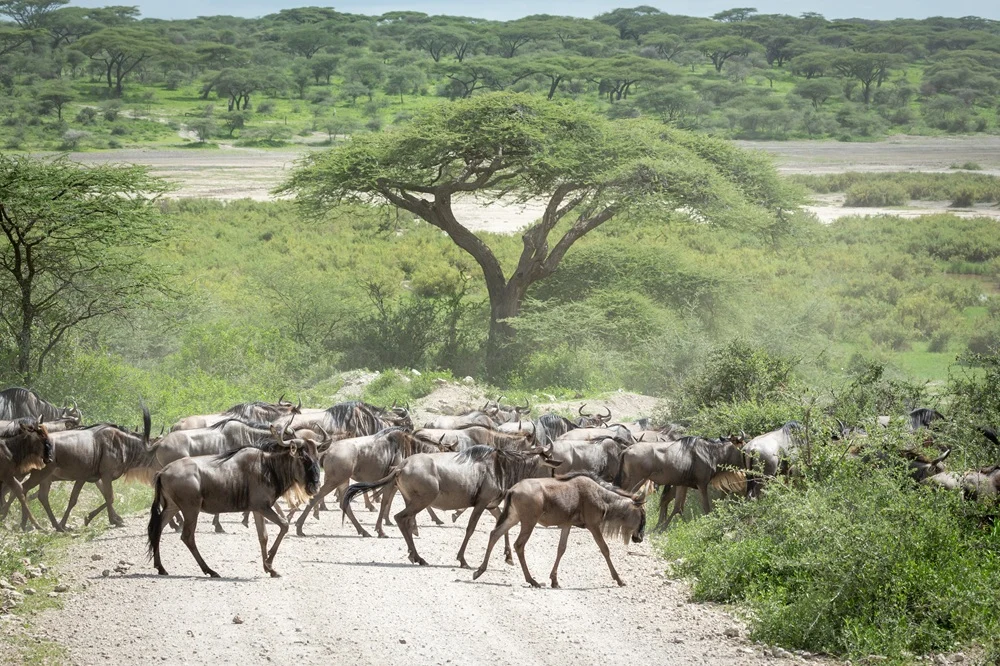
A Ndutu calving season safari is booked for one event. Nearly 500,000 wildebeest calves are born on these short grass plains in about three weeks.
The timing is not chance. Wildebeest rut in the dry season, and research published in Scientific Reports found that around 80 percent of females mate inside a two to three week window at the peak of it. Gestation is about 258 days. Count forward from the rut and the births land on the southern plains in late January and February.
Wildlife
Ndutu Wildlife
Two sets of animals share Ndutu and only one of them leaves.
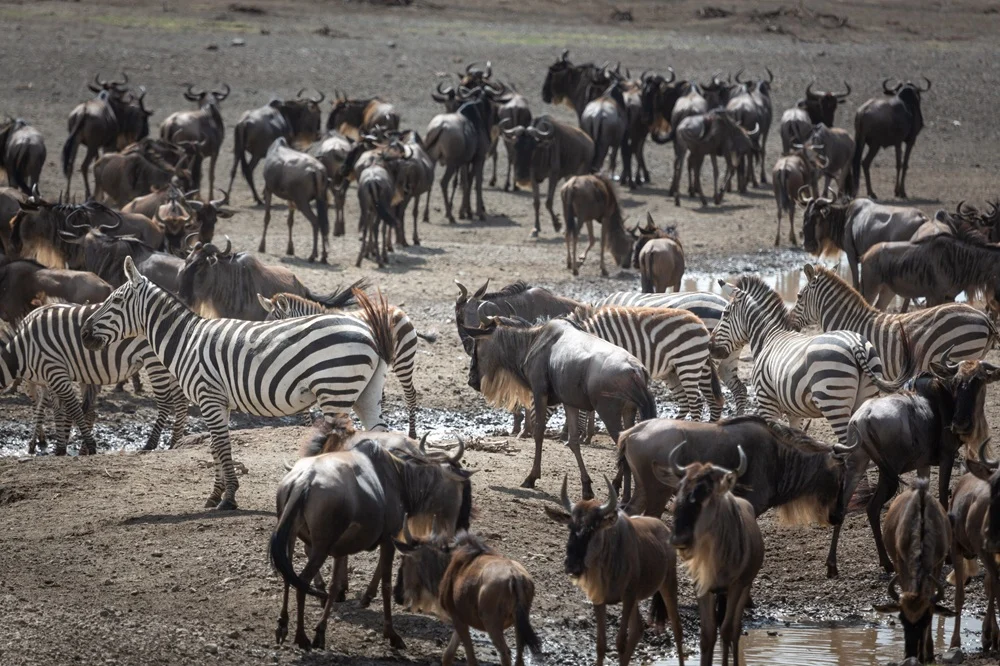
The migratory herds are here from late December to March. Wildebeest in the hundreds of thousands, with zebra and gazelle moving alongside them.
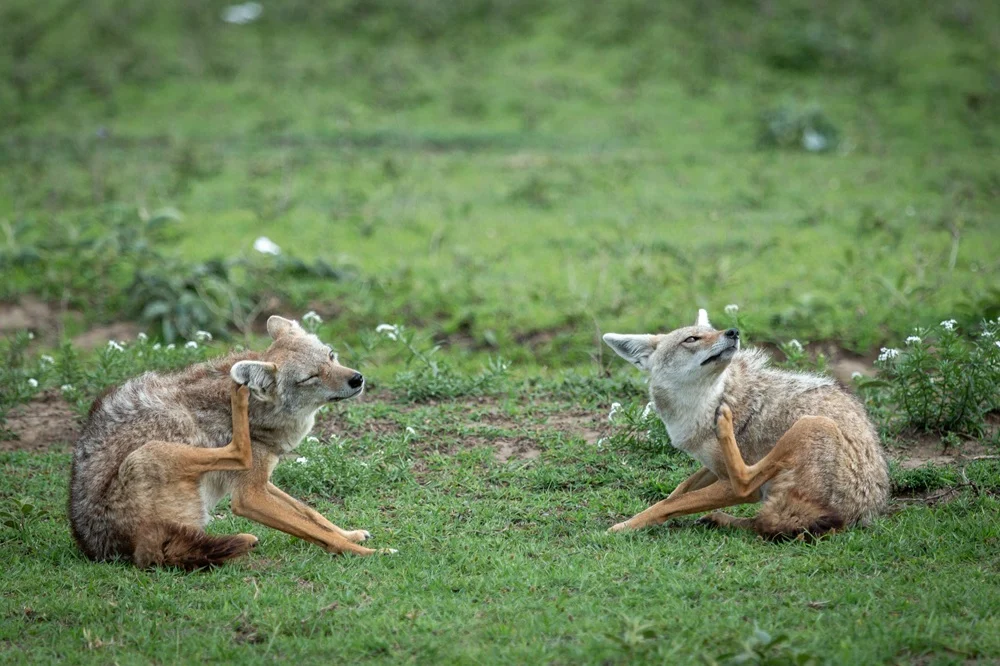
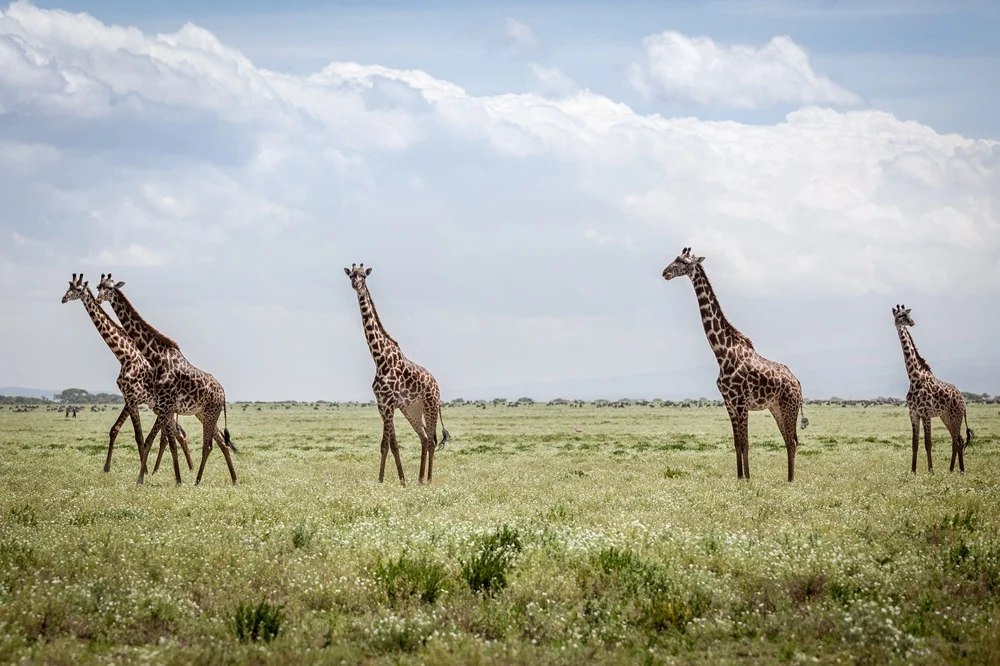
The resident game is here every month. The conservation authority’s own list for the Ndutu plains names giraffe, impala, elephant, dik dik, lion, cheetah, leopard, hyena, bat-eared fox, genet, jackal and wildcat.
Cats hunt well here because of the ground rather than luck. Short grass gives a cheetah a clear run and gives you a clear view of it. Acacia woodland at the edge of the plains gives a leopard cover and gives lions shade through the middle of the day. The two habitats meet within a few kilometers of each other, so one morning drive can cover both.
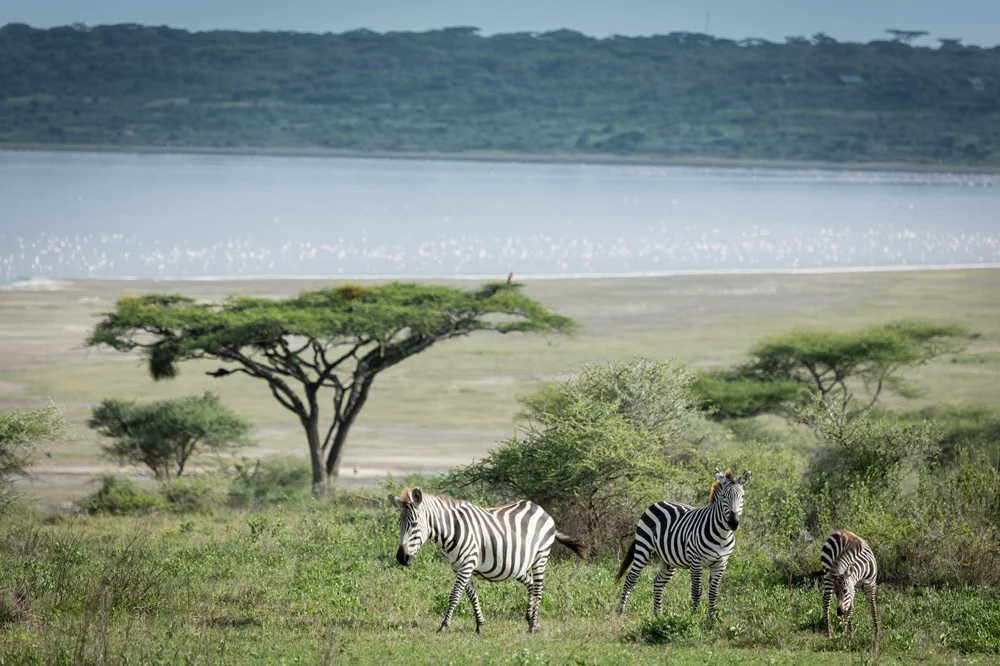
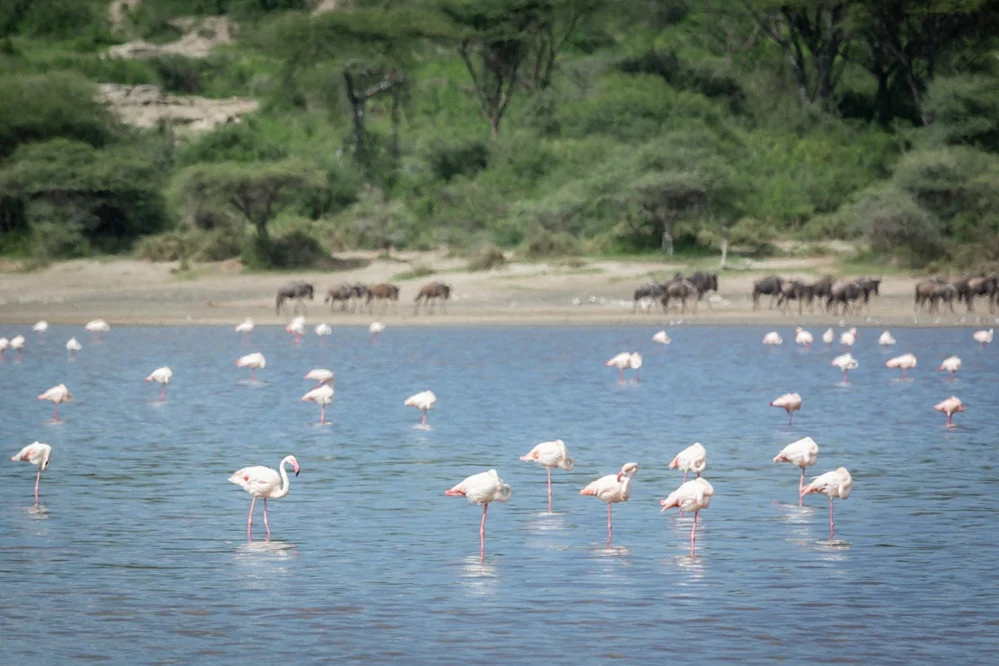
Lake Ndutu and Lake Masek bring the birds. Both are soda lakes, Ndutu seasonal and Masek holding water all year, and flamingos work the shallows when the levels suit them.
Experiences
Things to Do in Ndutu
Game Drives
Game drives leave at first light, because the cats are still hunting then and the light is soft. Morning drives are the longest of the day and most guests take a breakfast box rather than come back for it.
Walking Safaris
Guided walking safaris show you the plains at ground level, with tracks, plants and birds a vehicle passes at speed. Walks go out in the cool morning hours and need booking ahead.
Balloon Flights
Balloon flights go up over the southern plains at dawn in season and land for a bush breakfast. Seats are limited and they sell early, so the time to ask is when you book.
Photography
Photographers who tell us their equipment and what they want to shoot are matched to a guide and a vehicle seat before arrival.
On the Road In
Oldupai Gorge
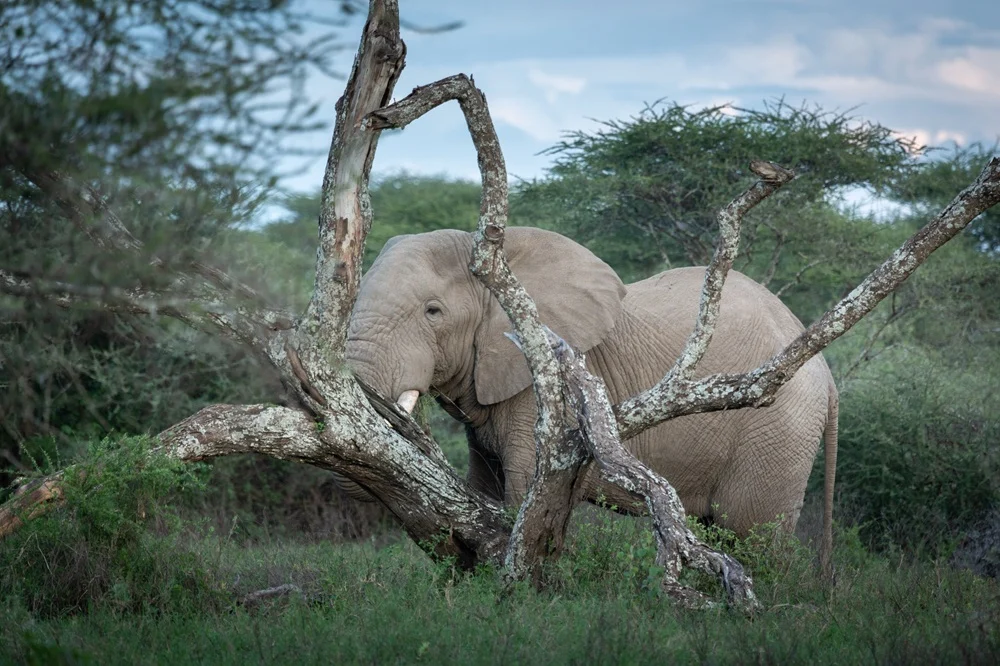
Oldupai Gorge is about 25 kilometers (15 miles) from the lakes, on the road between the crater and Ndutu, and most guests drive past it without stopping. UNESCO describes it as a 14 kilometer ravine and lists it among the reasons Ngorongoro holds World Heritage status.
Lake Ndutu has its own place in that record. UNESCO’s listing names an early form of Homo sapiens found at the lake, and the skull, known as the Ndutu cranium, was excavated in 1973. Published estimates put it between 500,000 and 600,000 years old. Oldupai Gorge is a half-hour stop and it fits into the transfer without adding a day.
Where to Stay
Where to Stay on a Ndutu Safari
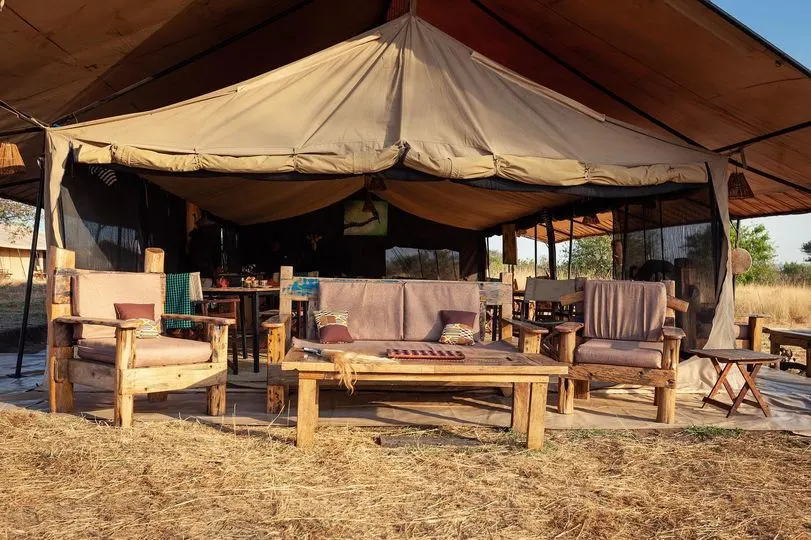
Two kinds of accommodation are on these plains. Permanent lodges keep one site all year. Mobile tented camps go up for the season, move as the herds move, and come down when they go north.
Gnu Ndutu Camp is the second kind. Ten en-suite tents on the calving grounds, open from late December until 31 March, from $262 per person per night sharing on full board. Solar power, hot showers, flush toilets and a deck on each tent facing the plains.
Getting Here
Getting to Ndutu: Drive Times and the Airstrip
Most guests reach Ndutu by road from the crater or the central Serengeti, or they fly into Ndutu Airstrip. From Arusha the road takes about five hours and the flight takes about one hour and five minutes.
From
By road
By air
Seronera, central Serengeti
By road
About 2 hours
By air
—
Arusha
By road
About 5 hours
By air
1 hour 5 minutes, 07:45 to 08:50
Lake Manyara airstrip
By road
—
By air
30 minutes, 08:20 to 08:50
Coastal Aviation’s published timetable for 2023 to 2027, updated in December 2025, has a morning service from Arusha at 07:45 arriving Ndutu at 08:50, and a second departure at 10:45 arriving 11:45 via Manyara. Flights out of Ndutu leave in the late afternoon, between 17:05 and 17:30. The one-way fare from Arusha is listed at $343 for an adult plus $32 in taxes and charges.
Search for the Ngorongoro Crater to Ndutu drive time and you will get one hour and you will get two. Our guides drive it in about two, off the crater rim and with no stops. If you are staying at Karatu Tented Lodge the night before, add the 30 minutes from Karatu up to the rim.
Costs
Ndutu Safari Costs
Budget for two things. The conservation fee, which the authority collects, and the camp rate. At Gnu Ndutu Camp the rate is from $262 per person per night sharing on full board, and the adult conservation fee is $70.80 for each 24 hours.
Authority charge
Non-East African rate
Entry permit, adult 16 and over
Non-East African rate
$70.80 per person
Entry permit, child 5 to 16
Non-East African rate
$23.60 per person
Entry permit, child under 5
Non-East African rate
Free
Vehicle permit, up to 2,000 kg
Non-East African rate
$47.20
Vehicle permit, 7,001 kg and above
Non-East African rate
$354.00
Special campsite, adult
Non-East African rate
$70.80 per person
Special campsite, child 5 to 16
Non-East African rate
$35.40 per person
The detail that catches people out is in the authority’s own wording. A permit once issued is valid for one entry within 24 hours only. Three nights at Ndutu means three permits, not one. How park fees get paid covers the mechanics.
Our rate covers full board, VAT and government taxes, and parking. It doesn’t cover the conservation fees above, the concession and seasonal campsite charges the authority collects separately, drinks from the bar, balloon flights, transfers or gratuities.
Packages
Ndutu Safari Packages
Two nights is the working answer and three is better if calving is the reason for the trip. One night isn’t worth booking, because most of it goes on getting there and getting out again.
Most Ndutu safari packages put these plains in the middle of a northern circuit route rather than at the start. Shorter tours that treat Ndutu as a day trip out of Karatu spend about five hours in the vehicle to get two on the plains. A common order is Tarangire, then Karatu for the crater, then Ndutu, then the central Serengeti, which is four of our own properties in sequence. Our 7 day Tanzania safari is built on that shape.
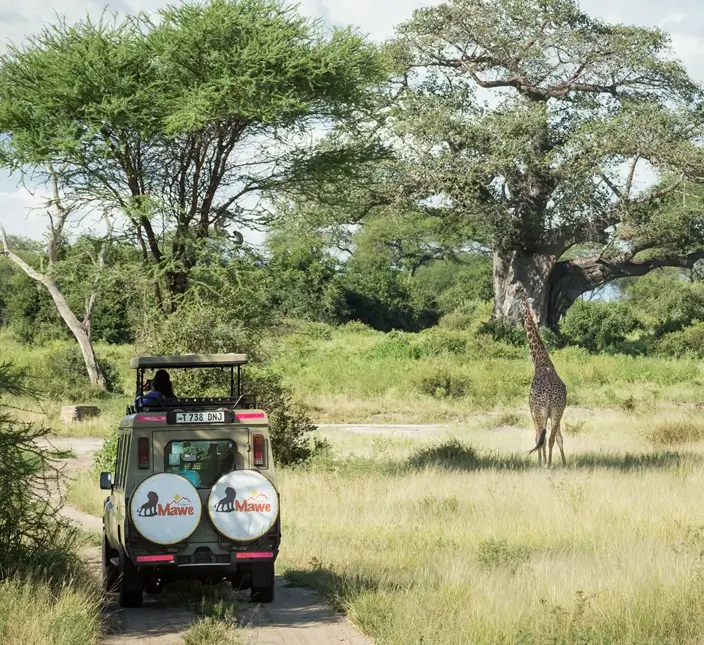
Ndutu safari tours and packages mean the same thing in practice. Both are a route with the camp nights, the vehicle, the guide and the park fees costed together as one price. Tours sold through an agent add a margin between you and the camp. We own the camps, employ the guides and own the vehicles, so a booking made with us is priced at the rate on the property page, and the team answering your email is the team meeting you at the airstrip.
Out of Season
Ndutu from April to November
From April to November the plains dry out and the migratory herds are gone. The resident lions, cheetahs, giraffe and elephant stay, and there are far fewer vehicles on the tracks.
We are not open for it. Gnu Ndutu Camp takes its last guests on 31 March. For those months Mawe Tented Camp at Soit Le Motonyi in the central eastern Serengeti has resident lions, leopards and cheetahs in every month of the year, and from 1 June the northern Serengeti has the river crossings.
Questions
Ndutu Safari FAQs
Ngorongoro, administratively. The Ndutu area is inside the Ngorongoro Conservation Area and the conservation authority manages it and charges for it. The short grass calving plains themselves cross into Serengeti National Park, which is why you get both answers. The boundary is unfenced and the herds move across it freely.
Ndutu is in northern Tanzania, at the southern end of the Serengeti ecosystem, in the northwest corner of the Ngorongoro Conservation Area. Lake Ndutu and Lake Masek are the landmarks. By road it is about two hours from the Ngorongoro Crater and about five hours from Arusha.
No. Tanzania National Parks does not list a Ndutu National Park and there has never been one. It is Ngorongoro land, where people and livestock share the ground with wildlife. That is also why off-road driving is allowed here and not in the park.
Two charges make up most of it. Our camp rate is from $262 per person per night sharing on full board. The conservation fee is $70.80 per adult for every 24 hours inside the area, collected by the authority and not included in the camp rate. Vehicle permits start at $47.20.
About two hours, off the crater rim with no stops. One hour is a figure that circulates and it doesn’t match what our guides drive. From Karatu, add roughly 30 minutes to get up to the rim first, which makes it about two and a half hours door to door.
Yes. Ndutu Airstrip takes scheduled light aircraft. Coastal Aviation’s timetable has an Arusha departure at 07:45 arriving 08:50, and a second at 10:45 arriving 11:45 via Manyara. Departures out of Ndutu are in the late afternoon, between 17:05 and 17:30.
Two nights covers it and three is better in calving season, because the herds move around the plains and a third morning gives you another chance at a hunt. One night is not worth the transfers. Most guests pair Ndutu with the central Serengeti or the crater.
Yes, and it is the main reason photographers choose these plains. Our guides take the vehicle off the track to follow animals here, which isn’t possible inside Serengeti National Park. It matters most at dawn, when a cheetah hunt can start well away from any road.
The area is, but the seasonal camps are not. Gnu Ndutu Camp is open from late December until 31 March and comes down for the rest of the year, because the animals it exists for have moved north. Resident game stays on the plains through the dry months.
Tanzania · Northern Circuit
Book your stay with Mawe Lodges
Our own lodges and camps, our own guides, our own 4×4 vehicles. One team from arrival to departure.
-
12+
years operating -
Own
lodges & camps -
Own
guides & 4×4 vehicles