Are safari tents safe? A staffed tented camp can provide an organized place to stay in a wildlife area, but no operator should promise that the risk is zero. The camp’s procedures, staff support and your behavior all matter.
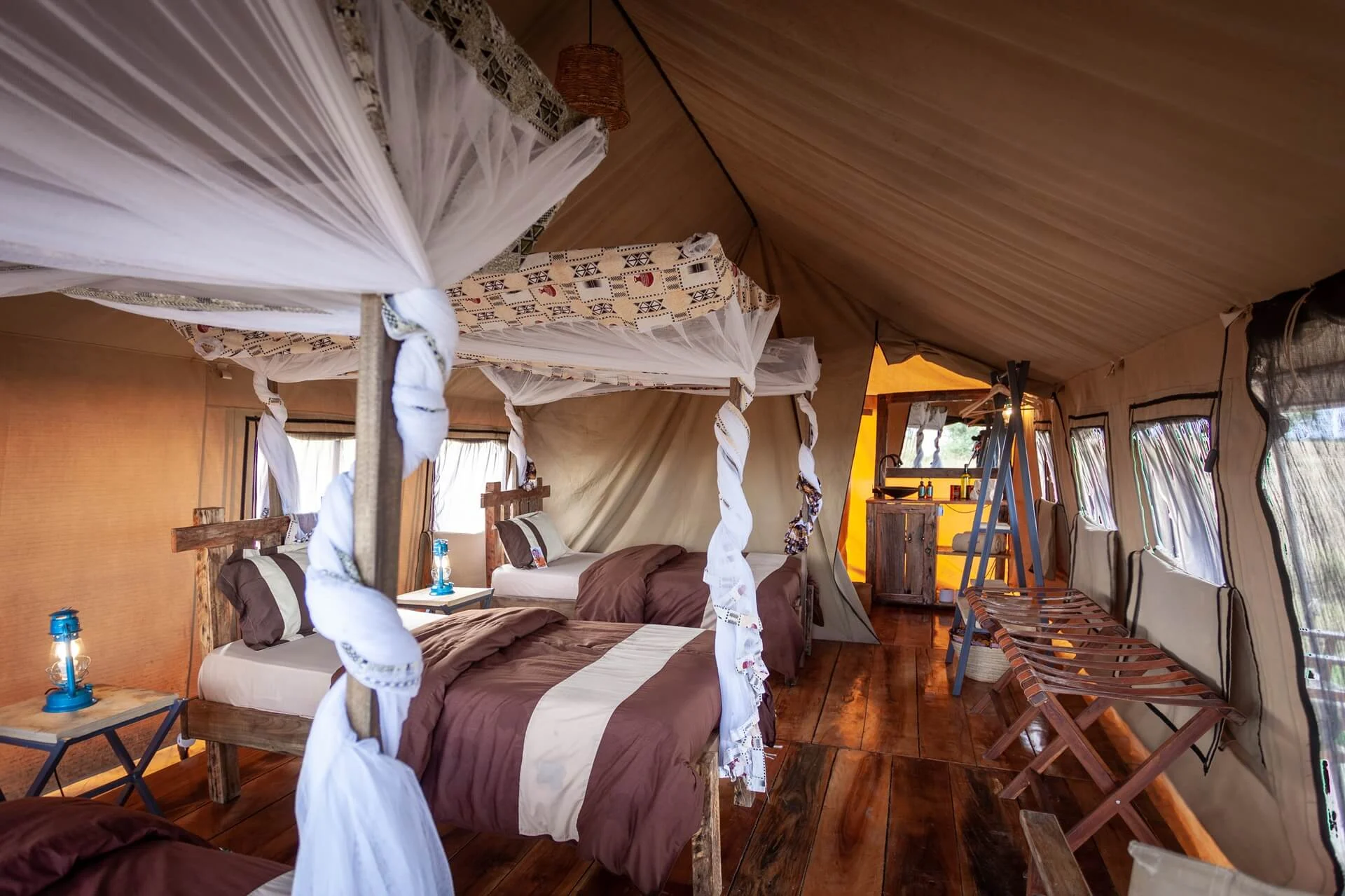
Mawe’s tented camps have beds and en-suite bathrooms rather than small tents you pitch yourself. At Mawe Tented Camp, the published guest information also describes staff walking guests to their tents after dark. Those practical arrangements are more useful to check than a general assurance that canvas alone keeps every animal out.
Are safari tents safe in an unfenced camp?
An unfenced camp operates within wildlife habitat. Animals can move through the surrounding grounds, so the camp needs procedures for guest movements and staff assistance. You need to follow the briefing for the particular property rather than apply rules from a previous stay.
The tent is your room, not permission to approach animals outside it. Keep the room secured as instructed, use the agreed contact method and let staff manage movements when wildlife is nearby.
Before booking, ask how the team handles after-dark walks, early departures and a request for help from the tent. If you have children or need assistance moving between buildings, those answers should be specific to your room and stay.
| Part of the stay | What to establish |
|---|---|
| Arrival briefing | Which paths and shared areas guests may use |
| After-dark movement | How to request an escort |
| Inside the tent | How to secure doors or zips and store food |
| Assistance | The contact method that works from your room |
| Children | Supervision and room arrangements for the family’s ages |
| Weather or another incident | The staff instructions and response plan |
What an unfenced camp means
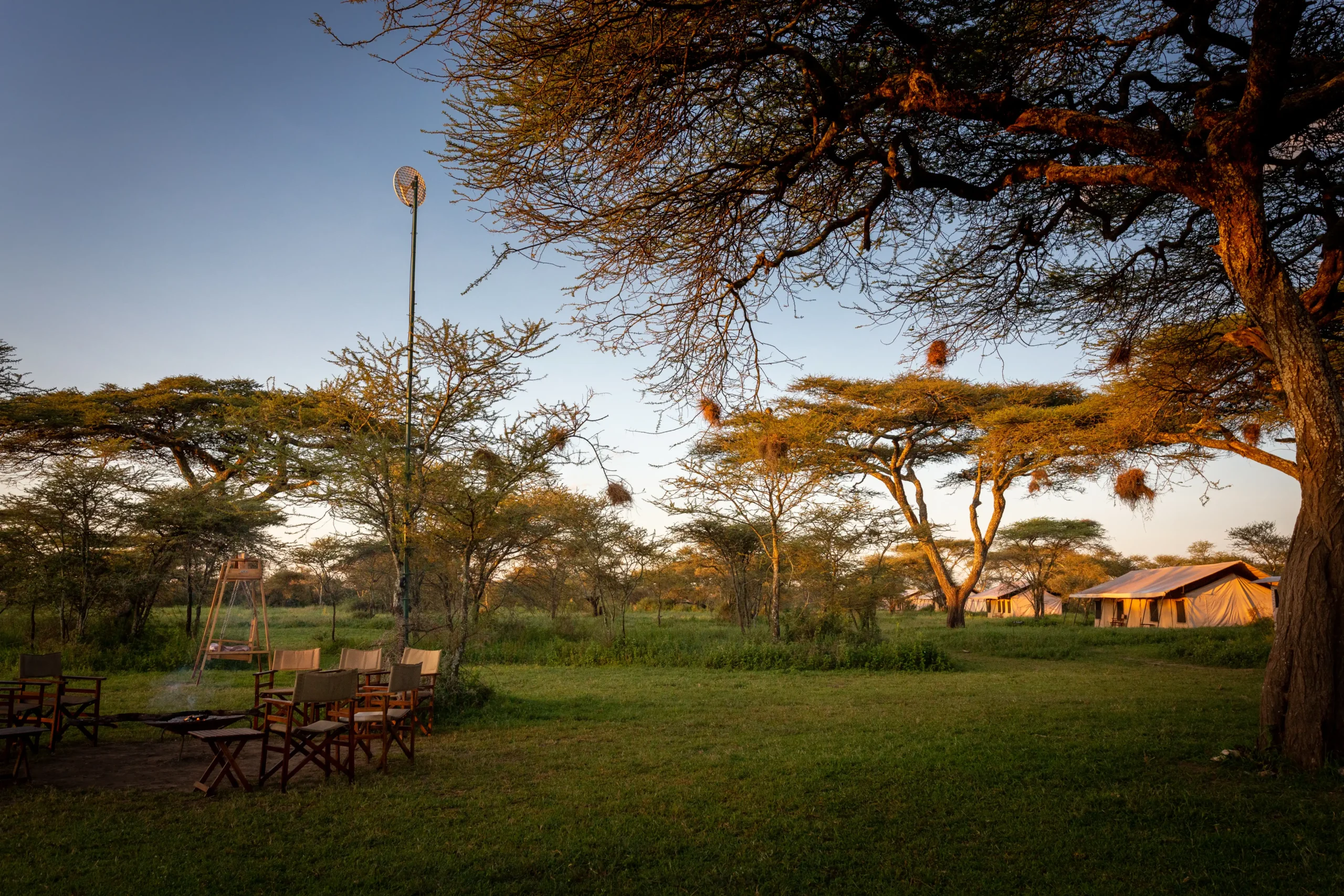
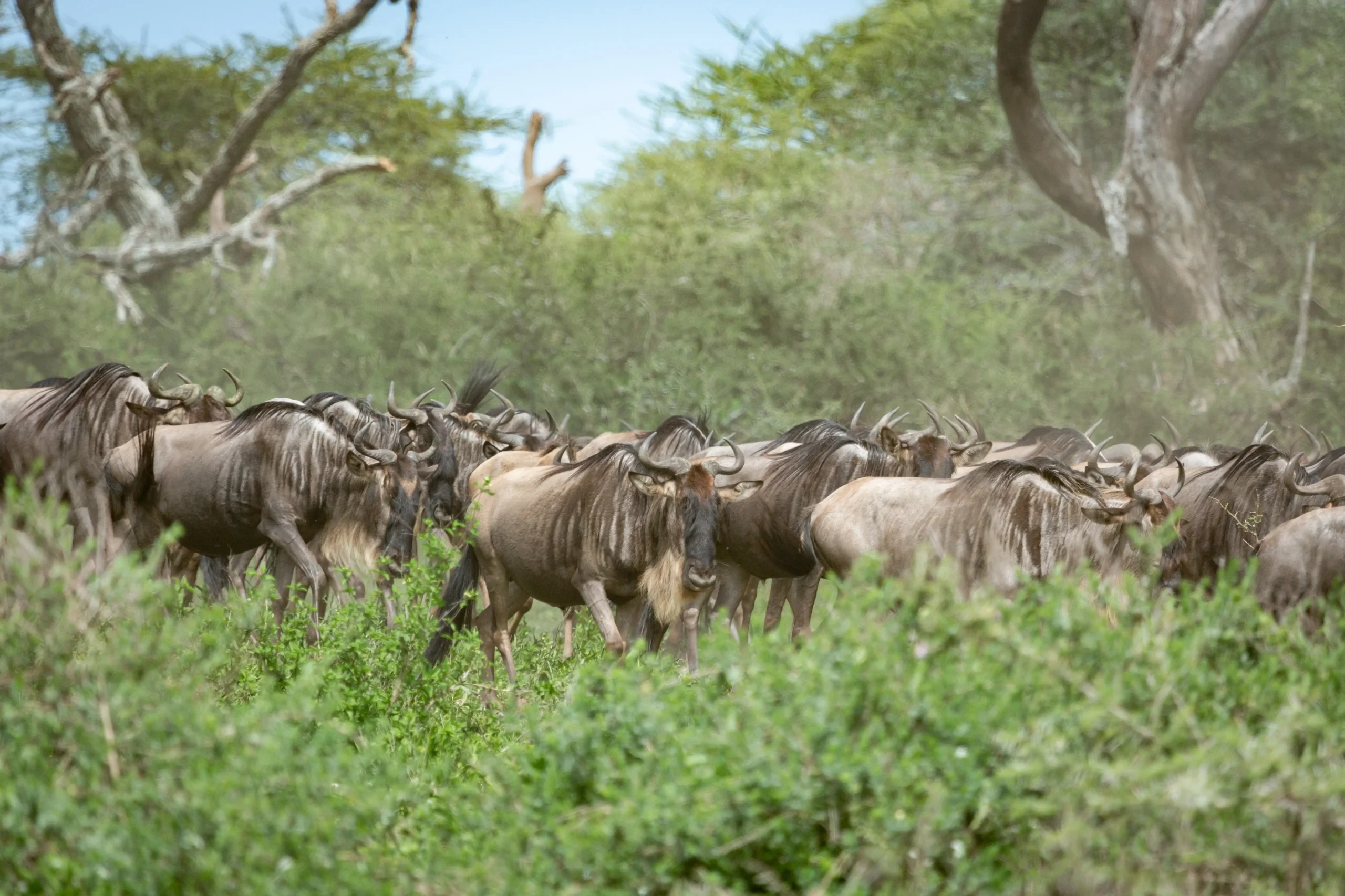
An unfenced camp does not have a continuous wildlife barrier around the guest area. Animals may be present between the tents or near shared facilities. That possibility is part of staying in a wildlife area and needs sensible management.
A raised platform, deck or strong canvas is not a guarantee that animals cannot reach the room. A lighted path also does not establish that you should walk it alone. Follow the camp’s instructions about where and when you can move.
The distinction between fenced and unfenced accommodation is useful when choosing a property. It does not replace questions about staffing, room access or emergency contact. A fence is only one part of the arrangement, and different properties have different layouts.
If the idea of animal sounds close to your room would prevent you from sleeping, discuss that before booking. A lodge with a different construction and setting may suit you better than a remote canvas room. Choosing comfort with the setting is a reasonable part of planning.
What Mawe publishes about its tents
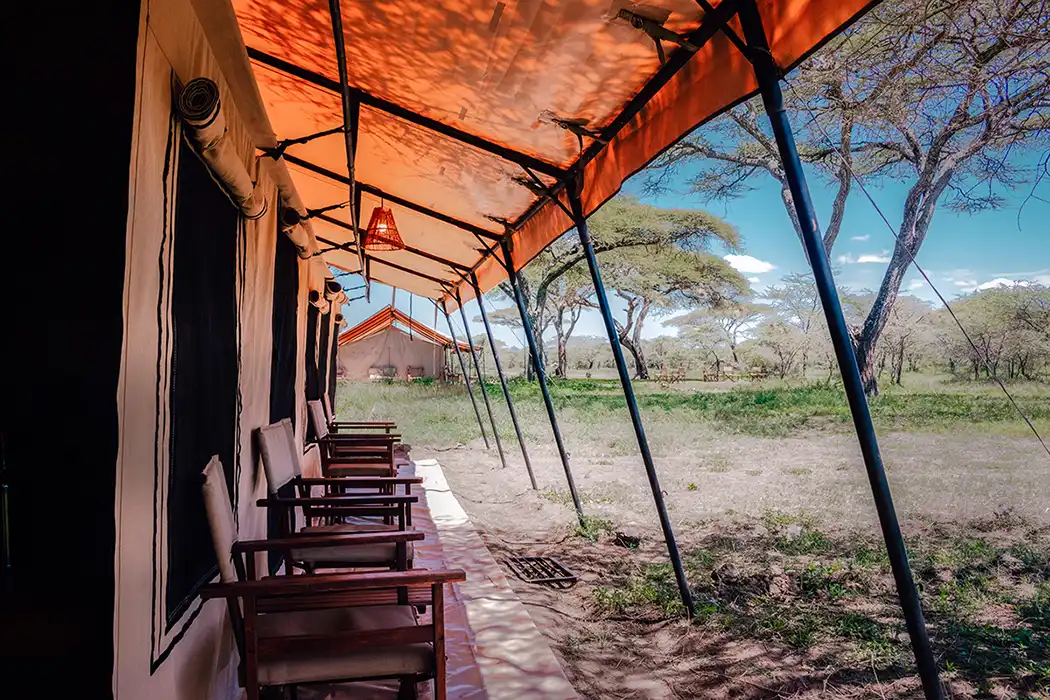
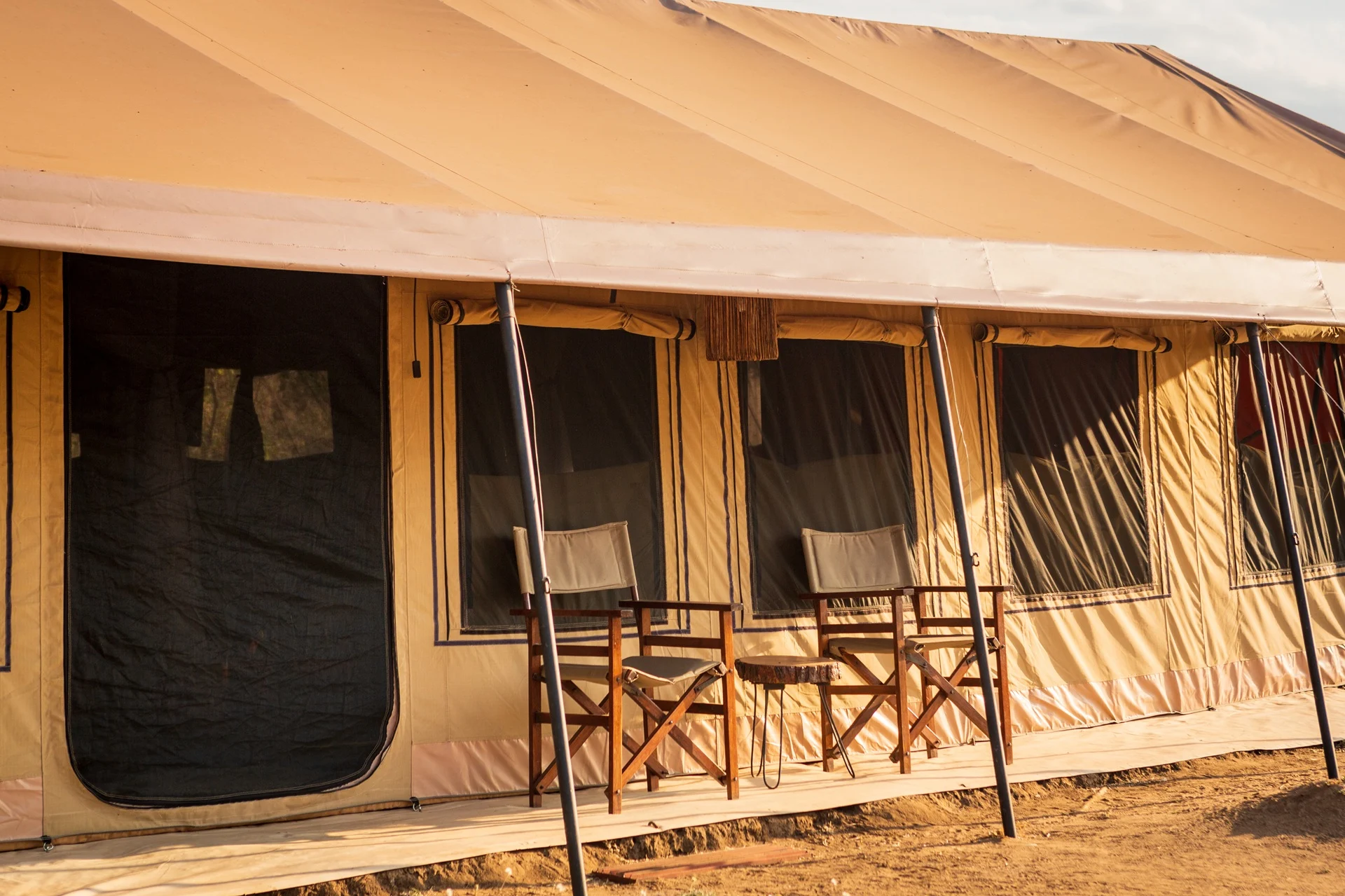
Mawe Tented Camp has ten en-suite tents in the central-eastern Serengeti. The published facilities include beds, mosquito nets, lighting and bathrooms. Its guest information describes a staff escort to the tent after dark.
Baobab Tented Camp is inside Tarangire National Park. It also has en-suite tents, so a bathroom visit does not require a walk to a separate communal toilet. Check the room-specific arrangement in your confirmation.
The seasonal Gnu Ndutu Camp and Gnu Mara River Camp have their own setting and opening periods. A procedure described for one camp should not be treated as the complete briefing for another.
Ask the reservations team about the exact property you have booked. This is particularly useful if you need a room nearer the shared areas or help on paths and steps. General tent photographs cannot confirm those arrangements.
Getting to your tent after dark
Use the escort arrangement the camp explains at arrival. If you leave dinner later than the rest of the group, request assistance rather than assume the earlier escort means the route remains suitable for an independent walk.
Keep the staff contact method somewhere accessible inside the room. It might differ from a normal hotel telephone, so test or confirm it while the team is present. Personal mobile signal should not be your only plan unless the camp has confirmed it works.
An early game drive can also involve movement before daylight. Agree the morning arrangements with staff the previous evening. Do not walk around looking for a guide or vehicle if the briefing requires an escort.
Let the team know if hearing or mobility needs affect your ability to use a call system or reach the meeting point. Ask how assistance reaches your tent and how staff receive the request from your room.
Food, zips, insects and night sounds
Follow the camp’s instructions about keeping food in the tent. If you carry snacks, tell staff and ask where to store them. A personal bag is not automatically an approved place for food in a wildlife camp.
Close doors, screens and zips as the team instructs. If a fastening or net has damage, report it rather than assuming it will have no effect. Housekeeping can explain the room’s arrangement and help with a practical problem.
Mosquito nets and screens help with insects, but they do not replace personal travel-health advice. If you need medical preparation for the safari, discuss the destination with a qualified travel-health professional before departure. This camp guide cannot assess an individual’s health needs.
Night sounds can be unfamiliar under canvas. Hearing an animal does not give you a reason to open the tent and investigate. Stay in the room and contact staff if you need help or reassurance about what is happening outside.
For comfort, keep a light within reach and avoid leaving essential items on the deck. Warm layers can be useful at night. The safari packing list covers the wider preparation without turning the room into a store for unnecessary luggage.
If an animal is near your tent
Remain inside and contact the camp team using the method explained in the briefing. Do not leave the room to get a closer photograph, feed the animal or test whether it will move away.
If you are already outside, follow the staff member’s instructions. This is not a situation for applying general wildlife tactics from a blog or social-media clip. The animal, distance and surroundings matter, and the local team needs to manage the response.
Report a problem with the contact system early. If it does not work from your room, agree another arrangement before going to bed. A contact number written on a card is not enough if the device or signal needed to use it is unavailable.
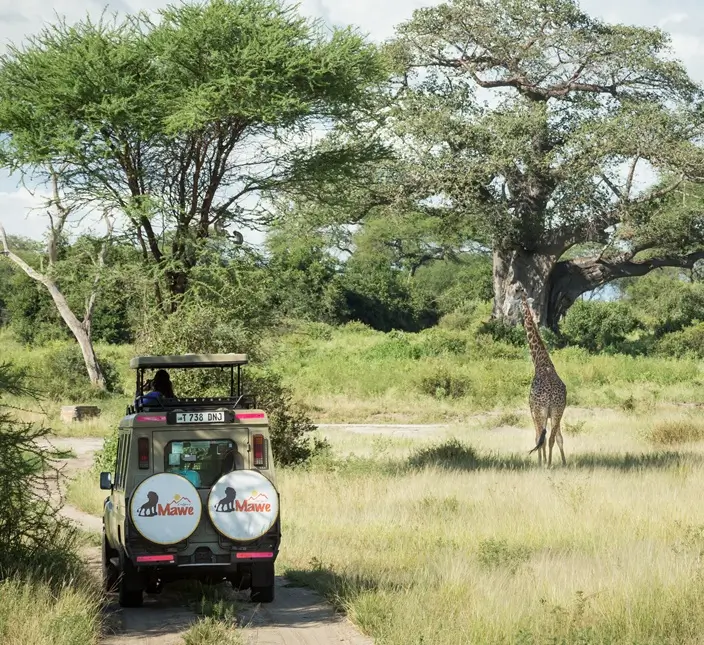
The same care applies during game drives. Being with a guide gives you someone responsible for the activity; it does not make it appropriate to leave the vehicle or approach wildlife independently.
Children, solo guests and mobility needs
A family tent answers a sleeping-arrangement question. It does not by itself establish that every activity or path suits every child. Tell the camp your children’s ages and ask how the family should move around the property.
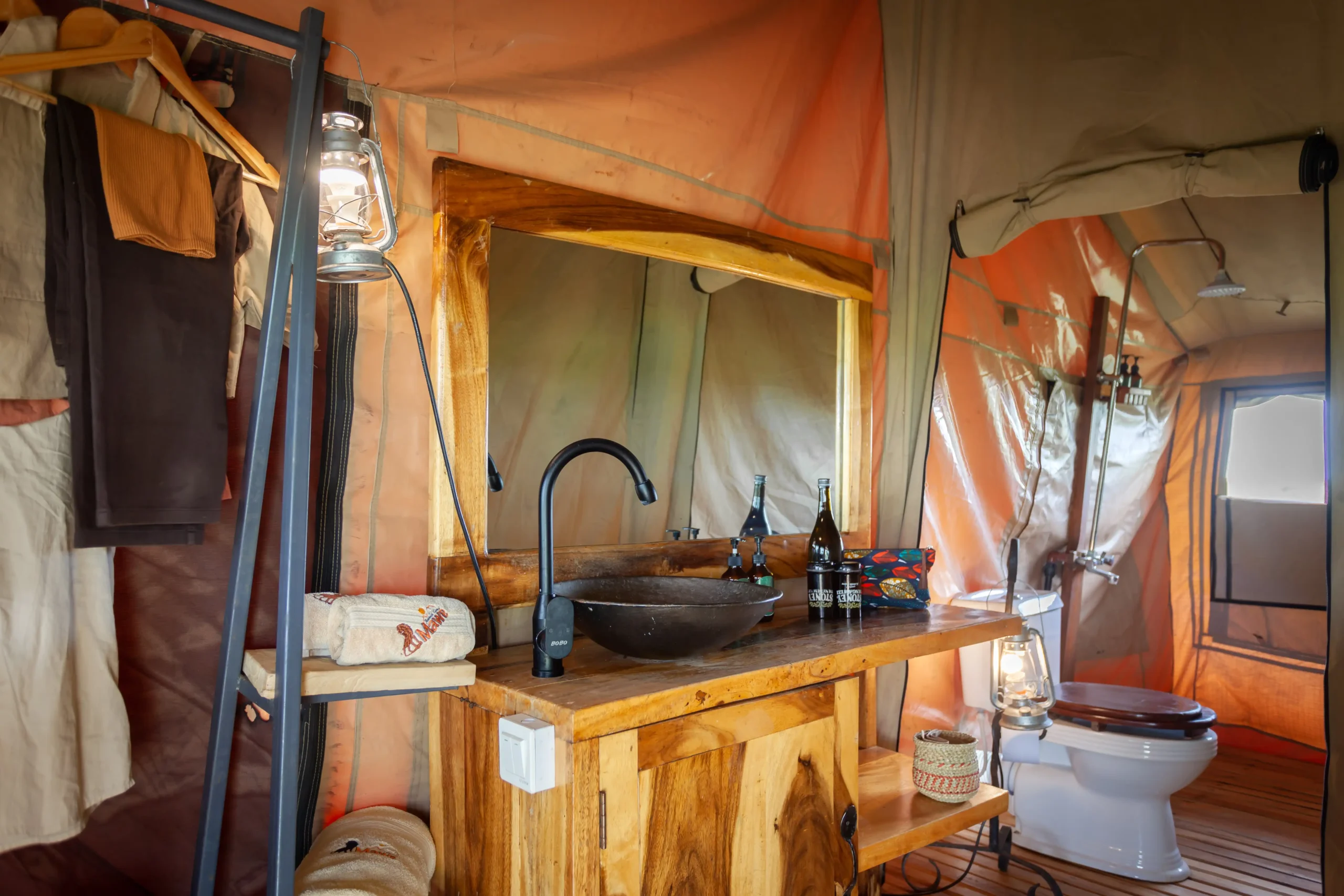
Children need close adult supervision in the shared areas and near the tent. If a child needs the bathroom at night, the room layout matters. En-suite accommodation can avoid an outside walk, but you still need to understand the particular room.
Our family safari information explains the wider planning questions. The final proposal should connect those needs with a named camp and room rather than a general family-friendly label.
Solo travelers should ask the same practical questions about escorts and contact. An escort arrangement should work for a single guest leaving dinner as well as for a group. There is no need to join someone else’s movement plan to ask for assistance.
For mobility needs, request details about surfaces, slopes, steps, bathroom access and the distance to shared facilities. A tent on a platform may involve steps. Photographs and broad accommodation categories cannot establish step-free access.
Questions to ask before booking
Ask how staff reach the room if you need help and what communication method works there. Confirm the after-dark escort procedure and how it applies to an early departure.
Describe any need for a nearby room, assistance on steps or particular bathroom access. Ask whether the team can confirm those arrangements for your dates. A preference on an enquiry form is not the same as a confirmed room allocation.
If you prefer a lodge setting, Karatu Tented Lodge has cottages and a pool outside the parks. Its setting differs from the wildlife camps. The reservations team can explain how it fits the route, without assuming it replaces a Serengeti overnight on the same itinerary.
Safari tent safety questions
Can animals enter an unfenced camp?
Yes, animals can move through the grounds. That is why the arrival briefing and staff movement arrangements matter. Do not assume a path is suitable for an independent walk because another guest used it earlier or because you can see the restaurant.
Can I walk to dinner alone?
Follow the rule for your camp and the time of day. Where the team requires an escort, request one. The procedure should be explained on arrival, including how to return after dinner and how to leave before dawn.
Do Mawe’s tents have bathrooms?
The camp pages describe en-suite accommodation. Confirm the exact room you book and any bathroom or mobility needs. An en-suite bathroom reduces the need to leave the room at night, but the camp’s other safety procedures still apply.
Is a solid-walled lodge always the safer choice?
Construction is only part of the decision. Location, procedures, room access and staff support also matter. If you are uncomfortable sleeping under canvas, discuss another setting instead of expecting a tent to feel like a city hotel.
What if I cannot reach staff from my tent?
Raise that before the first night and agree a working contact arrangement. Do not depend on unconfirmed phone signal or leave the room to search for someone. At Mawe Tented Camp, published arrival information includes staff escorts after dark.
Plan your safari with Mawe Lodges
Send us your dates, guest numbers and the camps or parks you want to visit. Our team can explain the arrangements and prepare a quote.