Tanzania in March changes halfway through the month. The first two weeks are dry, the wildebeest are still packed onto the Ndutu plains, and calving is finishing. Then the long rains start and the herds scatter north.
The Tanzania Meteorological Authority puts the onset of the Masika rains in the second and third weeks of March for Arusha, Manyara and Kilimanjaro regions. Four dated changes land in the same few weeks. Low season camp rates start on 1 March. Balloon launches over the Ndutu plains finish in mid-March. Serengeti entry fees drop from $70 to $60 on 15 March. The seasonal camps on the Ndutu plains come down at the end of the month and follow the herds.
So the first week of March gives you February’s wildlife at March’s prices.
Going on safari in Tanzania in March
A safari in Tanzania in March is a green season safari with one late dry week attached. Four of the five northern circuit parks are open, the plains are green, and the newborn wildebeest are still on the ground at Ndutu until the herds break up and drift north.
Three of our five properties are open all month. Mawe Tented Camp in the central eastern Serengeti and Baobab Tented Camp inside Tarangire are open every month of the year, and so is our lodge at Karatu. The fourth, Gnu Ndutu Camp, is open until 31 March. Our camp in the northern Serengeti doesn’t open until 1 June.
You give up certainty about the weather. You get back fewer vehicles at every sighting and a lower nightly rate at three of the four open properties.
Tanzania weather in March
March is the start of the long rains in northern Tanzania. The Tanzania Meteorological Authority calls this season the Masika and treats it as specific to the northeastern highlands, which covers Arusha, Manyara and Kilimanjaro regions, with rainfall building through April. In its 2025 outlook the authority expected the rains to begin in the second and third weeks of March.
That timing matters more than the total. Rain that starts on 12 March leaves you eleven dry days at the front of the month.
Temperature in Tanzania in March
March gives you two answers, because the month splits, and the difference is humidity rather than degrees.
In the first half you get February’s heat without February’s rain. Mornings on the plains are mild, you are warm by nine, and the middle of the day is hot and dry with almost no shade at Ndutu. In the second half the storms arrive and the air changes. Afternoons are warm and heavy instead of warm and dry, clothes take longer to dry at camp, and an evening after rain is the most comfortable hour of the day.
The crater rim ignores all of that. It is 610 meters (2,000 feet) above the floor you will spend the day on, and it is cold there before sunrise in every month of the year, March included. You want a fleece, a hat and long trousers at six, and you will have taken all of it off by nine on the floor. Guests are caught out by this more often than by anything else on the northern circuit. Karatu, up on the escarpment, is the cool place to sleep. Tarangire is the warmest of the parks we operate in.
If you want station records rather than description, the Tanzania Meteorological Authority publishes them.
How early March and late March differ
Early March and late March are close to two different months. Between 1 and roughly 14 March you get dry ground, the last of the calving concentration at Ndutu, high season park fees and low season camp rates. After the middle of the month the rain builds, the herds start to scatter, and the Serengeti entry fee drops.
| 1 to 14 March | 15 to 31 March | |
|---|---|---|
| Rain | Usually still dry, first storms possible from the second week | Afternoon storms most days, building into April |
| Wildebeest | Concentrated at Ndutu, calving finishing | Breaking into scattered groups, starting north |
| Serengeti entry fee, non resident adult | $70 per day | $60 per day |
| Ground conditions | Firm, all tracks open | Soft in places, black cotton soil holds water |
| Camps open | All four northern circuit camps | All four until 31 March |
Park fees above are the Tanzania National Parks tariff for non East African citizens aged 16 and over, and they exclude 18 percent VAT.
Where the wildebeest herds are in March
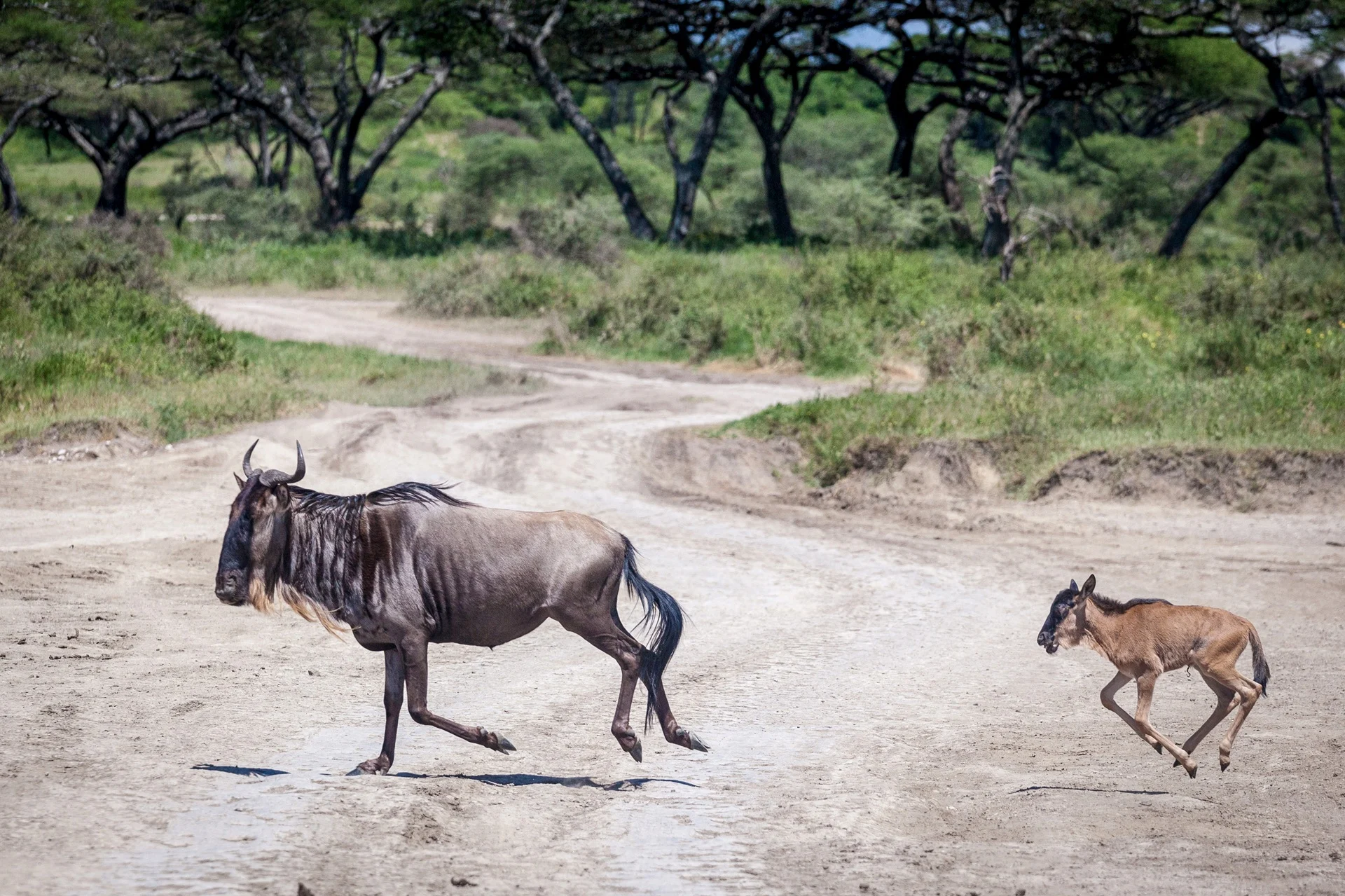
In March the wildebeest are on the southern short grass plains around Ndutu, and they leave during the month. Calving finishes, the calves get strong enough to travel, and the herds break into scattered groups that drift north through the central Serengeti from April.
Nearly 500,000 calves are born on these plains in about three weeks, which works out near 24,000 a day at the peak. That figure comes from a 2018 paper in Scientific Reports. By March most of them are already on their feet, so what you watch changes. Earlier in the season you see births. By March you see herds on the move with predators tracking them, and you cover more ground to find them. The full picture is in our guide to wildebeest calving season.
Ndutu is inside the Ngorongoro Conservation Area, not inside Serengeti National Park, which is why the fee change on 15 March doesn’t apply to the plains themselves.
When the herds reach the western corridor
Not in March. The leading groups reach the Western Corridor at the end of May and the main body is there through June, after two months of drifting north and west through the central Serengeti. If the Grumeti crossings are what you have come for, March is three months early.
March is the tail of the calving story, not the start of the crossing story. Our Great Migration calendar sets out where the herds are in each of the twelve months.
What you see when the herds leave
The wildebeest are the reason most people book Tanzania in March, and they are one species, and by the end of the month they are somewhere else. Everything below is on the circuit whatever the herds are doing, and in the second half of March it is the reason to be here.
The cats. Soit Le Motonyi in the central eastern Serengeti has probably the highest density of cheetah in the whole park, along with resident lion and leopard in every month of the year. That is the part of the trip the rain does not take away. On the crater floor there are 60 to 70 lions in prides. Leopard wants cover rather than open plain, so the acacia woodland of the central east and the riverine bush in Tarangire are where to look.
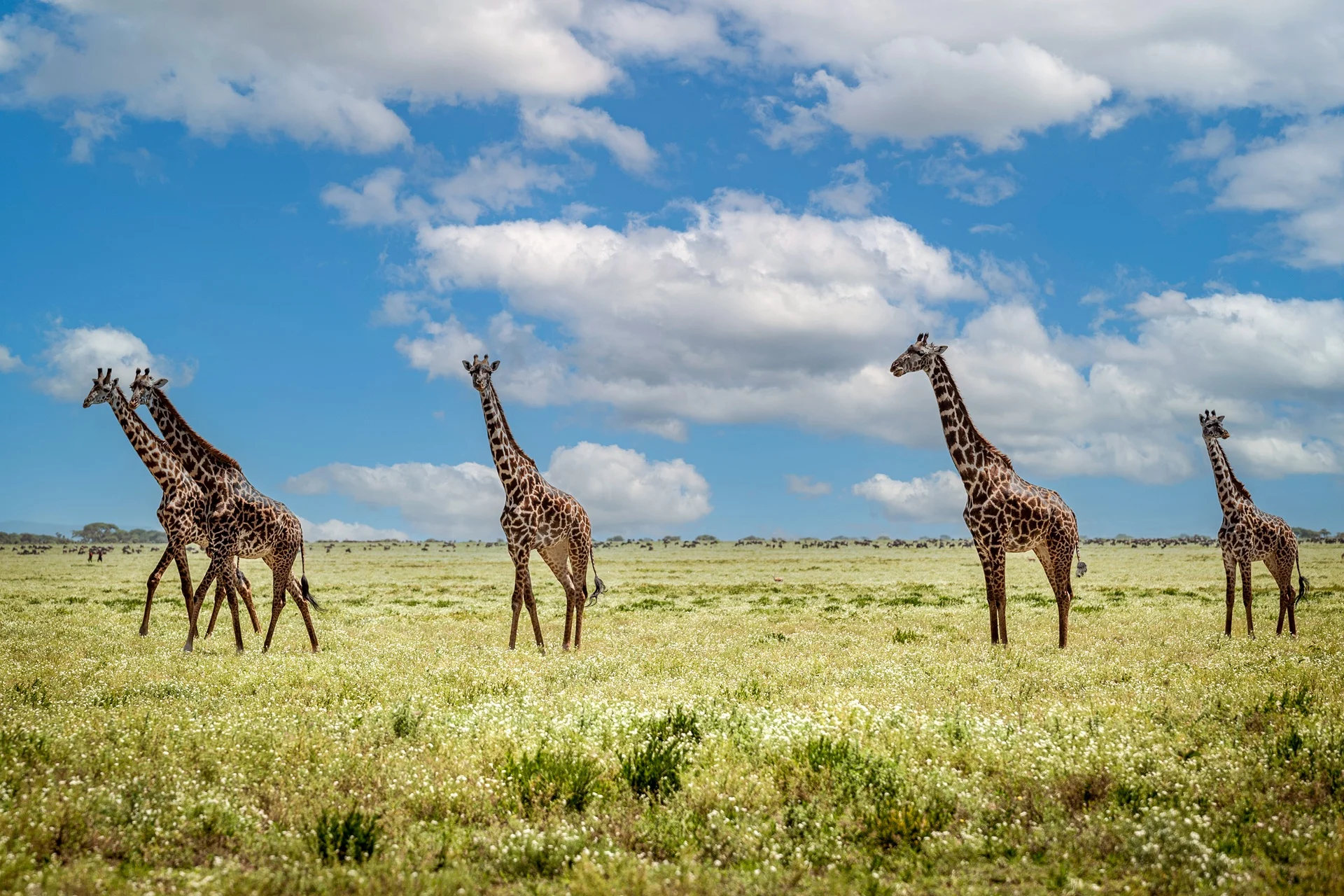
The big bodies. Elephant herds pass the Lake Burunge corridor in Tarangire daily, and there are elephants on the crater floor and in the Lake Manyara forest as well. Buffalo graze in large herds in every park on the circuit. Black rhino is the one nobody can promise, in March or in any month, and the Ngorongoro Crater is where your chance is. Giraffe are across the circuit and absent from the crater floor only, because the steep walls and short grass do not suit them.
The rest of it. Lake Manyara carries hippo, olive baboon and blue monkey in the groundwater forest, along with the tree climbing lions it is known for. Around Ndutu, for as long as the camp is open, there are zebra and gazelle moving with the wildebeest, plus impala, dik dik, spotted hyena, bat-eared fox, genet, jackal and wildcat. Tarangire is the one park on our routes where African wild dogs turn up, rarely enough that nobody should plan around them.
There is a practical point inside that list. A March trip booked for the second half of the month is not a worse trip, it is a different one, and it is built on animals that do not move. The Soit Le Motonyi page covers the area the second half of March belongs to.
What a March safari costs, and the four dates that change it
Four dated changes land inside this one month, and they don’t all move in the same direction. Camp rates fall on 1 March, balloon launches over Ndutu stop in mid-March, park fees fall on 15 March, and a camp closes on 31 March. Book the first two weeks and you get the rate cut without the fee cut. Book the last two and you get both.
Our packaged trips start at $2,114 per person for a 5 day safari on a two person booking, and the same trip is $1,790 per person at six people or more. Those are all inclusive package prices, not nightly rates. The full breakdown is on our Tanzania safari cost page.
1 March low season rates
Our low season starts on 1 March and holds until 30 June. At Karatu Tented Lodge a triple cottage is $101 per person per night in low season, which covers 1 March to 30 June, against $126 in the high season that ends on 28 February. A double or twin there is $118 against $130. Both are full board.
The same pattern applies in the parks. A double or twin tent in the central eastern Serengeti is $195 per person in low season and $247 in high season, and inside Tarangire it is $194 against $218. All of those rates are full board and include VAT, government fees and parking. Park entry fees are separate.
The date is useful because the rate changes on 1 March while the wildlife does not. A night in the first week of March costs what a night in June costs and shows you what February showed.
Mid-March, the last Ndutu balloon
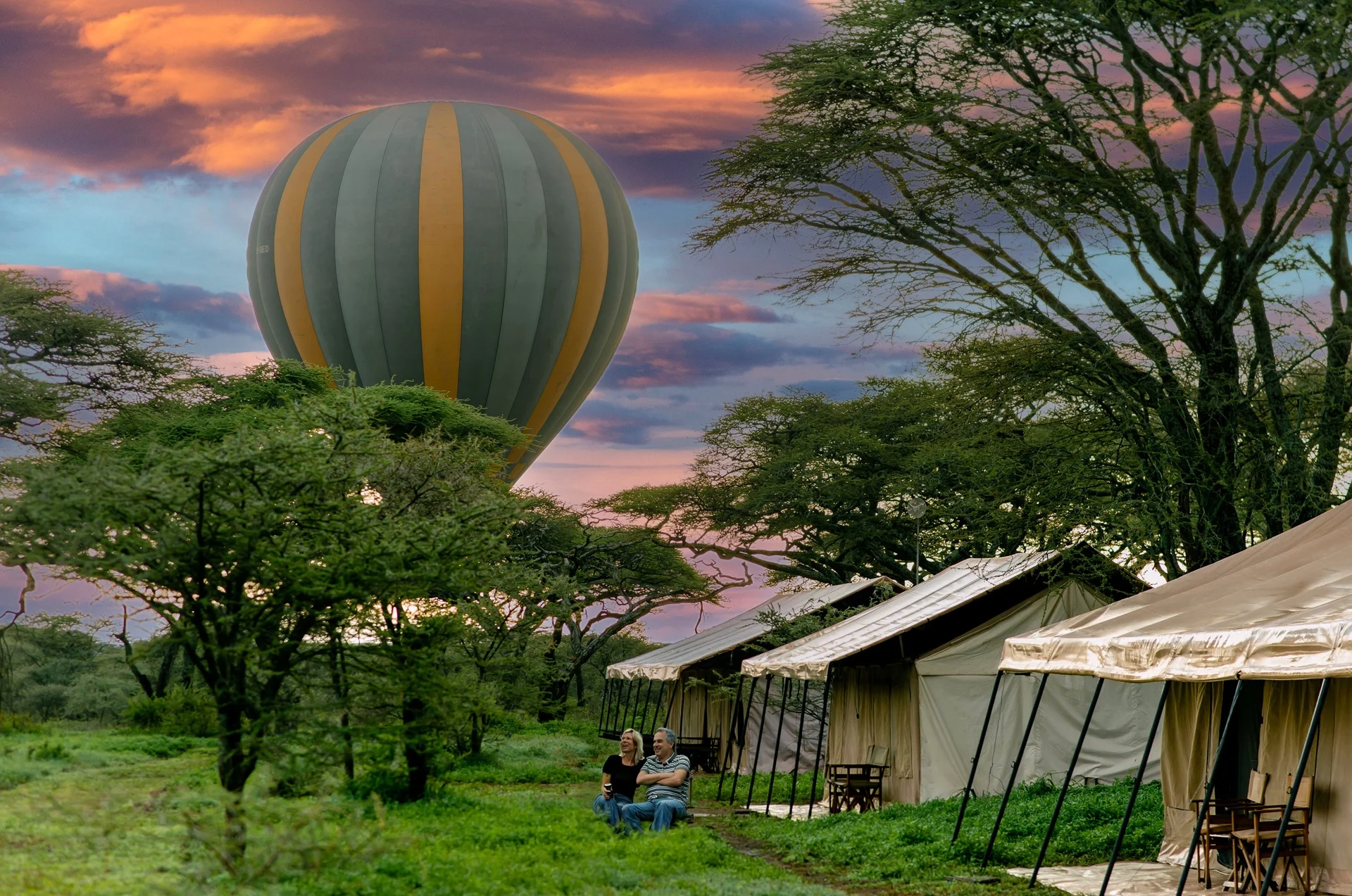
Balloon flights launch over the Ndutu plains from late December to mid-March, and after that the launch site moves. The central Serengeti and Tarangire fly year round, the Western Corridor starts in June, and the northern Serengeti starts in July. A flight is from $599 per person and covers the transfer, an hour in the air and a champagne breakfast on the ground.
So a balloon over the calving plains is a first-half-of-March booking. After mid-March you can still fly, over the central Serengeti instead, and you should expect more weather cancellations than in the dry months, because the launch window needs settled air at first light. Children under seven cannot fly. Our hot air balloon page has the rest.
15 March Serengeti fee change
On 15 March the Serengeti National Park entry fee for a non resident adult drops from $70 to $60 per person per day. Tanzania National Parks quotes those figures exclusive of 18 percent VAT, so what you pay goes from $82.60 to $70.80 a day. The low season holds until 15 May, then goes back up on 16 May. Children aged 5 to 15 pay $20 either way.
Tarangire and Lake Manyara don’t move. Neither has a published seasonal split. Tarangire is also the one park where the official sources disagree outright. The tariff schedule lists $50 for a non resident adult, Tanzania National Parks’ own Tarangire page shows $70, and our destination page gives roughly $50 to $60 including VAT. We use the park page figure and suggest you check it directly. Ngorongoro doesn’t move either. The Ngorongoro Conservation Area Authority charges $70.80 per person per day year round, VAT included, plus $295 per vehicle for the crater descent.
So a Serengeti day after 15 March saves you $11.80 a head once VAT is counted, and nothing else on the route changes. On a trip with three Serengeti days that is $35.40 per person, and a Tarangire day or a crater day costs exactly what it cost on 14 March. The 15 March date has been in the tariff since at least 2022, but the amounts are revised each financial year, so check the current figures before you budget. Fees are paid per person for each 24 hour period, at the gate or online, and they are quoted separately from everything else on your itinerary.
31 March Gnu Ndutu closure
Our camp at Ndutu is open from late December until 31 March, and 31 March is the last night. From April the herds move north and the camp comes down and follows them. There is no extension into April, whatever the rain does.
Rates there don’t fall on 1 March, because one rate applies across the whole season. A triple tent is $262 per person per night, a double or twin is $286, and single occupancy is $350. If Ndutu is the reason you are coming, the last week of March is the last chance until late December, and Ndutu has more on the area itself.
Roads, drive times and when to fly
You come in through Kilimanjaro International Airport, which is about an hour from Arusha and serves the whole northern circuit. Arusha to Karatu is about two hours over 130 kilometers (81 miles) on paved road, and that stretch does not change with the weather.
From Karatu it is 20 minutes to Lake Manyara, 30 minutes to the Loduare gate and about an hour down to the crater floor, an hour to Tarangire and 45 minutes to Lake Eyasi. Ndutu is the long leg. About two and a half hours from Karatu past the crater rim, about two hours off the rim itself, about two hours from the central Serengeti and about five hours from Arusha.
March is the month those last figures stop being reliable. Before the rains the drive out to the plains is straightforward. After them the black cotton soil is the variable, and a track that took forty minutes in the first week can take twice that in the fourth. Coastal Aviation flies into the Ndutu airstrip in an hour and five minutes from Arusha, or half an hour from the Lake Manyara airstrip. That is $343 one way for an adult plus $32 in taxes and charges. In most months that is a convenience. In the second half of March it is the one leg where it starts to earn the money.
Where to go in Tanzania in March
Come early in the month and the calving plains are where the nights go. Come late and the central eastern Serengeti is, with the crater and Tarangire holding up either way. The four areas we operate in behave differently once the rain starts.
Ndutu
Ndutu is where the wildebeest still are for most of March, on the southern short grass plains. Our guides see lion, cheetah and spotted hyena working those herds through the first three weeks, because the predators stay with the calves.
Families should know before booking that predators take newborns in front of the vehicle, and that some guests find it hard to watch. It is the one thing guests ask us about afterwards more than any sighting.
Central and eastern Serengeti
This is where the second half of March goes, and it is the part of the park that holds resident game all year regardless of the migration. Soit Le Motonyi is where the southern short grass plains meet the acacia woodland, so it carries both the open country animals and the ones that need cover. The underground Ngare Nanyuki River keeps pockets of permanent water in front of the camp through every month of the year.
That combination is what makes it the right base once the herds start to scatter. Resident lion, leopard and cheetah, water that does not depend on the season, and two hours to Ndutu if the plains still hold animals when you arrive. Mawe Tented Camp is there at $195 per person per night for a double or twin, full board, in the low season that starts on 1 March.
Ngorongoro
The crater holds around 25,000 large animals across a floor of 260 square kilometers (100 square miles), and the Ngorongoro Conservation Area Authority says the wildlife is there in every month of the year. So the crater doesn’t empty the way the migration plains do, and March costs the same to enter as July does. Karatu Tented Lodge is 30 minutes from the Loduare gate and about an hour from the crater floor, which is the shortest run to the descent road of any base we have.
Pack for the rim instead of the floor. The rim is cold at dawn and the floor is warm by nine. Ngorongoro sets out how the conservation area works.
Tarangire and Lake Manyara
Tarangire in March is green, and the elephant herds still pass the Lake Burunge corridor daily. Our camp there is inside the park on that corridor, so the drive starts at the tent. Animals crowd the river in the dry months, so March is not Tarangire’s strongest month for concentration, and it is one of its best for birds and for having a sighting to yourself.
Lake Manyara pairs with Tarangire on the same drive. The lake fills as the rains build, which is what brings the flamingos in.
What the rain does to a game drive in Tanzania in March
Rain in northern Tanzania usually comes as an afternoon storm and clears inside an hour or two, so your morning drive is rarely affected. The rest of the day changes, though. The grass grows longer and there is water everywhere, so the animals spread out instead of gathering at a few waterholes. That means you drive further to find them.
The ground is the other half of it. Black cotton soil holds water and turns greasy, and some tracks get closed instead of risked. Our guides know which ones go first and route around them, so the practical effect is a longer loop, not a cancelled morning.
Photographers tend to prefer this month. The dust is gone, the light after a storm is clean, and the sky has something in it. If you want animals packed around a shrinking waterhole, you want July to October.
Activities that carry on through the rain
Most of what is not a game drive carries on through Tanzania in March, and one of them moves.
Walking, relocated. From March to May we shift walks to the Ngorongoro highlands and Karatu, where the drainage is better, so a walk that leaves from a Serengeti camp in August leaves from the escarpment in March. That is higher and firmer ground, and the country it covers is worth walking in its own right. A bush walk is $80 per person for two to three hours and a half day is $180 per person for up to six hours. Our walking safaris page sets out where each one goes.
The night drive. Tarangire is the only park on our routes that permits one, at $94.50 per person plus a $59 per person activity fee to Tanzania National Parks, for two to three hours after sunset. Rain does not cancel it.
Culture and coffee from Karatu. Lake Eyasi is 45 minutes away, where the Hadzabe hunt at first light and the Datoga work iron by hand, and the coffee estates toward Oldeani are closer still. Heavy rain in March can slow the tracks out to Eyasi, so it is a plan worth keeping flexible rather than fixed to one morning.
The balloon is the one thing March takes away, and only at Ndutu, which is covered above.
Birding in Tanzania in March
March is a wet month, and the water is what makes the birding good. Tanzania National Parks records more than 350 bird species at Lake Manyara, and has counted more than two million flamingos on that lake at one time. The rains raise the water in the shallow soda lake, which is the condition those counts depend on.
Our guides put the Lake Manyara flamingo window at roughly November to May, so March lands inside it. Lake Eyasi and the Lake Burunge corridor in Tarangire are the other two places worth the drive.
Lake Manyara entry is about $50 per adult per day plus 18 percent VAT, which comes to roughly $59, and it does not change on 15 March. Children aged 5 to 15 pay about $15 to $20 and under fives are free.
Kilimanjaro and Zanzibar in March
Kilimanjaro is in Kilimanjaro region, which is one of the three regions the Tanzania Meteorological Authority names for the Masika rains. The same onset applies, so the first two weeks of March are the drier half and the second half is the wetter one. Tanzania National Parks charges $70 per person per day to enter Kilimanjaro National Park for a non resident adult aged 16 and over, with no seasonal change. Huts on the Marangu route are $60 a night at Mandara, Horombo and Kibo.
Zanzibar is on the coast, and the authority includes the coastal zone in the same Masika season. Rain builds there through March into April, and the island is warmer and more humid than the northern circuit in every month. On a combined safari and beach trip in March, the beach half works better at the front of the trip than at the back.
Before you fly
The visa is applied for online before you travel and a single entry tourist visa allows a stay of up to 90 days, with the fee depending on your nationality. Our post on how to obtain a tourist visa walks through it.
Malaria is present across northern Tanzania in every month. March is the month mosquito numbers start climbing, because the rains arrive and standing water arrives with them. Have the conversation with a travel clinic well before you fly rather than the week before. Whether you need a yellow fever certificate depends on the countries you pass through on the way rather than on Tanzania alone. Bring insurance that covers medical evacuation.
What to pack for Tanzania in March
Pack for warm days, cold dawns and afternoon rain, in that order. A light rain shell and a warm fleece cover the two extremes, and neither takes up much space.
The March additions to our usual list are a dry bag or a waterproof cover for camera gear, and closed shoes instead of sandals, because the ground is wet underfoot at camp. Bring one more change of clothes than you think you need, since things dry slowly in humid air. Neutral colors still apply. So does the luggage limit if you are flying between parks.
Our safari packing list covers the rest of the year too.
Who should come to Tanzania in March, and who should not
Come to Tanzania in March if you photograph, if you want fewer vehicles at a sighting, or if the price of the trip is what decides whether it happens at all. The first two weeks put the calving plains on low season rates. The first two weeks give you the highest wildlife concentration of any low season fortnight in the year.
Don’t come in March if you need predictable weather, or if the Mara or Grumeti river crossings are the reason you are traveling. Think hard before bringing young children who would find the predation on the plains distressing. That third one should move your trip rather than stay in the back of your mind on it. June to October gives you dry ground and crossings, and it costs more for exactly that reason.
If you want the crossings and the lower price, the honest answer is that those two do not exist in the same month.
Tanzania tours in March
The shape of a March route changes at the middle of the month, which is not true of any other month in the calendar. Come in the first two weeks and the calving plains carry the trip. Come in the last two and the central eastern Serengeti carries it, because the herds have started to scatter and the cheetah, lion and leopard at Soit Le Motonyi have not. Most March weeks want both, and they are two hours apart.
Our 5 day trip is $2,114 per person for two people sharing and the 9 day is $5,605 on the same basis, both with a private vehicle and a guide throughout. Park fees, international flights and visas are quoted separately. Every route is on our itineraries page.
What the two halves of March cost
Put the same trip either side of 15 March and only one line on the bill moves. That is worth knowing before you shift your dates, because the cost of Tanzania in March is set on the 1st rather than the 15th. On a route with one crater day, two nights at Ndutu and two Serengeti days, the fees per person come out like this.
| Fee | 1 to 14 March | 15 to 31 March |
|---|---|---|
| Ngorongoro Conservation Area, three days | $212.40 | $212.40 |
| Crater service fee, per vehicle shared between two | $147.50 | $147.50 |
| Serengeti, two days | $165.20 | $141.60 |
| Fees per person | $525.10 | $501.50 |
So the second half saves you $23.60 a head on a two-day Serengeti leg. The rate cut is the one that matters, and it already happened on 1 March, which is why the first two weeks are the value fortnight rather than the last two. Fees are charged per 24 hour period, so your own number moves with your entry and exit times, and the Ndutu concession and campsite fees are quoted against your dates.
FAQs
Gnu Ndutu Camp takes its last booking of the season for 31 March, and low season rates at our other three northern circuit properties start on 1 March.
Check dates on our live availability calendar or send us your dates through the enquiry form.
Reviewed by the Mawe Lodges reservations team, Arusha.