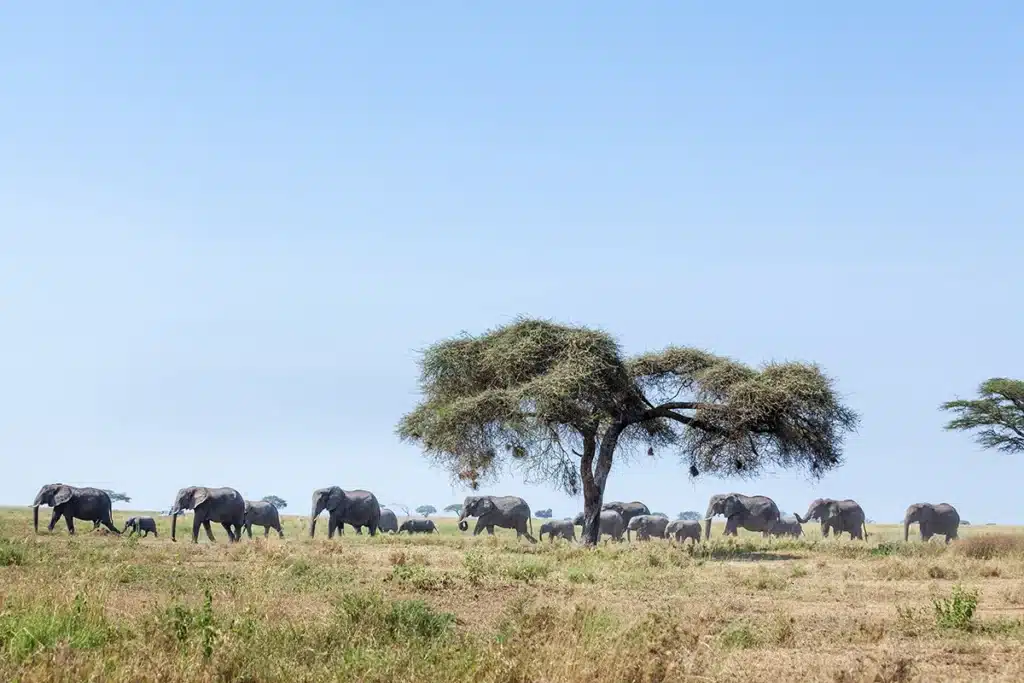
Tanzania in May is a month that changes while you are in it. The long rains end somewhere between about 10 and 20 May, so a week at the start of the month and a week at the end of it are two different holidays sold under one name.
Two more dates land on either side of that one. The Serengeti conservation fee returns to its higher rate on 16 May, a few days after the rain usually stops, and camp rates hold in the low band until 30 June, so the accommodation does not follow the fee.
Then, in the last week, the bulls start calling. The rut happens in May and in no other month of the year, and it is the reason the back half of the month rewards a second visit more than a first one.
When the long rains end
The Tanzania Meteorological Authority measures rainfall in ten day blocks, which it calls dekads, and its 2024 seasonal statement puts the end of the Masika in the first or second dekad of May at most stations. In plain language, the rain usually finishes between the 10th and the 20th.
That single line decides more about your week than the month name does. Before cessation you get heavy afternoon storms, soft ground and slower driving. After it you get drying tracks, air with the haze washed out of it and parks that nobody has arrived in yet, because the return begins in June.
What the drying actually does
Two things change, and they change at different speeds.
The tracks firm up quickly. Black cotton soil holds water and goes greasy under a tire, and the minor routes over it stay soft for days after a storm, but a week without rain takes most of them back. Our guides can name the tracks that soften first and plan a morning away from them, so overnight rain changes the shape of a drive rather than whether it happens. We own our vehicles and employ our guides, so that decision gets made at six in the morning instead of being requested through an office.
The grass takes far longer. It grows through March and April and it reaches its full height just as May begins, which is why animals are further apart and harder to pick out even on a dry day. Grazing pressure and drying ground bring it down slowly through the second half of the month, and it is still tall on 31 May. Anyone who tells you the grass drops as soon as the rain stops is describing something that does not happen inside this month.
The three dates that split the month
| 1 to 15 May | 16 to 31 May | |
|---|---|---|
| Rain | Afternoon storms, cessation usually inside this window | Usually finished, ground drying |
| Serengeti entry, non resident adult aged 16 and over | $60 per 24 hours | $70 per 24 hours |
| Grass and visibility | At its tallest, animals hardest to find | Coming down slowly, sightlines opening |
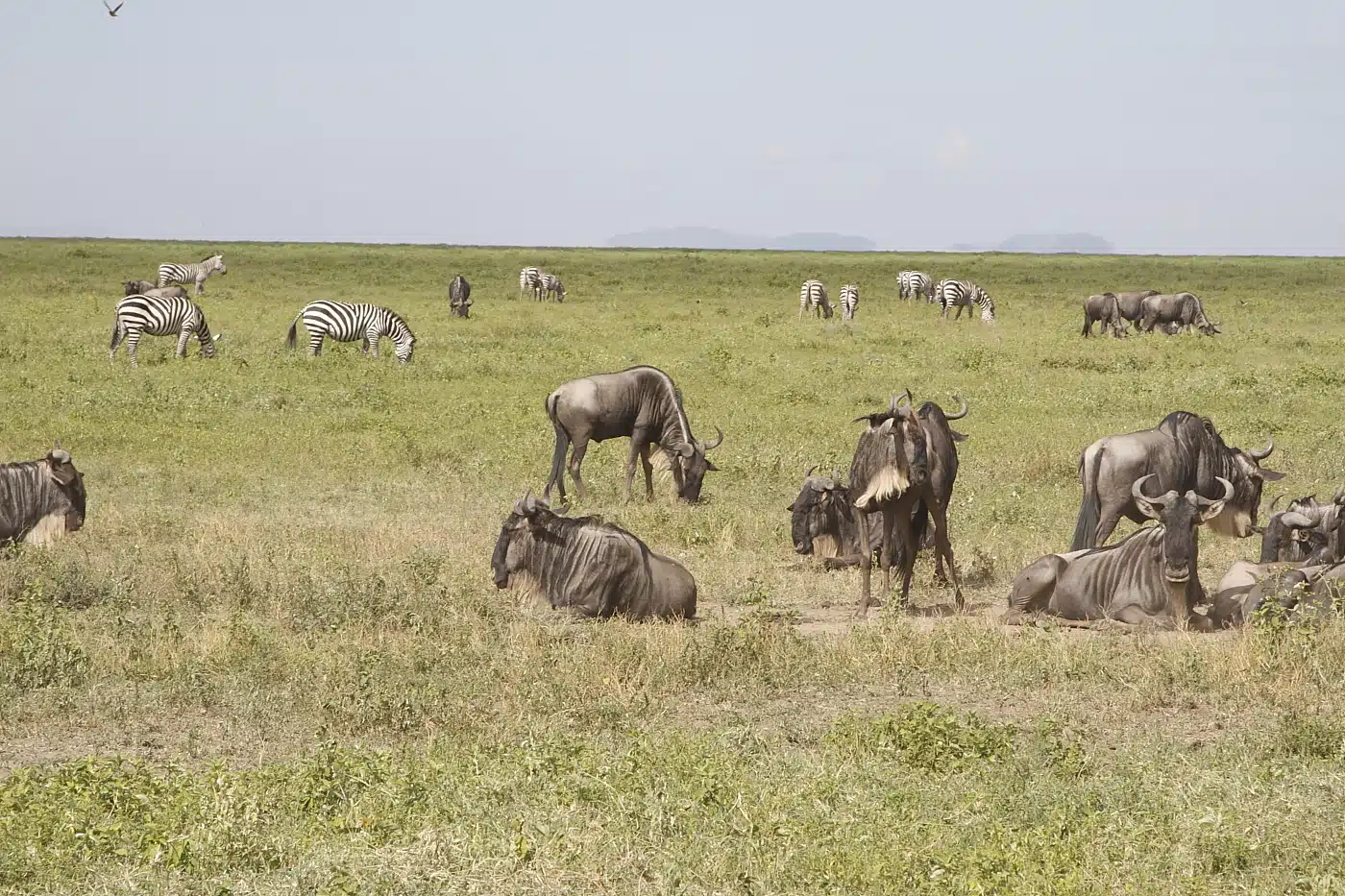
| Wildebeest | Scattered across the central Serengeti | Rut begins, leading groups reach the Western Corridor |
| Camp rates with us | Low band, unchanged | Low band, unchanged until 30 June |
Park fees above are the Tanzania National Parks tariff for non East African citizens, quoted as published and exclusive of 18 percent VAT. With VAT you pay $70.80 a day before 16 May and $82.60 from 16 May. That schedule was valid to 30 June 2024 and is the most recent one the authority publishes, so confirm the current figure before you budget. Fees are charged per 24 hour period rather than per calendar day, so your own total moves with your arrival time at the gate.
So the two things a traveller wants out of Tanzania in May pull against each other. The cheaper fee is in the wetter half and the drier ground is in the dearer half. On a route with three Serengeti days the gap is $35.40 per person, which is smaller than most people expect and rarely worth booking a wetter week for.
The rut, and why the last week is different
In the last week of May the bulls begin holding ground. Each one takes a patch of open country, defends the edges of it against the bull next door, and calls almost without pause. On a flat plain with nothing to absorb it, the sound carries for a long way, and it is the first thing guests notice before anyone points at anything.
February gives you newborn calves. May gives you the sound that produces next February’s calves. It is the one month of the year when a wildebeest herd is loud for a reason other than birth.
For a photographer, or for anyone who has already done a first safari and wants something the first trip did not have, this is the argument for the last ten days over the first ten. You are trading easier sightings for an event with a date on it.
Where the wildebeest herds are in May
North and west of where they were. The herds left the southern plains during April and spend May crossing the central Serengeti in scattered groups rather than in one mass, with the leading animals reaching the Western Corridor at the end of the month. The main body is there through June, and the Grumeti River is what they meet next.
There are no river crossings to watch in May. The crossings belong to July through October in the far north. Our guide to the best time to visit the Serengeti covers which part of the park holds the herds in each month of the year.
The practical consequence for your week is worth stating plainly. Nobody can tell you in advance which quarter of the central Serengeti the herds will be in on your second morning, so a May route that depends on finding them is a route with a hole in it.
Tanzania weather in May
May is the closing month of the Masika, the long rains that begin in March. The season peaks before May opens, so this is the month it ends rather than the month it is heaviest, and the difference shows up as fewer storm days each week as you move through it.
How much rain you actually get depends far more on the year than on the date. TMA recorded May 2024 at 64 percent of the long term average, the ninth driest May since 1970. The northern half of the country came in between 50 and 75 percent of normal, with Arusha and Manyara at a third to a half of their usual May totals. That same May set a record national mean temperature, 0.9°C above the 1991 to 2020 baseline.
What you wear in May, and when you take it off
May changes how long the cold lasts in the morning rather than how hot the day gets.
On the crater rim and at Karatu, cloud stays low while the rains are finishing, so a six o’clock start is genuinely cold and a fleece earns its place in the bag. The difference from the dry months is that the chill holds into the second hour of the drive instead of burning off inside the first. By nine the fleece is behind the seat. Down on the Serengeti plains the same morning starts mild, the afternoon is warm without being punishing, and you sleep with the tent open. On the coast it is warm and humid at both ends of the day, because there is no altitude out there to take the edge off anything.
The item nobody packs and everybody wants is a second pair of closed shoes. They matter more in May than in any other month, because tracks are muddy, campsites are damp and the first pair will not dry overnight. TMA publishes national monthly figures for anyone who wants the numbers behind all this.
Going on safari in Tanzania in May
Green, quiet on the tracks, and slower to deliver. The plains that are bare and dust colored in September carry grass to the height of a wheel arch, water collects in places that have no water in August, and animals no longer walk to a river because the river has come to them.
A Tanzania safari in May buys space with that. The month carries the fewest vehicles of any on the northern circuit. You can spend a morning in the central eastern Serengeti and pass nobody, and a leopard in a tree is a leopard you and your guide found rather than one you queued for.
Light is the other compensation. The dust is down, the grass is green rather than bleached, and storm cloud gives a background that the dry months never produce. Photographers book Tanzania in May for exactly that and accept the longer search as the price of it. Our guide to the best time to visit Tanzania sets the month against the other eleven.
The month the animals start gathering again
Most guides to Tanzania in May describe the country as scattered and stop there. That describes the first week. For anyone watching resident wildlife the month matters for the opposite reason: May is the first month of the reverse process, and the reverse happens in an order you can plan a route around.
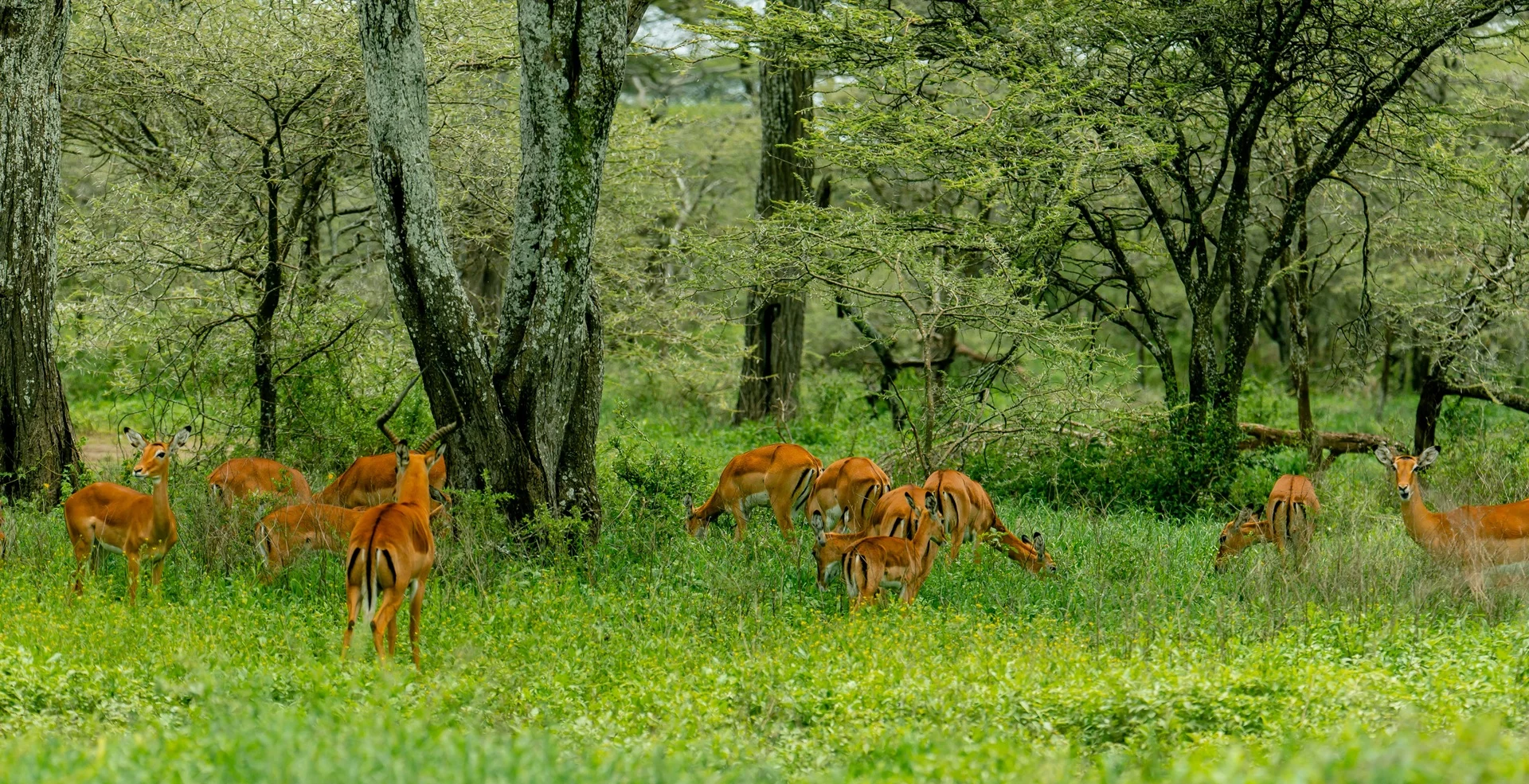
The order it happens in. Shallow pans on the open plains are the first water to disappear once the storms stop, because there is nothing under them holding it. Rivers, springs and swamps are the last. So through the second half of May the grazers begin drifting back toward permanent water, slowly and unevenly, weeks before anyone would call it the dry season. Zebra, eland, impala, gazelle, warthog and dik dik are the ones you notice doing it, and you will see all of them without trying at any point in the month.
Tarangire shows it first. The elephants come back toward the Tarangire River and the Lake Burunge corridor as the surrounding country begins to dry, and this is the earliest visible stage of the concentration that builds through June and peaks in the dry months. Buffalo follow the same water. African wild dog appears in Tarangire and in none of the other parks we use, at odds long enough that nobody should build a week around the possibility.
Two places the season never reaches. The crater floor is short grass at every point in the year, so the roughly 25,000 large animals the Ngorongoro Conservation Area Authority counts down there are as findable in May as in August, black rhino included, and 60 to 70 lions live on the floor in prides. Giraffe are the exception, absent from the floor because of the descent rather than the month, though they are across the rest of the circuit. And the groundwater forest at Lake Manyara is spring fed rather than rain fed, which is why hippo, olive baboon, blue monkey and the tree climbing lions the park is known for keep to the same short circuit of track regardless of what the rain is doing. Flamingo numbers on the lake itself move with water level and nobody can quote you a figure in advance.
The cats do the opposite of what you expect. Wet ground pushes lion, leopard and cheetah onto rock and raised ground to lie up on, so a wet month makes them more predictable rather than less. Soit Le Motonyi in the central eastern Serengeti has probably the highest density of cheetah in the Serengeti, with resident lion and leopard there in every month, and its kopjes are exactly the dry high ground a May morning sends them to. Leopard needs cover as much as height, which puts your second best odds in the thicker woodland and along the watercourses in Tarangire.
The honest summary of Tanzania in May is that the resident animals carry the week, and they are easier to plan around in May than the herds are. The Soit Le Motonyi page covers the ground most of that happens on.
Where to go in Tanzania in May
Base yourself where water and terrain hold animals together, rather than where the herds were last month.
Tarangire
The park May flatters. As the land begins to dry the elephants come back toward the Tarangire River and the Lake Burunge corridor, so this is where wildlife concentrates while the open plains disperse. The famous dry season gatherings build from June onward, so May hands you the opening stage of that in a park still green, still short of vehicles, and with the baobabs in leaf rather than bare. Baobab Tented Camp is inside the park on that corridor, at $194 per person per night for a double or twin, full board, in the low band that covers all of May.
Ngorongoro Crater and Karatu
Nothing May does to the grass applies inside the crater. The floor is short grass across its whole 260 square kilometers (100 square miles) whatever the month, which means your sightlines down there in May are the sightlines a dry season visitor gets. That alone is the argument for putting a crater day into a May route rather than saving it for a drier trip. The Ngorongoro Conservation Area Authority counts around 25,000 large animals on the floor and records wildlife there year round, black rhino among them. Giraffe never make the descent, so the one large species missing from the floor is missing for reasons that have nothing to do with rain.
Karatu Tented Lodge is 30 minutes from the Loduare gate and about an hour from the crater floor, a 600 meter descent below the rim. A double or twin is $118 per person per night, full board, the lowest of our northern circuit rates in May. An early start earns more here in a wet month than anywhere else on the route, because the descent road is slower after a night of rain and the first vehicles down get the floor to themselves.
Central and eastern Serengeti
The southern plains are empty by May, so the ground that earns your nights is the center and the east. Soit Le Motonyi occupies the join between short grass country and acacia woodland, which puts open ground and cover inside one morning’s driving, and the underground Ngare Nanyuki River creates pockets of permanent water that attract wildlife all year round.
Permanent water is an odd asset to value in a wet month, and that is exactly the point. Rain lets animals drink anywhere, so it dissolves the gatherings a dry month creates, while ground that held wildlife before the rain arrived tends to keep holding it through. Mawe Tented Camp is there at $195 per person per night for a double or twin, full board. With the wildebeest strung out across half a park, cats you can look for on the same kopjes every morning are worth more to a week than being near wherever the herds were reported yesterday.
Lake Manyara
Worth a morning in May for the reason given above, that the forest is spring fed and does not empty out with the season. The caution is access. Water collects on the low ground under the escarpment, and one heavy night can put sections of the park out of reach, so build Manyara in as a flexible half day and confirm conditions on the morning itself. Our Lake Manyara page has the detail on the park.
Arriving in May, and what wet ground does to a transfer
You fly into Kilimanjaro International Airport, about an hour from Arusha, which serves the whole northern circuit. Arusha to Karatu is about two hours over 130 kilometers (81 miles) of paved road, and that leg holds up whatever the weather is doing.
From Karatu it is 20 minutes to Lake Manyara, 30 minutes to the Loduare gate and about an hour down to the crater floor, an hour to Tarangire, 45 minutes to Lake Eyasi and 20 minutes to the Lake Manyara airstrip.
The variable for Tanzania in May is the surface rather than the distance, and it applies to the unpaved sections only. Add time to anything below the Manyara escarpment and to the internal Serengeti tracks in the first half of the month, and take the published drive times at face value in the second half. That difference is worth building into the itinerary rather than absorbing on the day, because a transfer that arrives after dark costs you a game drive as well as an afternoon.
The map is also shorter in May than the calving months allow, since the camp on the southern plains closed on 31 March and nothing on a May route goes that far south. Fewer legs and shorter ones is exactly what a month with slower going needs.
Flying between the Serengeti and Arusha is the way to buy back a driving day if your dates are tight. It is worth deciding that at the booking stage rather than mid trip, because seats in a light aircraft in low season go quickly on the days that suit everybody.
Which camps are open in Tanzania in May
Two of our five properties are shut in May, and neither of them is shut because of the weather.
Our camp on the Ndutu plains came down on 31 March, because the herds finished the grass there and moved north. Gnu Mara River Camp at Kogatende does not open until 1 June, because it exists for the Mara River crossings and the herds are still two months and a long way south of them.
The three that are open are open every month of the year, in the central eastern Serengeti, inside Tarangire and at Karatu on the escarpment. Each has ten tents or cottages. That is a small number in July and a comfortable one in May, which is why a May booking is usually available inside two months where a July booking is not.
What Tanzania in May costs
May is inside the low rate band, 1 March to 30 June, at all three open properties, and that band is the cheapest of the four we publish. Nothing about the rate changes inside the month.
Three things carry the cost of a safari and they are quoted separately, which is the part that catches people out. Accommodation is full board and covers your tent and your meals. A full day game drive is from $300 per vehicle with a private four wheel drive, a guide and fuel. Park fees are collected by the authorities and are never inside either of the other two. Our Tanzania safari cost page breaks the whole thing down.
The same route, booked on 8 May and on 24 May
This is the calculation that is specific to Tanzania in May and to no other month. Take a seven day route with three Serengeti days, one crater day and a day in Tarangire, and price the fees per person on either side of the 16th.
| Fee | How it is charged | Starting 8 May | Starting 24 May |
|---|---|---|---|
| Serengeti, three days | Per 24 hours, plus 18 percent VAT | $212.40 | $247.80 |
| Ngorongoro Conservation Area, one day | $70.80 per adult per 24 hours | $70.80 | $70.80 |
| Crater service fee | $295 per vehicle, one entry inside 24 hours | $147.50 | $147.50 |
| Tarangire, one day | Park page figure, sources disagree | $70.00 | $70.00 |
| Fees per person | $500.70 | $536.10 |
The crater service fee above assumes two people sharing a vehicle, and it drops per head as the vehicle fills. Tarangire is the one park where the published sources disagree, with a fee schedule, the park page and our own cost page carrying different figures, so we use the park page number and tell you to confirm it at the gate.
Fees like the ones in that table go on top of a packaged price and never inside it, whichever length of trip you book. On the route above, the 16 May change comes to $35.40 per person. That is a rounding error next to an intercontinental airfare, and it should not be the thing that decides your dates.
The one activity that changes address in May
Less comes off the list than people expect, and the interesting one moves rather than stops.
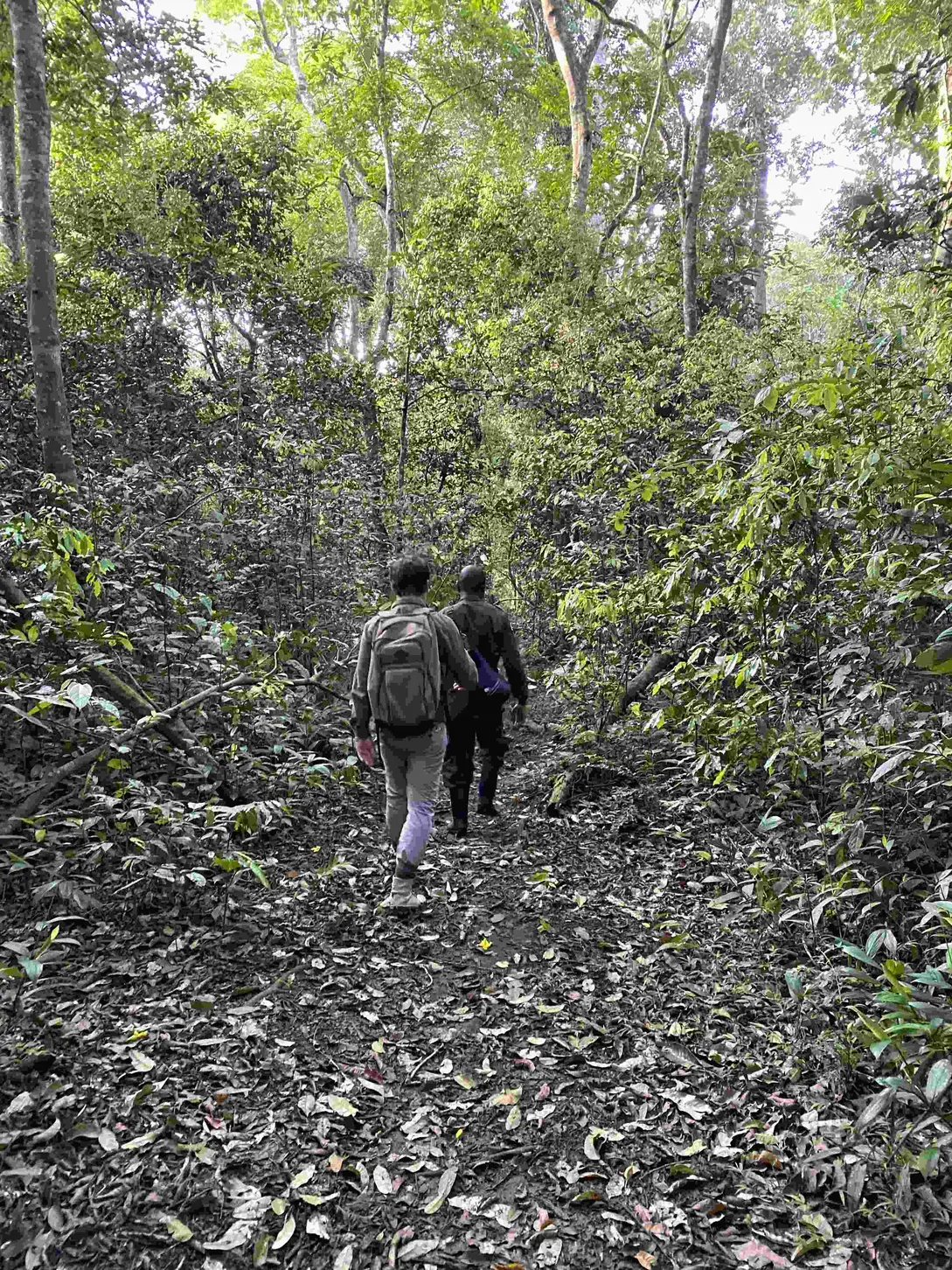
The walk changes address. Our walking is relocated from March to May to the Ngorongoro highlands and Karatu, where the drainage holds up and the plains do not. So a walk booked for May starts on the escarpment rather than out of a Serengeti camp, on higher and firmer ground, and the highland country it crosses is worth covering on foot in its own right. A bush walk is $80 per person for two to three hours, a half day $180 per person for up to six hours, and the walking safaris page has the detail. This is the one thing on the list that people are surprised to find still available.
Two balloon launch sites, not three. Over the central Serengeti and Tarangire, from $599 per person for the transfer, an hour in the air and a champagne breakfast on the ground. Ndutu launches finished in mid-March and the Western Corridor does not begin until June, which leaves the central Serengeti as the option inside this month. Cancellations are more common than in the dry season, because the launch window needs settled air at first light, and children under seven cannot fly. The hot air balloon page has the rest.
The night shift, in Tarangire only. No other park we use permits driving after dark, so a May week has exactly one opportunity at it, and green season nights are more active than dry ones because there is more for small animals to eat. Two to three hours after sunset, $94.50 per person plus a $59 per person activity fee to Tanzania National Parks.
The morning rain cannot spoil. Lake Eyasi is 45 minutes from Karatu, and the Hadzabe and Datoga keep a working day that weather does not interrupt. The coffee farms above Karatu are nearer still. The track down to Eyasi slows after heavy rain, so hold this for whichever morning looks least promising for game viewing instead of fixing it to a date.
Birding in Tanzania in May
May is the peak month for breeding plumage on the northern circuit. Resident species are still in color, the last of the migrants have not all left, and green cover supports far more insect life than the dry months do.
Birders get the best of May while general game viewers get the hardest version of it, which is an unusual split and worth knowing before you fix your dates. The groundwater forest at Lake Manyara and the Tarangire swamps are the two places to spend real time, and Tanzania National Parks puts more than 350 species in Lake Manyara alone.
The paperwork and the mosquitoes
Apply online for the tourist visa before you fly, using the official portal, which publishes the current fee and the conditions attached to a single entry. Our post on how to obtain a tourist visa has the steps.
Malaria is present across northern Tanzania all year. Tanzania in May differs from its neighbors only in direction, because standing water is going rather than growing, so mosquito pressure eases across the four weeks. That is a difference of degree, so take the same precautions and have the same conversation with a travel clinic, booked with time to spare. Yellow fever certification is a question about your routing, not about Tanzania. Insurance should cover medical evacuation.
What to wear on safari in Tanzania in May
A rain shell with a hood, not a packable windbreaker, because early May storms come down hard and an open sided vehicle shelters you less than it looks. Trousers that dry fast rather than cotton, which stays wet all evening once it soaks.
Two pairs of closed shoes. A warm layer for dawn at Karatu and on the rim. Neutral colors, with long sleeves and long legs for the tsetse country in Tarangire. Something waterproof to keep a camera body in, because the humidity gets everywhere and a storm arrives faster than you can pack a bag. Our safari packing list covers the rest of the year.
Zanzibar and Kilimanjaro in May
The islands are at the back end of their own long rains through May, with heavy showers, high humidity and the lowest hotel rates of the year, easing as the weeks pass. We have no property out there, so a beach extension is a partner hotel we name before anything gets booked.
Kilimanjaro is harder work in May than in the dry months. Wet forest underfoot on the lower routes, low cloud for much of the day, and little of the view the lower camps exist for. We are not a trekking operator and would put you with a specialist, then collect you at the bottom.
Events in May
Two dates matter. International Workers’ Day falls on 1 May and is a public holiday, so government offices and banks close while parks, camps and transfers keep their normal schedule.
Karibu-Kilifair, East Africa’s largest tourism expo, is on 27 to 30 May 2027 in Arusha. It is a trade event rather than a public festival, so it fills Arusha hotels and keeps operators at the expo rather than at their desks. Plan your arrival and departure around it if your trip starts that week.
Tanzania tours in May
A route through Tanzania in May is built around two anchors rather than around the herds. Tarangire and the crater hold animals together while the Serengeti spreads them out, so the nights concentrate there and the Serengeti days go to the resident cats in the center and east.
Build in more time than a dry season route needs. A sighting that takes twenty minutes on open ground can take an hour in tall grass, so two bases across a week return more than four, and the itinerary that looks slower on paper is the one that delivers.
Our five day trip is $2,114 per person for two people sharing and the nine day is $5,605 on the same basis, both with a private vehicle and a guide throughout. Park fees, international flights and visas are quoted separately. The routes are on our 5 day Tanzania safari page.
Who May suits, and who it does not
| If this is you | May |
|---|---|
| You have been on safari before | Yes, and this is the month’s strongest argument. The rut in the last week is an event no other month offers, and you already have the easy sightings behind you |
| You want the emptiest parks of the year | Yes. May carries the fewest vehicles of any month on the northern circuit, and a sighting is yours rather than shared |
| You can choose your week inside the month | Yes, and choose the last ten days. Rain has usually stopped by then, the ground is drying and the calling has started |
| You are deciding between a wet week and a dry one on price | No, because the price gap is not what you think. The fee difference across 16 May is $35.40 per person on a three day Serengeti route, and the camp rate does not move at all |
| You want long sightlines and open country | No. The grass is at its full height when May opens and it is still tall when May closes. Open, dust-colored country belongs to the dry season, not to this month |
| You are bringing children on a first safari | Partly. Long searches between sightings test young patience, so a short route with two bases and a shorter driving day works far better than a wide loop |
| You are a birder | Yes. Breeding plumage peaks now, the last migrants are still around, and green cover means more to look at in the forest and the swamps |
| You have come for a river crossing | No, and not by a few weeks either. The crossings belong to July through October in the far north, and our camp up there does not open until 1 June |
The two rows worth arguing with are the grass row and the family row, and they are the same problem twice. May asks you to spend longer looking. Whether that is a fair trade depends on whether the people in the vehicle enjoy the looking.
Frequently asked questions
A double or twin at Karatu Tented Lodge is $118 per person per night in May, full board, and the low band holds until 30 June.
Check availability · Enquire now
Reviewed by the Mawe Lodges reservations team, Arusha.