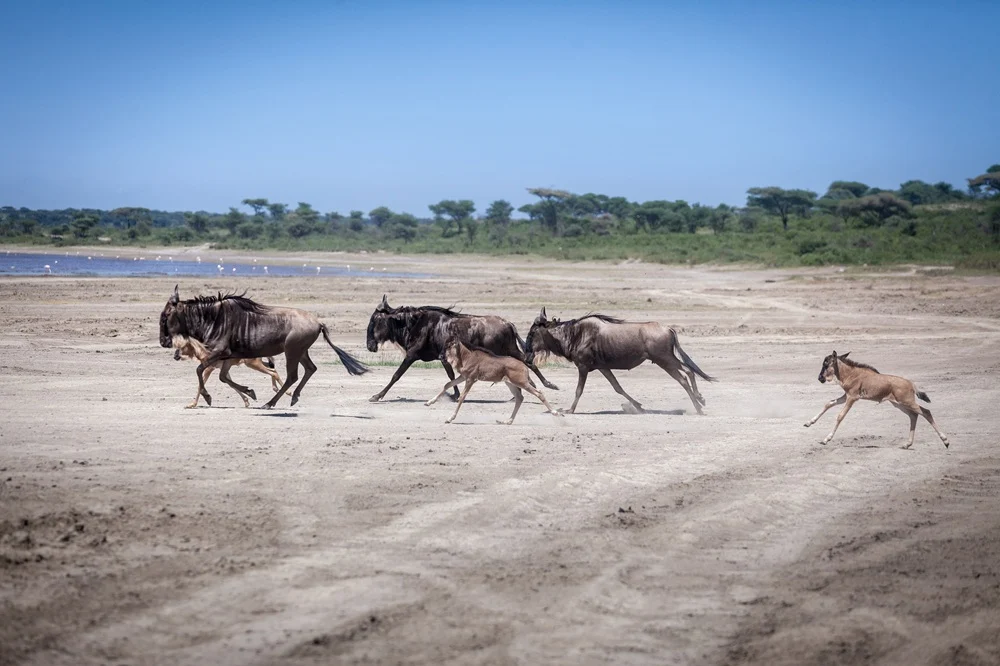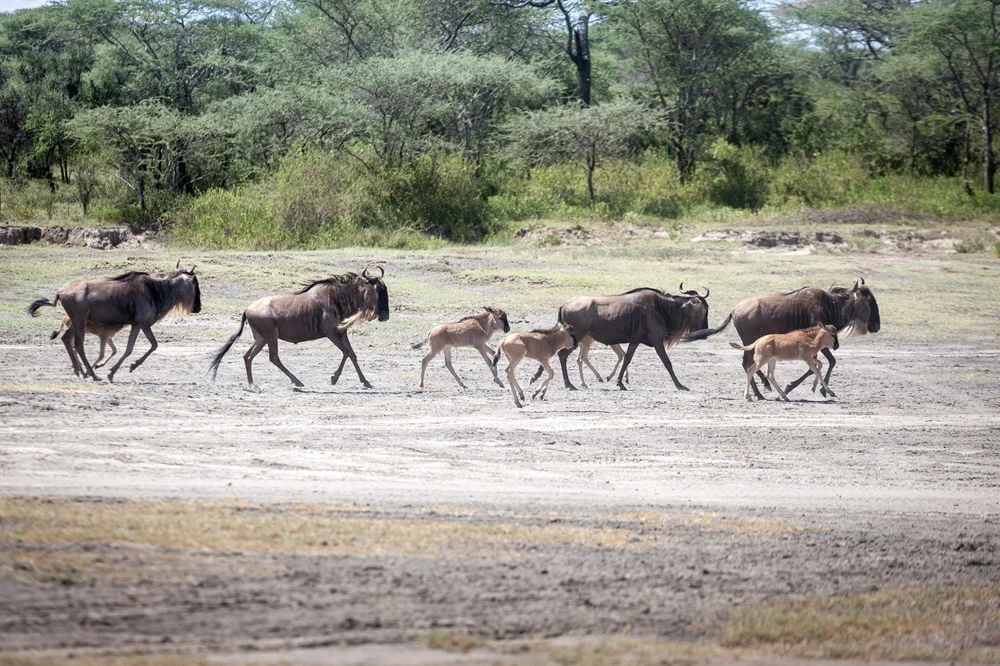
Nearly 500,000 wildebeest calves are born on the southern plains in about three weeks. Divide one number by the other and you get somewhere near 24,000 calves a day at the peak. That figure is the real reason the wildebeest calving season looks the way it does when you are standing in it.
The density is the point. February at Ndutu gives you newborn calves in every direction and every predator on those plains working the same food source for weeks.
What is the wildebeest calving season?
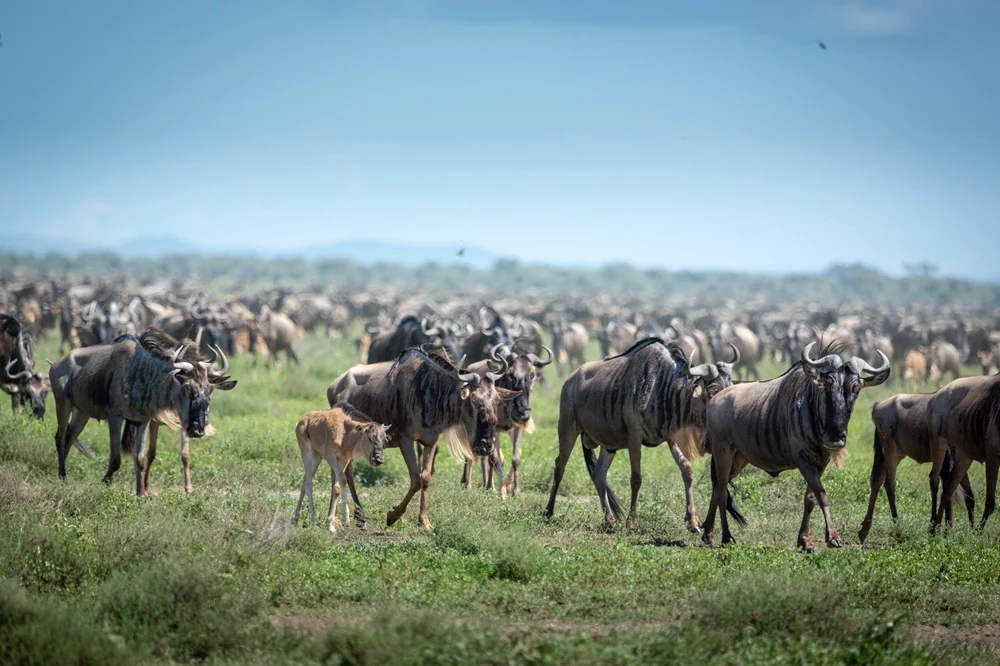
The wildebeest calving season is the few weeks each year when the migratory wildebeest herds give birth, on the short grass plains at the southern end of the Serengeti ecosystem. It happens between late December and March, and most calves arrive in late January and February.
The animal is Connochaetes taurinus mearnsi, the western white-bearded wildebeest. It is the subspecies that makes the annual migration between the southern plains and the Mara, and it is the one you will see calving. Calving is the plain word for giving birth in a herd animal, borrowed from cattle.
Two things separate the wildebeest calving season from other birthing seasons in Africa. The first is scale. The second is that the births pack into a window short enough that a two night stay can put you in the middle of it.
The herds are not in one park. They calve across a boundary, on land managed by two different authorities. That is why you will see the same event called the Serengeti calving season in one place and the Ndutu calving season in another.
When does the wildebeest calving season happen?
Calving is on the plains from late December to March, and the births concentrate in late January and February. If you want the peak, take the first three weeks of February. March still has calves on the ground, but it is the wettest of the three months and vehicles get stuck.
The window is not a marketing range. It comes out of when the animals mate.
Why February is the peak
Wildebeest mate during the rut, in the dry season months. Mean gestation is 258 days, measured against a published range of 242 to 274 days. Count 258 days forward from a rut in late May and June and you land in February.
The synchrony at the mating end is as tight as it is at the birthing end. Around 80 percent of females mate inside a two to three week window at the peak of the rut. Eight and a half months later the calves arrive together.
Researchers measure the birthing synchrony as T80, the number of days it takes for 80 percent of calves to be born. In 1973 that figure came out at 19.56 days. In 1965 it was 28.99 days. So the window shifts a little year to year, but it has never been long.
Where the wildebeest calving season happens
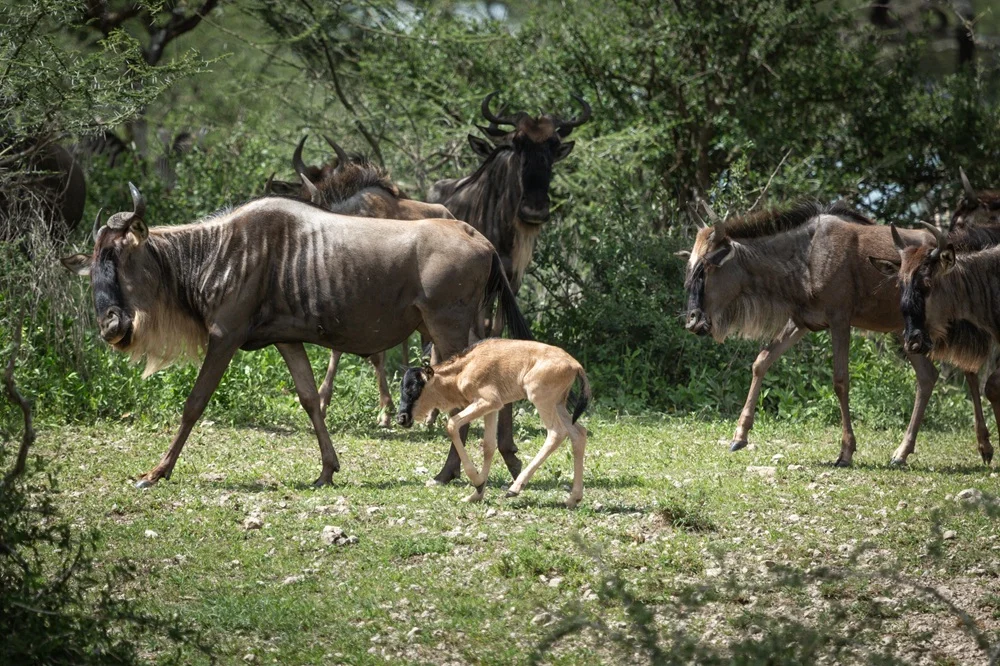
On the short grass plains at the southern end of the Serengeti ecosystem, around Ndutu and across into the southern part of Serengeti National Park. UNESCO’s listing for the Ngorongoro Conservation Area says the herds calve on short grass plains that cross the boundary between the conservation area and the park.
So the two common answers are both half right. The event has one address and two landlords.
Ndutu, and why it is not in the Serengeti
Ndutu is inside the Ngorongoro Conservation Area, not inside Serengeti National Park. The Ngorongoro Conservation Area Authority manages that land and collects the fees, and the adult conservation fee is $70.80 for every 24 hours.
One rule follows from that boundary and it changes your morning. On the Ndutu side your guide can leave the track and follow an animal. Cross into the national park and he has to stay on it. Ngorongoro applies the same off-road permission at Ndutu that the crater does not.
The southern Serengeti side of the line
The plains continue north and west of Ndutu into the park itself, past the Kusini plains and out towards Moru Kopjes. Herds spill across in numbers in some years and barely at all in others, depending on where the rain has fallen.
That is why a fixed camp on one side of the line is a gamble and mobile camps move. It is also why nobody can promise you which side of the boundary the animals will be on in the week you book.
Why the short grass plains and nowhere else
The plains are covered in volcanic ash blown from the highlands, and the soil that ash makes is high in calcium and phosphorus. The grass that grows in it is short, and it carries more mineral per mouthful than the long grass further north.
A cow feeding a calf needs that. So the herds walk to this specific ground to give birth, and they leave when the grass is finished. Zebra graze the taller grass first and the wildebeest follow onto what is left, which is why the two species move together instead of competing.
Why every calf is born at once
Synchronized birthing is a strategy, not an accident. The herd puts nearly all its calves on the ground inside three weeks, and that timing does something specific to the animals hunting them.
What synchronized births do to predators
A lioness can eat one calf a day. She cannot eat 200. When 23,000 calves arrive in a morning, the predators on that ground are working at capacity within days. The number of calves taken climbs, but the proportion taken falls.
Spread the same births across three months and the predators handle them comfortably. Compress them into three weeks and most calves survive the first fortnight because there are too many of them. Ecologists call it predator swamping.
The rutting call behind it
The mechanism that keeps the timing tight was worked out by Smithsonian and Oxford researchers and published in Scientific Reports in 2018. Male wildebeest make a low grunting call through the rut, and that call advances ovulation in the females hearing it.
The researchers played recorded rutting calls to females several weeks before their expected breeding peak. The mating synchrony they predicted from those animals matched independent field data on wildebeest mating and calving. So the noise of the rut is part of what sets the calendar, and the herd effectively times itself.
What a newborn calf can do, and how fast
A calf is on its feet faster than almost any other hoofed animal. Published accounts disagree on the exact figures, so the table below gives the range instead of one number dressed up as fact.
| Milestone | Reported range |
|---|---|
| Standing after birth | 2 to 10 minutes |
| Running with the herd | Under an hour, to three days |
| Birth weight | About 20 kg (44 lb) |
The variation is real, not sloppy reporting. A calf born in the open with a hyena 200 meters away has different odds from one born inside a dense herd. Slow calves do not survive to be counted.
Calves recognize their mother in the first minutes and follow her rather than the herd. Separation is what kills them. In a stampede, a calf that loses its mother will follow the wrong animal, get rejected, and then be alone on open ground. Most of the predation you watch during calving starts with a separation, not a chase.
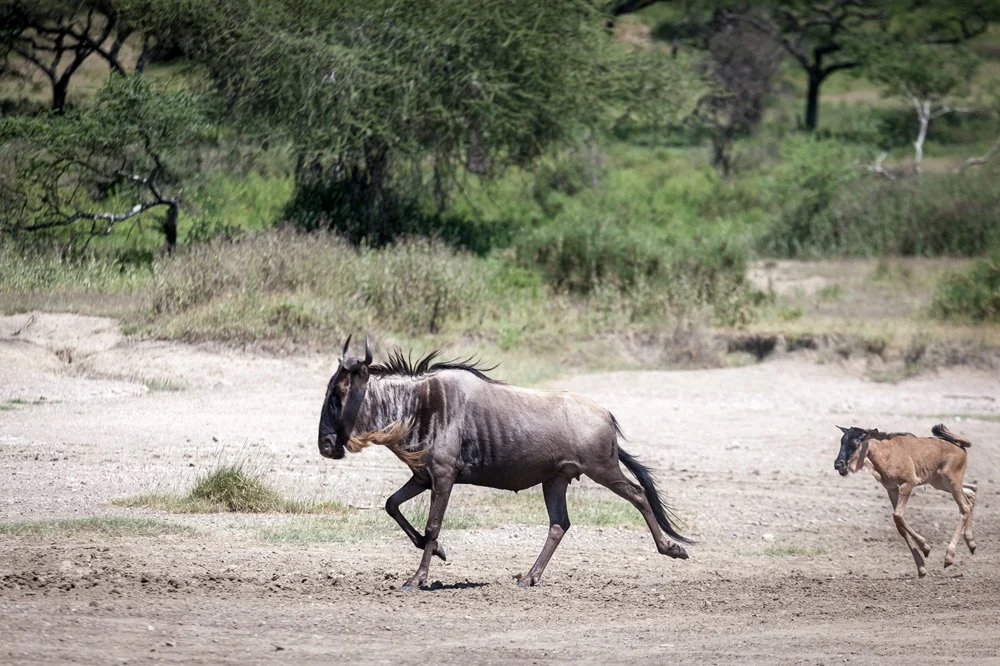
The predators on the calving grounds
Lion, cheetah, spotted hyena, leopard and black-backed jackal all work the calving plains, and the concentration is the densest of the migration year. This is the part of the season that keeps photographers coming back.
Cheetah do disproportionately well here and it is a matter of ground rather than luck. A cheetah needs open sightlines and a clear run, and the short grass plains give both. Cats that struggle in long grass further north hunt well in February at Ndutu.
Hyena take more calves than most visitors expect. Lion take fewer than the reputation suggests, because a lion is built to kill an adult wildebeest and a calf is a small return for the effort.
Off-road driving is the difference between watching a hunt and watching a dust cloud. Our game drives at Ndutu are in our own vehicles, with guides on our own payroll. Leaving the track to follow a hunting cheetah is your guide’s call, not a booking office decision. If you want cats outside the calving window, the big cats of the eastern Serengeti are on those plains in every month.
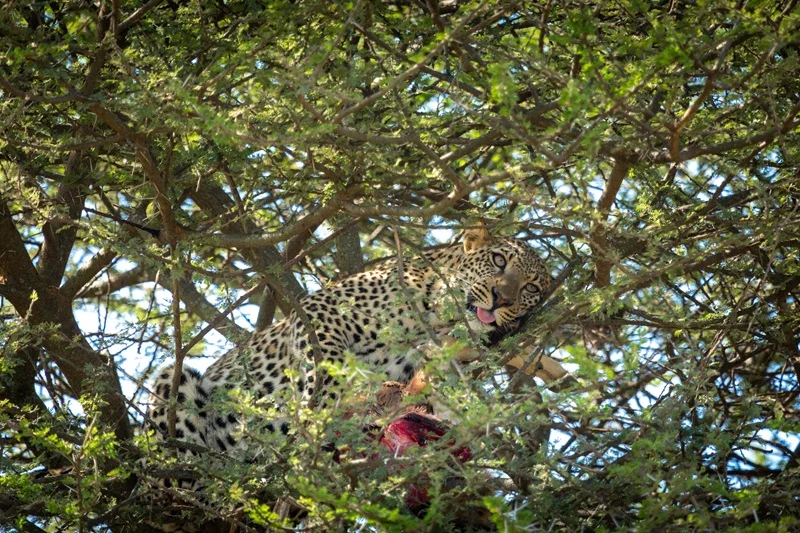
What else is giving birth at the same time
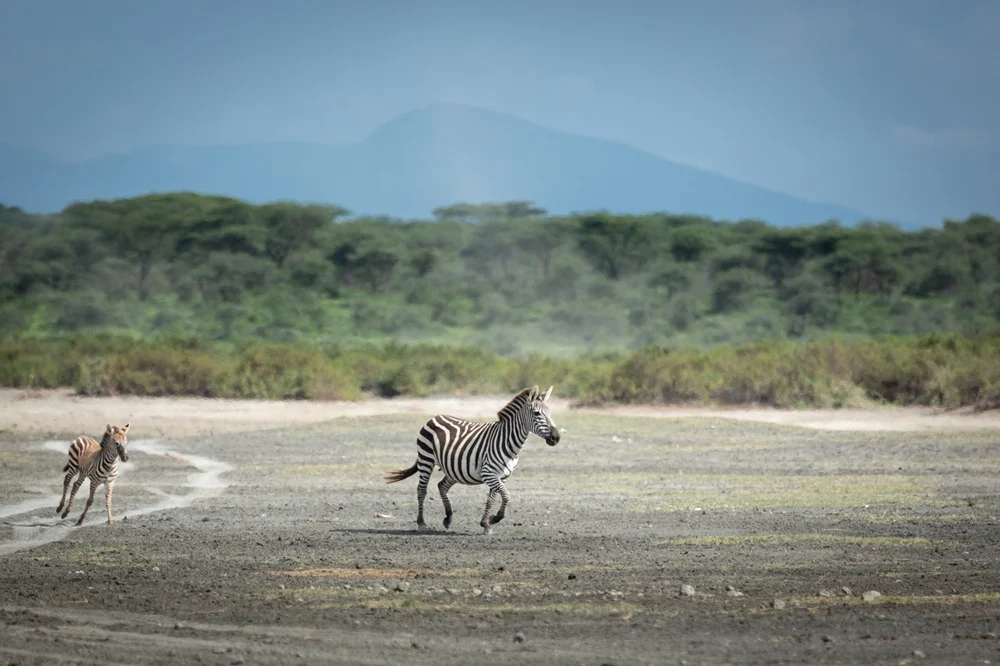
Wildebeest are not the only animals calving on the southern plains in February. Plains zebra foal through the same months, though their births spread out over months instead of compressing into weeks. Thomson’s and Grant’s gazelle both drop fawns on the same ground.
The gazelle fawns matter for what you see. A Thomson’s fawn is small enough for a jackal or a serval to take, which widens the range of predators hunting in front of you beyond the big cats.
What the plains look like in February
Flat, green and covered in animals. The short rains have been and gone, the grass is low enough to see a cheetah at distance, and the herds are spread over open ground in every direction.
Your drive starts in the hour after dawn, because that is when the cats hunt and when a chase can begin well away from any track. Off-road driving at Ndutu is what lets your guide go with it. Our Gnu Ndutu Camp is open from late December until 31 March and comes down for the rest of the year, because the animals it exists for have gone north.